Sunday, 5th April 2026

Khabor Wala Desk
Published: 27th January 2026, 9:14 AM
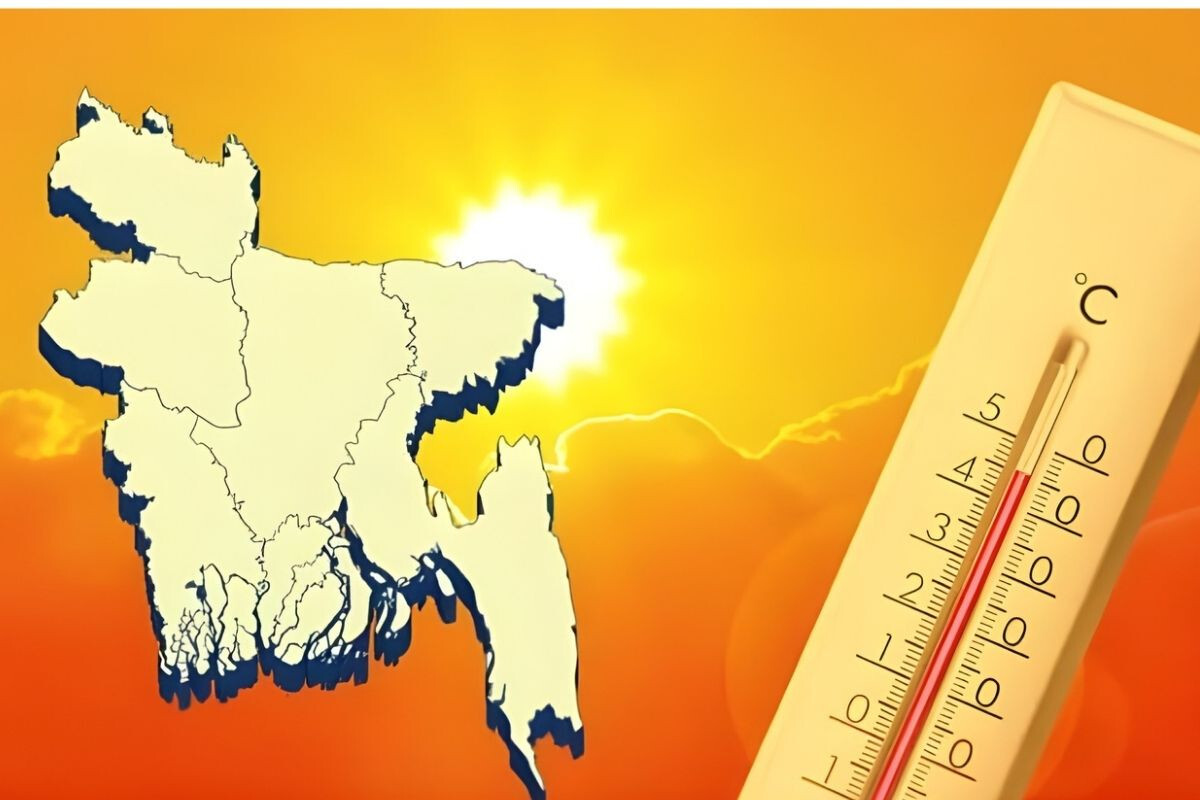
As global temperatures continue to climb, a striking new study from Oxford University warns that by 2050, six countries—including Bangladesh—will experience some of the world’s most extreme heat. The research, published on 26 January in the journal Nature Sustainability, highlights the profound impacts that prolonged heat exposure could have on natural ecosystems, economies, and public health systems.
The study, led by Dr Jesus Lizana and his team at Oxford, predicts that if current fossil fuel consumption persists, the number of people living under extreme heat conditions could nearly double over the next 25 years. According to their projections, if global warming pushes temperatures 2°C above pre-industrial levels, roughly 41% of the world’s population—approximately 3.79 billion people—would face life under severe heat stress by the middle of this century. This represents a stark rise from 2010, when 23% of the global population, or about 1.54 billion people, were similarly affected.
The researchers employed the “Cooling Degree Days” (CDD) index to quantify heat exposure, using high-resolution climate and population models. Regions exceeding 3,000 CDD annually were classified as “extreme heat-prone.” This metric measures the extent of cooling required to maintain safe indoor temperatures.
| Rank | Country | Annual CDD (>3000) | Notes on Vulnerability |
|---|---|---|---|
| 1 | India | High | Large populations in urban heat islands |
| 2 | Nigeria | High | Limited access to cooling infrastructure |
| 3 | Indonesia | High | Equatorial climate intensifies exposure |
| 4 | Bangladesh | High | Coastal, densely populated, highly climate-sensitive |
| 5 | Pakistan | High | Extreme summer temperatures and arid zones |
| 6 | Philippines | High | Vulnerable to typhoons and heatwaves |
Dr Lizana emphasises that national average temperatures often obscure local risks. In Bangladesh, a majority of people live in areas where annual cooling demand exceeds 3,000 CDD, exposing them to prolonged and dangerous heat levels. The consequences include reduced productivity, increased health risks such as heatstroke, cardiovascular strain, and kidney disease—particularly affecting children, the elderly, and low-income populations with limited access to cooling.
The study also notes that in warm and subtropical low- and middle-income countries, demand for cooling is projected to rise fastest, while heating needs will decrease in wealthier northern nations such as Canada, Russia, Finland, Sweden, and Norway. However, experts warn of the “cooling trap”: excessive reliance on energy-intensive air conditioning, if powered by fossil fuels, could accelerate climate change further.
The findings underscore an urgent reality: opportunities to mitigate the harmful impacts of extreme heat are rapidly diminishing. The researchers advocate limiting global warming to around 1.5°C above pre-industrial levels to significantly reduce the number of people exposed to lethal temperatures.




Comments