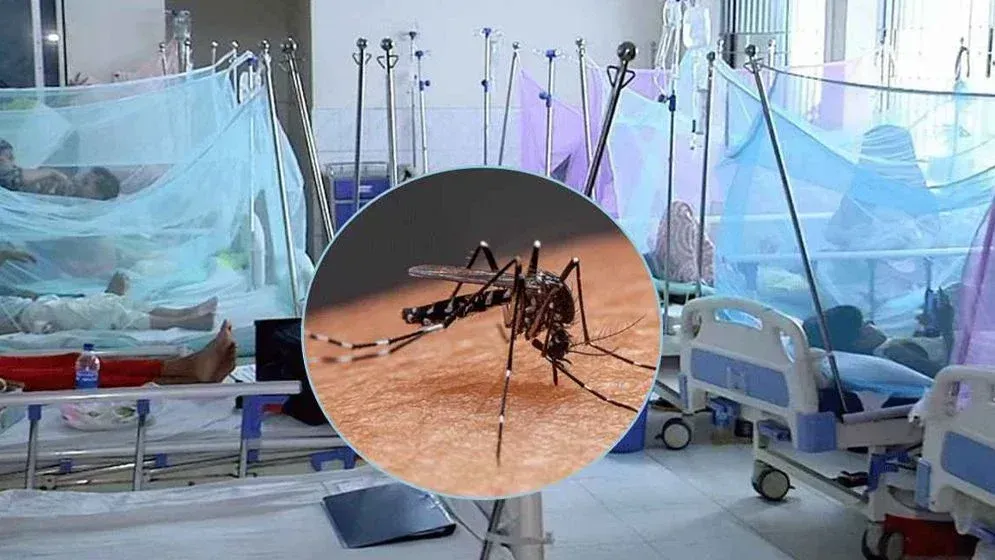
Bangladesh has crossed a grim milestone in its ongoing public health crisis as total hospital admissions due to dengue fever surpassed the 100,000 mark. According to the latest data released on Monday, 12 October, by the Health Emergency Operation Centre and Control Room under the Directorate General of Health Services (DGHS), four more patients succumbed to the mosquito-borne viral disease over the preceding 24 hours, taking the national death toll for the year to 307.
During the same period, hospitals across the country admitted 2,167 new dengue patients, bringing total cumulative hospitalisations to 101,442. Demographic analysis of the fatalities reveals a near-equal impact across genders, with women accounting for 51.3% of the reported deaths and men making up the remaining 48.7%.
The epidemiological trajectory of the outbreak highlights a dramatic surge during the latter half of the year. The early months saw minimal activity, with two fatalities recorded in both January and February, zero deaths in March and April, one in May, and 13 in June. However, as the monsoon season intensified, transmission escalated sharply. Monthly casualties rose to 36 in July and 43 in August, before spiking to a alarming 148 deaths in September alone. October continues to register high mortality, with 62 deaths recorded within its first twelve days, including a single-day peak of 10 fatalities on 6 October.
Admission statistics reflect a similar exponential growth pattern. The year began with relatively low monthly admissions: 1,081 in January, 409 in February, 353 in March, 640 in April, 714 in May, and 2,907 in June. Admissions surged to 9,206 in July and more than doubled to 20,536 in August, peaking at 43,774 in September. October has already recorded 21,822 hospitalisations. Amid the rising caseload, health officials confirmed that 95,331 patients have successfully recovered and been discharged from healthcare facilities nationwide.
Dengue is endemic to Bangladesh, primarily transmitted by the Aedes aegypti mosquito, which breeds in stagnant water accumulated during the monsoon period. Experts attribute the severe resurgence to erratic rainfall patterns, urban density, and inadequate vector-control measures, leaving public hospitals heavily burdened under the strain of continuous admissions.