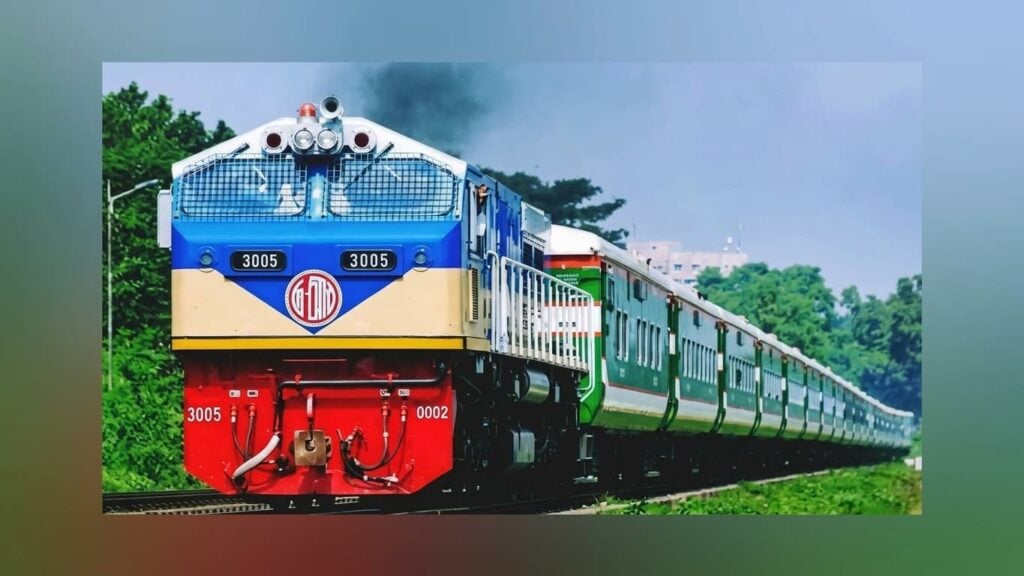
The arrival of 18 new broad-gauge railway coaches from India through the Darshana border has renewed attention on Bangladesh Railway’s capacity, investment priorities and the quality of services provided to passengers. The coaches are the first consignment under an agreement signed with India’s RITES Limited in May 2024 for the import of 200 coaches, intended to strengthen the country’s railway fleet.
The latest delivery, along with 20 locomotives received as a gift from India last year, reflects the continuing role of bilateral cooperation in supporting Bangladesh’s railway infrastructure. These acquisitions are expected to contribute to the expansion of available rolling stock, although the benefits passengers experience will ultimately depend on how effectively the equipment is integrated into the existing railway network.
Each coach has an average import cost of approximately Tk 6 crore. Comparable coaches sourced from Europe or the United States could cost between Tk 12 crore and Tk 20 crore, according to the figures cited, owing partly to higher labour and shipping costs. The geographical proximity of India also offers logistical advantages. The new coaches travelled directly by rail from Punjab, crossing into Bangladesh through Darshana.
The comparatively lower acquisition cost highlights the potential benefits of regional cooperation in railway procurement. However, purchasing new coaches is only one part of improving railway services. Their effective use requires sufficient locomotives, trained personnel, functioning stations, reliable signalling systems and regular maintenance.
Railway Expansion Has Not Guaranteed Better Services
Bangladesh has expanded its railway network considerably in recent years, but the growth in track length has not necessarily translated into a proportionate improvement in passenger and freight transport. This raises a fundamental question about the country’s railway development strategy: should the immediate priority be to construct more lines, or to improve the performance of the infrastructure already in place?
Historical figures illustrate the uneven pace of railway development. In 1947, the railway network in what was then East Pakistan had a total length of 2,603.92 kilometres, much of it inherited from the British colonial period. Over the following 25 years of Pakistani rule, the network grew by 254.78 kilometres.
Between independence in 1971 and 2009, however, the total length of railway lines did not increase. Instead, it declined by 23.70 kilometres. The most substantial expansion in the figures cited occurred between 2009 and 2024, when approximately 765 kilometres were added to the network.
Bangladesh’s railway network now extends to around 3,600 kilometres, according to the figures presented in the original account. This expansion represents a significant investment in transport infrastructure. Yet the central challenge remains ensuring that the network operates efficiently and delivers tangible benefits to passengers and businesses.
Track length alone is an incomplete measure of railway performance. The number of operational trains, the availability of coaches and locomotives, the condition of tracks, the efficiency of signalling and the reliability of station operations all influence the system’s capacity. A railway may cover more ground without necessarily offering more frequent services, shorter journey times or a better travel experience.
Five Priorities for a More Efficient Railway
Rather than placing further expansion at the centre of its immediate agenda, Bangladesh Railway should give greater attention to comprehensive reform, improved operational capacity and passenger satisfaction. Five areas deserve particular consideration.
1. Increase the Availability of Coaches and Locomotives
A shortage of coaches and locomotives limits the number of trains that can operate and reduces the flexibility of railway services during periods of high demand. Increasing the availability of serviceable rolling stock would allow the railway to introduce additional services where needed and improve capacity on busy routes.
Greater capacity could also ease pressure on ticket availability, particularly during holidays and other peak travel periods. When legitimate ticket supply is insufficient to meet demand, passengers become more vulnerable to ticket touting and other irregular practices. Expanding services, strengthening ticketing oversight and improving transparency would help address these problems.
However, additional coaches alone cannot eliminate ticket shortages. Their impact will depend on locomotive availability, operational staffing, maintenance arrangements and the capacity of individual routes.
2. Fill Vacant Posts Without Delay
Staff shortages represent another major obstacle to efficient railway operations. The original account estimates that approximately 43 per cent of authorised posts remain vacant. If accurate, such a substantial gap would place considerable pressure on existing employees and hinder the effective operation of railway facilities.
The consequences may be particularly evident at newly constructed stations that cannot be fully operational without stationmasters and other essential personnel. Investments in buildings and infrastructure deliver limited returns when the staff required to operate them are unavailable.
Bangladesh Railway should therefore assess staffing requirements across its network and prioritise recruitment for operationally critical positions. Stationmasters, signalling personnel, maintenance workers and other frontline employees are essential to keeping services safe and reliable.
Recruitment should be accompanied by appropriate training, clear accountability and regular performance assessments. New infrastructure can only serve its intended purpose when qualified personnel are available to manage it.
3. Repair Existing Tracks and Modernise Signalling
The condition of existing tracks and signalling equipment directly affects train speeds, safety and punctuality. Ageing infrastructure can require speed restrictions and increase the likelihood of service disruptions, while outdated signalling arrangements may constrain the number of trains that can safely use a route.
Regular track inspections, timely repairs and preventive maintenance should form the foundation of railway management. Addressing deteriorating sections before they require extensive reconstruction could also help reduce long-term maintenance costs.
Modern signalling technology offers another opportunity to improve operational efficiency. Depending on the needs and technical characteristics of individual routes, automated signalling, reliable train-detection systems and appropriate digital monitoring could support safer train movements and more effective traffic management.
The introduction of double-track sections on congested routes could also improve capacity by reducing the operational constraints associated with trains travelling in opposite directions on a single line. Such investments should be guided by traffic demand, safety assessments and economic feasibility rather than pursued indiscriminately.
Technology must also be supported by trained staff, reliable communications and proper maintenance. Installing modern equipment without ensuring that it remains operational would do little to resolve the underlying problems.
4. Put Passenger Comfort, Safety and Punctuality First
For most passengers, the quality of a railway service is measured by practical experience: whether the train arrives on time, whether seats are available, whether the carriages are clean and whether the journey feels safe and comfortable.
Bangladesh Railway should establish stronger standards for punctuality, cleanliness, onboard facilities and passenger safety. Toilets and other shared facilities require regular maintenance, while food sold on trains should meet appropriate standards of hygiene and quality.
Passengers also need reliable information when services are delayed or disrupted. Clear announcements, accessible assistance and effective complaint-handling arrangements would make the system more responsive to their needs.
Safety must remain central to every improvement programme. This includes maintaining tracks and rolling stock, ensuring that signalling systems function properly and providing passengers with clear information about emergency procedures.
A passenger-focused approach would also require regular monitoring of service quality. Publishing performance information on punctuality, cancellations, complaints and cleanliness could help identify recurring problems and strengthen accountability.
5. Introduce Modern Technology and Increase Freight Revenue
Digital technology could make railway services easier to use while improving operational oversight. A real-time train-tracking application, for example, would allow passengers to check train locations and receive more accurate arrival estimates. Such a service would be particularly useful when delays occur or connections need to be adjusted.
Reliable digital ticketing and passenger information systems could also improve transparency and help the railway understand demand across different routes. Any new platform should be accessible, regularly updated and supported by dependable operational data.
Freight transport offers another opportunity to strengthen railway finances. Greater use of freight trains connecting ports, industrial centres and major distribution hubs could help move goods more efficiently while reducing pressure on roads.
Rail freight can be particularly useful for transporting large volumes of cargo over longer distances, provided that services are commercially competitive and supported by suitable terminals, loading facilities and dependable schedules. Closer coordination with ports and businesses could help identify routes where rail transport offers clear economic advantages.
Increasing freight activity would not automatically guarantee higher revenue. Pricing, operating costs, infrastructure capacity and customer demand would all need to be considered. Nevertheless, a more effective freight operation could provide an additional source of income and help the railway make better use of its existing assets.
A Shift in Priorities Is Needed
The arrival of new coaches from India is a welcome development for Bangladesh Railway, but the real measure of success will be whether passengers experience more reliable, comfortable and accessible services. Procurement agreements and infrastructure projects should ultimately be judged by their contribution to the performance of the railway system as a whole.
Expanding the network remains necessary where new lines can connect underserved areas, ease congestion or support economic development. The argument is not against railway expansion itself. Rather, it is that further construction should not overshadow the urgent need to improve existing infrastructure and operational efficiency.
A more balanced strategy would combine carefully selected expansion projects with investment in maintenance, staffing, rolling stock, technology and passenger services. It would also require better planning to ensure that new stations and railway lines become fully functional rather than remaining underused assets.
For Bangladesh, the next phase of railway development should be measured not simply by kilometres of track laid, but by the number of people and businesses served, the reliability of train operations and the value delivered for public money.
The guiding principle should be clear: passengers must come first. A safe, punctual, clean, comfortable and technologically modern railway would offer a more meaningful measure of progress than network expansion alone.
Author: Dr Mizanur Rahman