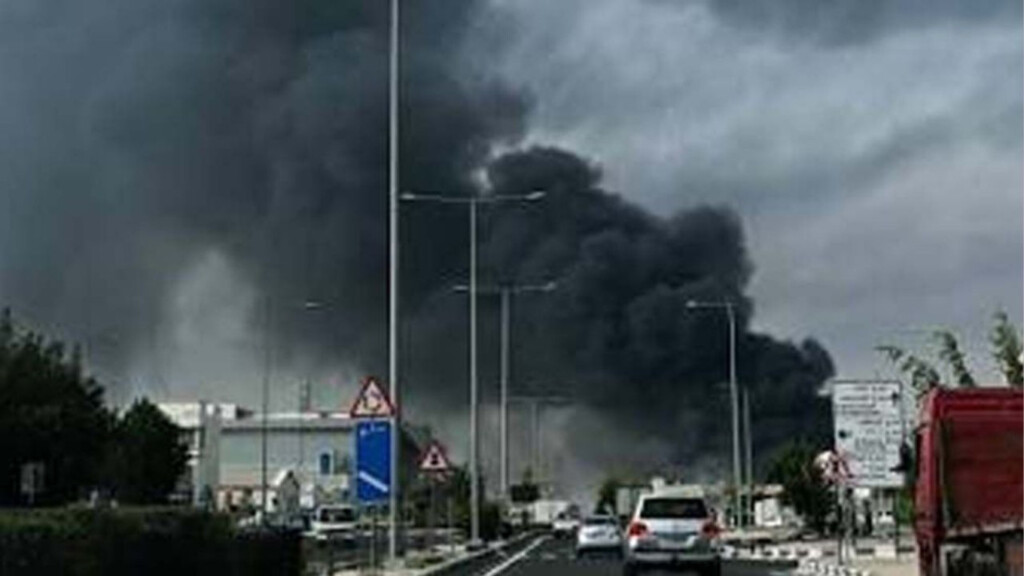
The Middle East has descended into a state of acute kinetic conflict following a series of high-intensity military exchanges. On Saturday, 28 February, a combined operation by United States and Israeli forces targeted key installations within Iran, eliciting an immediate and expansive retaliatory campaign from Tehran. While the “Axis of Resistance” targeted American military outposts across the region, the United Arab Emirates (UAE) has reported significant civilian and collateral casualties, including the tragic death of a Bangladeshi expatriate.
Escalation and Casualties in the Emirates
The fallout from the Iranian counter-strikes has become increasingly clear as local authorities assess the damage. According to reports released on Sunday, 1 March, the death toll within the UAE has risen to three individuals. Among the deceased is one Bangladeshi national, alongside citizens from Pakistan and Nepal. This loss of life underscores the precarious position of the vast expatriate workforce residing in the Gulf during times of regional instability.
Furthermore, medical facilities have confirmed that at least 58 individuals sustained various injuries during the barrage. The UAE Ministry of Defence has been working tirelessly to intercept incoming projectiles, yet the sheer volume of the assault has tested the limits of even the most sophisticated air defence umbrellas.
Analysis of the Aerial Assault
The UAE Ministry of Defence released a detailed breakdown of the ordnance detected within its sovereign airspace. The data suggests a coordinated multi-vector attack involving ballistic missiles, cruise missiles, and unmanned aerial vehicles (UAVs).
Table: Interception Statistics of Iranian Projectiles (UAE Airspace)
| Weapon Category | Detected | Intercepted / Destroyed | Success Rate |
|---|---|---|---|
| Ballistic Missiles | 165 | 152 | 92% |
| Cruise Missiles | 2 | 2 | 100% |
| Attack Drones (UAVs) | 541 | 506 | 93.5% |
A Region on the Brink
The Iranian response was specifically calibrated to target US military infrastructure embedded within the Gulf Cooperation Council (GCC) nations. However, the saturation of the skies with over 500 drones and nearly 200 missiles has led to inevitable “leaks” in the defensive perimeter.
While the UAE’s missile defence systems—including the US-made THAAD and Patriot batteries—achieved a high interception rate, the remaining projectiles have caused substantial structural damage and ignited fires in populated areas. For the Bangladeshi community in the UAE, this event has sparked deep concern, as many workers reside in industrial zones located near strategic logistics hubs.
The international community is now watching closely to see if this exchange marks the beginning of a “total war” or if diplomatic backchannels can de-escalate the situation before further civilian lives are lost.