Wednesday, 15th April 2026
Breaking News :
DMP Busts Major Mobile Smuggling Network in Dhaka Raid Joint Operation Seizes 48,500 Litres Oil “DMCH Clash Inquiry Panel Begins Urgent Investigation” “Illegal Octane Stock Seized in Chattogram Raid” “Dhaka Medical Clash Over Unavailable Emergency Injections” Eight More Flights Cancelled Amid Gulf Disruption Manager Arrested Over 50,000-Litre Fuel Discrepancy Mirza Abbas’s Health Shows Signs of Improvement DMP Busts Major Mobile Smuggling Network in Dhaka Raid Joint Operation Seizes 48,500 Litres Oil “DMCH Clash Inquiry Panel Begins Urgent Investigation” “Illegal Octane Stock Seized in Chattogram Raid” “Dhaka Medical Clash Over Unavailable Emergency Injections” Eight More Flights Cancelled Amid Gulf Disruption Manager Arrested Over 50,000-Litre Fuel Discrepancy Mirza Abbas’s Health Shows Signs of Improvement DMP Busts Major Mobile Smuggling Network in Dhaka Raid Joint Operation Seizes 48,500 Litres Oil “DMCH Clash Inquiry Panel Begins Urgent Investigation” “Illegal Octane Stock Seized in Chattogram Raid” “Dhaka Medical Clash Over Unavailable Emergency Injections” Eight More Flights Cancelled Amid Gulf Disruption Manager Arrested Over 50,000-Litre Fuel Discrepancy Mirza Abbas’s Health Shows Signs of Improvement DMP Busts Major Mobile Smuggling Network in Dhaka Raid Joint Operation Seizes 48,500 Litres Oil “DMCH Clash Inquiry Panel Begins Urgent Investigation” “Illegal Octane Stock Seized in Chattogram Raid” “Dhaka Medical Clash Over Unavailable Emergency Injections” Eight More Flights Cancelled Amid Gulf Disruption Manager Arrested Over 50,000-Litre Fuel Discrepancy Mirza Abbas’s Health Shows Signs of Improvement DMP Busts Major Mobile Smuggling Network in Dhaka Raid Joint Operation Seizes 48,500 Litres Oil “DMCH Clash Inquiry Panel Begins Urgent Investigation” “Illegal Octane Stock Seized in Chattogram Raid” “Dhaka Medical Clash Over Unavailable Emergency Injections” Eight More Flights Cancelled Amid Gulf Disruption Manager Arrested Over 50,000-Litre Fuel Discrepancy Mirza Abbas’s Health Shows Signs of Improvement DMP Busts Major Mobile Smuggling Network in Dhaka Raid Joint Operation Seizes 48,500 Litres Oil “DMCH Clash Inquiry Panel Begins Urgent Investigation” “Illegal Octane Stock Seized in Chattogram Raid” “Dhaka Medical Clash Over Unavailable Emergency Injections” Eight More Flights Cancelled Amid Gulf Disruption Manager Arrested Over 50,000-Litre Fuel Discrepancy Mirza Abbas’s Health Shows Signs of Improvement DMP Busts Major Mobile Smuggling Network in Dhaka Raid Joint Operation Seizes 48,500 Litres Oil “DMCH Clash Inquiry Panel Begins Urgent Investigation” “Illegal Octane Stock Seized in Chattogram Raid” “Dhaka Medical Clash Over Unavailable Emergency Injections” Eight More Flights Cancelled Amid Gulf Disruption Manager Arrested Over 50,000-Litre Fuel Discrepancy Mirza Abbas’s Health Shows Signs of Improvement DMP Busts Major Mobile Smuggling Network in Dhaka Raid Joint Operation Seizes 48,500 Litres Oil “DMCH Clash Inquiry Panel Begins Urgent Investigation” “Illegal Octane Stock Seized in Chattogram Raid” “Dhaka Medical Clash Over Unavailable Emergency Injections” Eight More Flights Cancelled Amid Gulf Disruption Manager Arrested Over 50,000-Litre Fuel Discrepancy Mirza Abbas’s Health Shows Signs of Improvement DMP Busts Major Mobile Smuggling Network in Dhaka Raid Joint Operation Seizes 48,500 Litres Oil “DMCH Clash Inquiry Panel Begins Urgent Investigation” “Illegal Octane Stock Seized in Chattogram Raid” “Dhaka Medical Clash Over Unavailable Emergency Injections” Eight More Flights Cancelled Amid Gulf Disruption Manager Arrested Over 50,000-Litre Fuel Discrepancy Mirza Abbas’s Health Shows Signs of Improvement DMP Busts Major Mobile Smuggling Network in Dhaka Raid Joint Operation Seizes 48,500 Litres Oil “DMCH Clash Inquiry Panel Begins Urgent Investigation” “Illegal Octane Stock Seized in Chattogram Raid” “Dhaka Medical Clash Over Unavailable Emergency Injections” Eight More Flights Cancelled Amid Gulf Disruption Manager Arrested Over 50,000-Litre Fuel Discrepancy Mirza Abbas’s Health Shows Signs of Improvement

Bangladesh

Banks Face Penalties For Refusing Damaged Currency Exchange

Khabor Wala Desk

Published: 12th April 2026, 5:14 PM

Banks Face Penalties For Refusing Damaged Currency Exchange

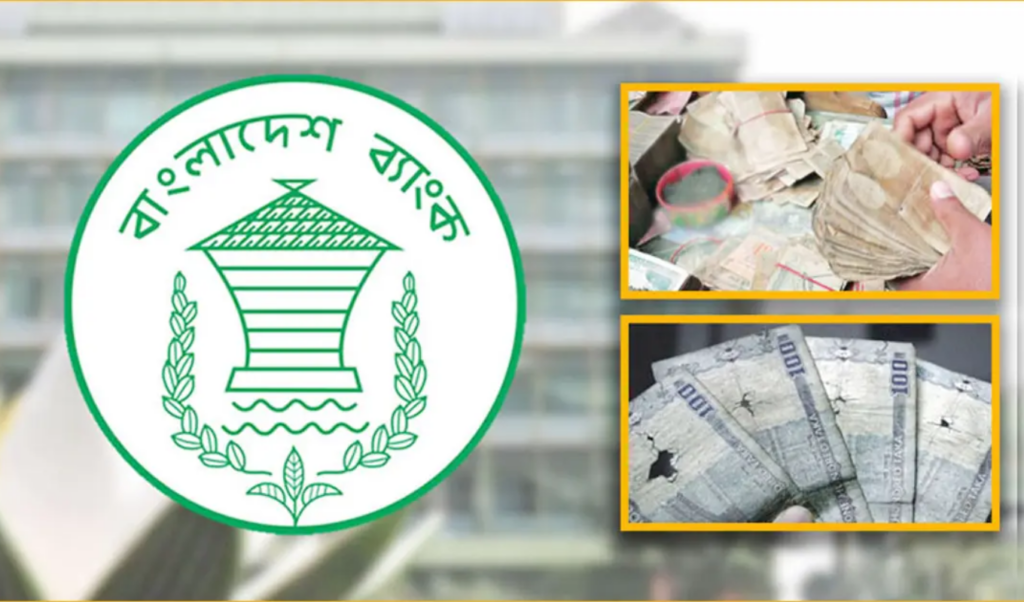
The Bangladesh Bank has issued a firm directive making it mandatory for all scheduled banks across the country to accept and exchange torn, mutilated, and soiled banknotes, warning that failure to comply will result in strict punitive action.

The instruction, released on Sunday (12 April), comes amid growing public complaints over the increasing circulation of damaged currency notes, which has been disrupting routine cash transactions and causing inconvenience to consumers and businesses alike. Despite existing guidelines, the central bank observed that many financial institutions have been reluctant to accept such notes, thereby undermining confidence in the cash-based economy.

Mandatory Compliance for All Bank Branches

Under the new directive, all branches of scheduled banks are required to provide uninterrupted services for accepting damaged notes and replacing them with fresh or reissuable currency. The move is part of the broader implementation of the central bank’s “Clean Note Policy”, aimed at ensuring the smooth functioning of cash transactions nationwide.

The directive explicitly states that banks must adhere to established rules when handling defective notes and ensure that customers are not turned away. It emphasises that this is not an optional service but a statutory obligation.

Key Instructions Issued by Bangladesh Bank

Requirement Details
Acceptance of damaged notes All branches must accept torn, soiled, and defective notes
Exchange service Customers must be provided with fresh or reusable notes
Special counters Dedicated counters should handle exchange transactions
Focus denominations Priority on Tk 5, Tk 10, Tk 20, and Tk 50 notes
Enforcement Legal action for non-compliance

Focus on Lower Denominations

Particular emphasis has been placed on lower denomination notes—Tk 5, Tk 10, Tk 20, and Tk 50—which are widely used in daily transactions and are more prone to wear and tear. Banks have been instructed to regularly collect such notes and facilitate their exchange through designated counters.

The central bank noted that the continued presence of damaged notes in circulation not only hampers daily commerce but also erodes public trust in the financial system. By ensuring timely replacement, authorities aim to improve the overall quality of currency in use.

Legal Backing and Enforcement Measures

The directive has been issued under Section 45 of the Bank Companies Act, 1991, granting the central bank authority to enforce compliance among financial institutions. Bangladesh Bank has made it clear that any negligence, reluctance, or failure to provide the mandated services will invite legal consequences.

Officials have described the matter as “extremely important”, signalling a zero-tolerance approach towards non-compliance. Banks are expected to take immediate steps to ensure full implementation of the directive across all branches.

Public Convenience and Economic Implications

Economists and banking experts have welcomed the move, noting that efficient currency management is essential for maintaining liquidity and ensuring seamless cash flow in an economy where a significant portion of transactions still rely on physical money.

The directive is also seen as a measure to enhance customer service standards within the banking sector. By obligating banks to accept damaged notes without hesitation, the central bank aims to eliminate arbitrary refusals that have long frustrated customers.

Looking Ahead

The success of this initiative will largely depend on effective monitoring and enforcement. Bangladesh Bank is expected to closely observe compliance levels and may conduct inspections to ensure that banks are adhering to the rules.

If implemented properly, the directive could significantly improve the quality of circulating currency, restore public confidence, and reduce transactional friction in everyday economic activities. However, sustained oversight will be crucial to ensure that the policy translates into tangible benefits for the public.

Comments