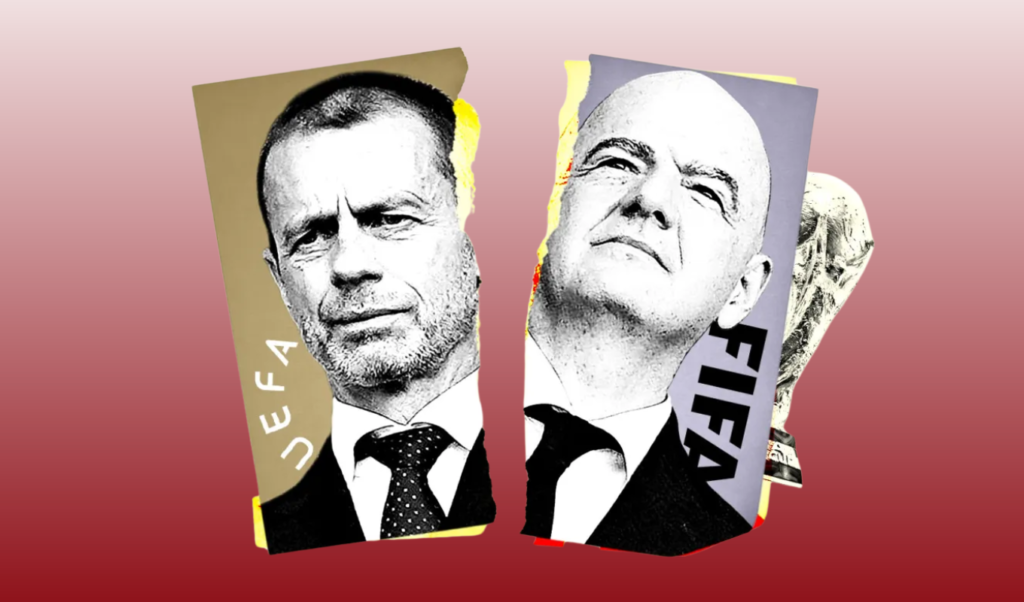
A fierce governance war has broken out at the pinnacle of global football, placing FIFA and UEFA at loggerheads over a radical commercial scheme to privatise a stake in World Cup operations.
Following the staging of the expanded 48-team World Cup, the global governing body, FIFA, unveiled plans to establish a 20-million-dollar subsidiary named “FIFA Forward Enterprise” to manage the commercial rights of its flagship tournament. Under the proposal, FIFA intends to sell up to a 20 per cent minority stake in the new corporate venture to private investors, aiming to raise roughly 4.2 billion USD (approximately 3.2 billion GBP) in capital. Investment banking giant JPMorgan has already been retained to scout potential financial backers.
FIFA President Gianni Infantino hailed the initiative as a historic breakthrough for global football development, insisting that every penny raised would be reinvested into the game. Under the proposed distribution model, each of FIFA’s 211 member associations would receive up to 20 million USD in one-off grants designated for infrastructure improvements, women’s football, and grassroots development. That funding allocation is projected to rise to 24 million USD per member state between 2035 and 2038. Infantino argued the move guarantees equitable wealth distribution and provides vital support to smaller footballing nations.
However, European governing body UEFA has strongly rejected the rationale, arguing that commercialising governance breaches fundamental boundaries. In a sharp public statement, UEFA declared that football’s heritage and administration are not commodities to be bought or sold, stressing that no sports body holds the right to auction off the World Cup’s identity. European football authorities warned that allowing external financial entities to dictate terms threatens the integrity of the sport.
Tensions have escalated to the point that UEFA is convening an emergency meeting involving all 55 member nations this week. Reports indicate that several European associations are prepared to consider boycotting future World Cups to block the proposal. A similar threat forced FIFA to abandon its controversial biennial World Cup plan in 2021, and European administrators appear ready to leverage the same pressure once again.
The dispute has drawn political reaction in the United Kingdom, where Prime Minister Andy Burnham publicly condemned FIFA’s strategy. Writing on social media, the Prime Minister stated that the World Cup represents the world’s greatest sporting competition and is not a tradable asset, warning that selling shares in its operational structure equates to selling off football itself.
While FIFA has historically generated billions through broadcasting rights, sponsorships, and ticketing, bringing private equity investors directly into its core business structure marks an unprecedented shift. Fans and analysts remain sharply divided—some view the capital influx as an essential boost for developing football markets, whilst others fear that investor profit margins will eventually override the sporting and cultural values of the beautiful game.