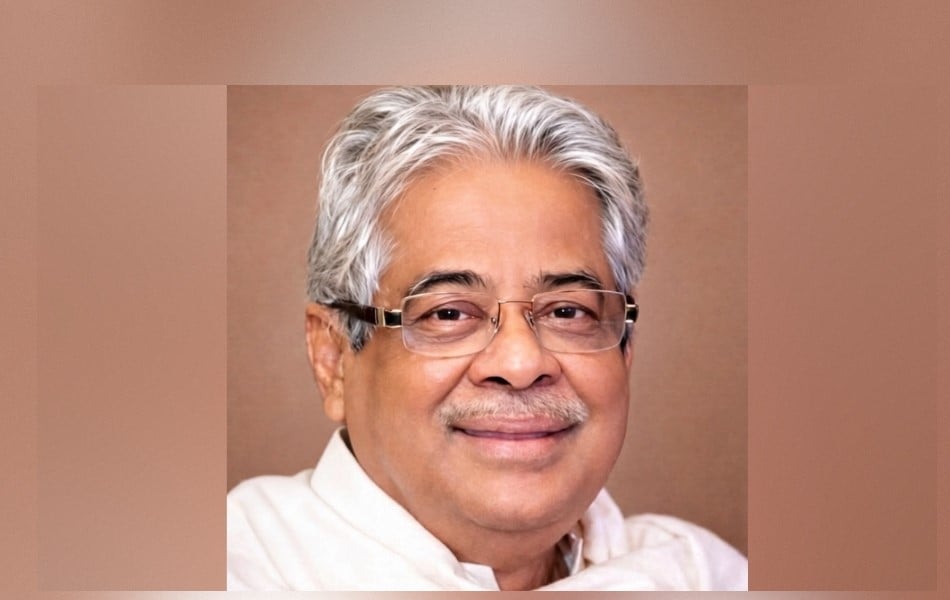
Some songs transcend entertainment and become part of a nation’s collective memory. Some lyricists do more than arrange words; they give voice to love, patriotism, longing, dreams and a deep attachment to one’s roots. Gazi Mazharul Anwar was one such creative force, leaving an enduring mark on Bangladeshi music through thousands of songs written over a career spanning several decades.
Born on 22 February 1943 in Taleshwar village of Daudkandi upazila in Cumilla, Anwar went on to establish himself as one of Bangladesh’s most prominent lyricists. His creative work, however, extended well beyond songwriting. He also worked as a composer, filmmaker, producer, story writer, screenwriter and dialogue writer, making him one of the more versatile figures in the country’s cultural landscape.
Patriotism and the spirit of the Liberation War were central to much of his songwriting. His lyrics frequently explored love for Bangladesh, its soil and its people, while capturing the emotional bond between individuals and their homeland.
One of his best-known lines, “Ekbar jete de na amar chhoto sonar gay”—an emotional plea to return to one’s little golden village—captures that attachment with remarkable simplicity. The words evoke rural Bengal, childhood memories and the longing for a familiar homeland left behind.
His repertoire also includes widely remembered songs such as “Joy Bangla Banglar Joy” and “Akash-er Hate Achhe Ek Rash Neel”. Several of his songs have remained popular across generations, while multiple works featured in the list of the greatest Bangla songs selected through a BBC Bangla survey.
Anwar’s professional career as a lyricist began in 1964, when he started writing songs for Radio Pakistan. He was also associated with Bangladesh Television from its early days, contributing songs and plays. His connection with the film industry began in 1967, when he wrote songs for the film ‘Ayna O Oboshishto’.
Cinema subsequently became an important part of his creative career. Alongside writing songs, he took on responsibilities in storytelling, screenplay writing, dialogue, production and direction. His directorial debut came with the film ‘Nantu Ghatak’, released in 1982.
The scale of his songwriting was remarkable. During his long career, he was credited with writing more than 20,000 songs. Singers from successive generations of Bangladesh’s music industry performed his work, helping his lyrics reach audiences across different periods and musical tastes.
His songs covered a wide range of subjects. Love and separation featured prominently, but so did nature, humanity, social life, modernity, patriotism and the Liberation War. This breadth allowed his writing to remain relevant to audiences with very different experiences.
A defining quality of his lyrics was their accessible language. He could take ordinary words and everyday emotions and shape them into lines with lasting emotional appeal. His songs often carried a narrative quality, with their subjects ranging from lovers and ordinary working people to freedom fighters and Bangladesh itself.
His contribution to the film industry was equally significant. Through his work as a director and producer, he expanded his role within Bangladesh’s cultural and cinematic spheres. His achievements were recognised with numerous honours, including the Bangladesh Chalachitra Sangbadik Samity Award. Among his major state recognitions were the Ekushey Padak in 2002 and the Independence Award in 2021.
His artistic legacy has also continued through his family. His daughter, Dithi Anwar, has performed many of her father’s songs at cultural events and television programmes, helping introduce his work to newer audiences.
Gazi Mazharul Anwar died on 4 September 2022, leaving behind one of the largest bodies of work associated with a Bangladeshi lyricist. His death marked the loss of a figure whose career had bridged radio, television, cinema and popular music across several generations.
Yet his creative presence has not disappeared. His songs continue to be heard, performed and remembered. Their subjects remain familiar because the emotions at their centre—love, longing, patriotism, memory and attachment to home—are not confined to any particular generation.
For many listeners, his lyrics provide a way of expressing feelings that are difficult to put into ordinary words. His songs about Bangladesh, in particular, have become part of the country’s wider cultural memory.
Gazi Mazharul Anwar may no longer be here to write new songs, but the vast body of work he left behind continues to speak. Through those words, generations of listeners can still find echoes of their own experiences, their love for their country and their connection to their roots.
His legacy therefore rests not only on the sheer number of songs he wrote, but also on the lasting place those songs have secured in Bangladeshi music and popular culture.
He remains remembered as a lyricist whose words gave enduring expression to the emotions of a people—and whose songs continue to carry his voice long after his passing.