Published: 10 Dec 2025, 07:55 am
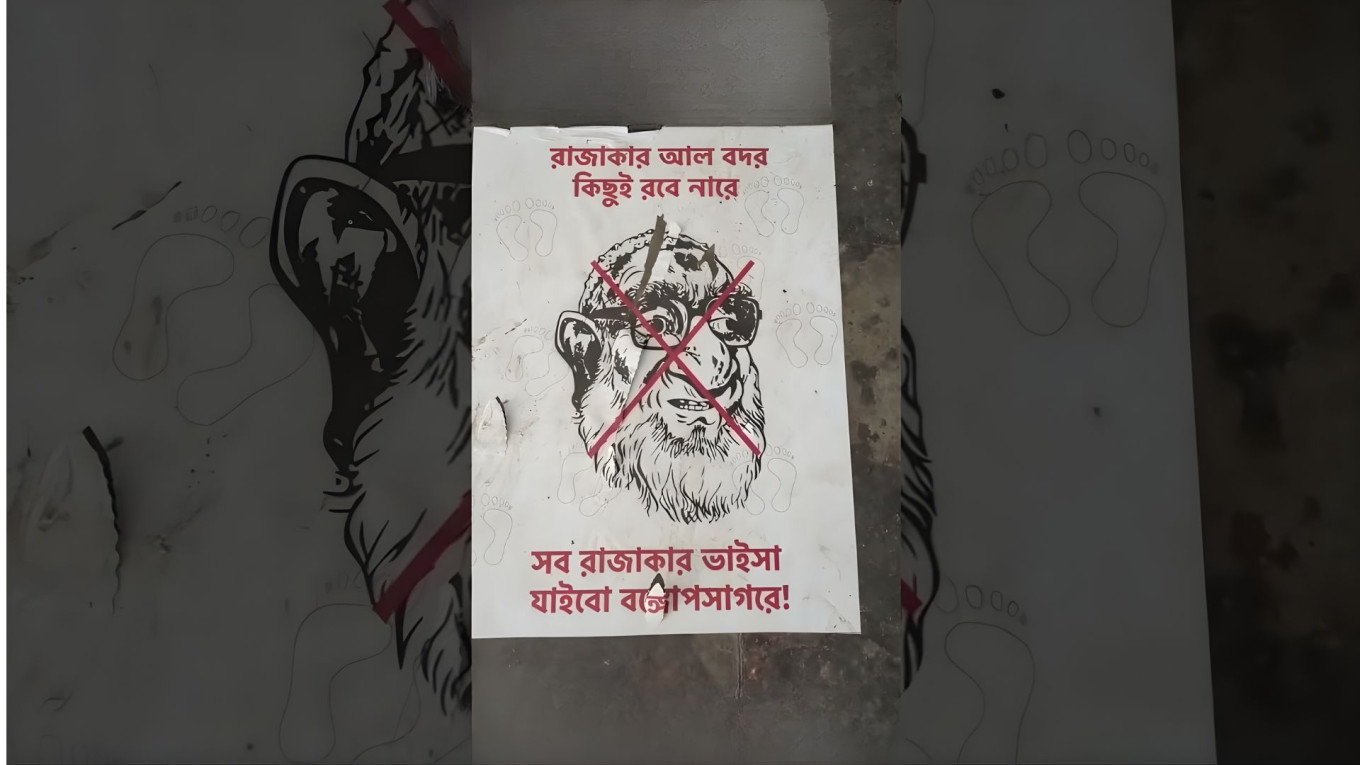
A recent incident on the campus of the University of Dhaka has reignited old debates and stirred intense discussion among students and educators alike. A video circulating widely on social media shows a portrait of the controversial political figure Ghulam Azam hung in such a manner at the entrance of a residential hall that students must step on the image to enter. The footage, once posted, quickly went viral, prompting heated exchanges about ethics, protest culture and the boundaries of symbolic expression in academic spaces.
Ghulam Azam remains one of the most contentious figures in the history of Bangladesh. Accused of crimes against humanity during the Liberation War of 1971 and known as a leading figure of the Jamaat-e-Islami, he has long been considered a symbol of wartime atrocities by many Bangladeshis. From this perspective, a section of students view stepping on his portrait as an act of symbolic resistance—an expression of generational accountability and a stance aligned with the values of the Liberation War.
However, others—both within the student body and among the general public—argue that regardless of how divisive a historical figure might be, displaying a portrait in a way that encourages physical degradation crosses the boundary of decency. Critics suggest that such behaviour undermines the dignity of educational institutions and promotes a culture of humiliation rather than constructive political engagement.
Within hours of the video gaining traction online, various student groups, individual students and several members of the teaching staff began expressing their views. While some student activists hailed the act as a powerful, symbolic protest, a number of teachers cautioned that academic environments should uphold ethical standards and encourage more educational and dignified forms of political expression.
Below is a consolidated summary of the different categories of reactions:
| Group | Type of Response | Brief Summary |
|---|---|---|
| General Students | Support | Considered a symbolic protest against a figure associated with war crimes |
| Teachers | Objection | Said such acts diminish academic decorum and foster a culture of disrespect |
| Politically Active Students | Mixed | Some supported the protest; others raised concerns about moral implications |
| General Social Media Users | Mostly Critical | Many described the act as distasteful and unnecessary |
The video garnered hundreds of thousands of views on platforms such as YouTube and Facebook. Opinions were sharply divided: some users described the act as emotionally satisfying or a justified reflection of national sentiment towards wartime collaborators. Others, however, condemned it as an uncivilised approach that encourages hatred rather than informed historical understanding.
Several commenters stressed that a nation committed to upholding the ideals of freedom and justice should demonstrate zero tolerance towards individuals associated with war crimes. In contrast, critics argued that civilised societies should oppose degrading gestures, advocating instead for teaching history through evidence, academic inquiry and informed debate.
As of this report, the University of Dhaka has not released an official statement. However, sources indicate that the hall administration is looking into the matter. Given that symbolic acts can quickly escalate tensions on campus, the authorities are believed to be proceeding cautiously.
The incident underscores the enduring impact of Bangladesh’s political and historical legacy on contemporary society. Issues related to the Liberation War, wartime atrocities, and their ongoing social resonance remain deeply embedded in the national consciousness. As a result, even small acts of symbolic dissent often escalate into nationwide debates.
Furthermore, the rapid amplification provided by social media means that events within academic institutions are no longer confined to campus boundaries. Protests—whether principled or problematic—can instantly become the subject of national conversation, influencing public discourse and shaping perceptions of youth politics and academic culture.

> Sabrina Carpenter Unveils Mischievous ‘House Tour’ Teaser
> Becky G Ends Engagement Amid Cheating Scandal
> Dolly Sayantani Revives Classic Bengali Hit
> Tailored Insurance for Working Women and Homemakers
> Farhan Breaks Records, Eyes Babar Azam
> Bangladesh’s Asian Cup Bid: Courage Amid Defeat
> Court Jails Singer Jahid Antu Over Harassment Case
> Drone Debris Kills Bangladeshi Worker in Fujairah
> Iraq Secure Historic World Cup Return After Forty Years
> Seven Bangladeshis Arrested in Major Terror Plot in India
> Housewife’s body found at parental home, husband detained
> Travel Insurance Growth Lags in Bangladesh


Classic Bengali film songs are experiencing a modern revival, with contemporary artists blending bel...

In Bangladesh, women face diverse financial realities, prompting insurers to develop specialised pro...
Bangladesh’s campaign in the 2027 Asian Cup qualifiers concluded with mixed emotions—commendable per...

Dhaka Bank PLC and Ascent Health Limited have signed a landmark Corporate Health Agreement, formalis...
SBAC Bank PLC has ushered in its fourteenth year of operations, marking the milestone with a “Meet t...

BRAC Bank has reported a robust year for its corporate internet banking platform, CORPnet, which pro...
A minor fire broke out aboard a luxury passenger vessel anchored on the Kirtankhola River in Barisha...
A tense and emotionally charged incident in Madaripur has drawn widespread local attention after a y...
A legal notice has been issued to Member of Parliament (MP) Mufi Amir Hamza, demanding that he publi...
Police in Narayanganj have arrested seven individuals during a special overnight operation on suspic...

Rail communication between Sylhet and the rest of Bangladesh has been completely suspended after a f...

A Dhaka court has ordered the imprisonment of young singer Abu Zahid, also known as Jahid Antu, in c...


Availabe for iphone & ipads

Available in google play
 বাংলা
বাংলা