Khaborwala Online Desk
Published: 27 Feb 2026, 11:20 am
_1772169571.jpg)
The abrupt change at the helm of Bangladesh Bank has generated renewed debate across Bangladesh’s financial sector and policy circles. The government has cancelled the appointment of former Governor Ahsan H. Mansur and named Md Mostakurr Rahman as his successor for a four-year term. While leadership transitions are not uncommon, the manner and context of this decision have prompted questions about institutional decorum and administrative transparency.
Dr Mansur’s contract had been due to run until August 2028. However, an official notification annulled the remainder of his tenure. On the very day of his removal, he told journalists at a press conference, “It would take me two seconds to resign.” Despite that statement, he was not afforded the opportunity to step down voluntarily; instead, the authorities opted to revoke his appointment administratively. The swift announcement of the new governor’s name has led many observers to conclude that the decision had been finalised well in advance.
While a newly installed government may legitimately restructure key positions to advance its policy agenda, critics argue that the departure of a central bank governor—an office closely associated with financial stability and credibility—ought to be handled with visible respect and procedural clarity. Reports that Dr Mansur left amid protests from a section of bank officials and employees have added to the unease, particularly at a time when the country is navigating a democratic transition.
Dr Mansur assumed office during a period of post-uprising economic strain. The banking sector was grappling with high levels of non-performing loans, exchange-rate distortions and pressure on foreign exchange reserves. His tenure was marked by several reform-oriented measures, some of which were controversial but widely regarded by economists as necessary.
A summary of his principal initiatives is presented below:
| Reform Initiative | Objective | Potential Impact |
|---|---|---|
| Introduction of market-based dollar exchange rate | Reduce artificial controls | Greater transparency in foreign transactions |
| Efforts to rebuild foreign reserves | Stabilise import payments and debt servicing | Restore international confidence |
| Disclosure of actual non-performing loan figures | Expose hidden financial risks | Strengthen accountability in banking |
| Merger of weaker banks | Reduce systemic vulnerabilities | Improve sectoral stability |
| Amendments to Bank Company Act | Enhance regulatory authority | Bolster institutional capacity |
These measures reportedly unsettled influential banking and industrial groups. Analysts have therefore questioned whether resistance to ongoing reforms may have contributed to pressure surrounding his tenure. If not, the circumstances of his departure—particularly the reported discourtesy shown by certain staff members—remain difficult to explain.
The appointment of Md Mostakurr Rahman, who comes from a business background, marks a significant development. For the first time, a businessman has been elevated to the central bank’s top post. Supporters contend that practical, private-sector experience could enrich policy formulation. Others, however, have raised concerns about potential conflicts of interest and the importance of maintaining regulatory independence.
The credibility of a central bank rests not only on competence but also on perceived impartiality. How the new governor balances business acumen with institutional neutrality will be closely observed.
Bangladesh’s economy continues to face multiple pressures: elevated inflation, external debt obligations, fluctuations in export earnings and liquidity constraints within the banking system. In such a context, continuity of reform and clarity of policy direction are essential.
A change in leadership may be administratively routine, yet the process by which it is conducted carries symbolic and practical weight. If transitions appear abrupt or opaque, institutional confidence can be weakened. The immediate challenge for the new governor is therefore twofold: to reassure markets of policy stability and to sustain momentum in much-needed financial reforms.
Ultimately, safeguarding economic stability and preserving trust in the central bank must remain paramount. The expectation across the financial community is that the new leadership will rise above controversy and steer the institution with steadiness, transparency and resolve.

> Court Acquits Arvind Kejriwal in Liquor Policy Case
> A Grand Reunion: Rabian Uttara Hosts Annual Iftar
> Fans File Corruption Complaint Against Asif Mahmud
> Arrest Made in Gazipur Murder of Divorced Woman
> Teen Worker Killed by High-Pressure Air, Suspect Arrested
> Interim Government Increases Project Spending by 80,000 Crore

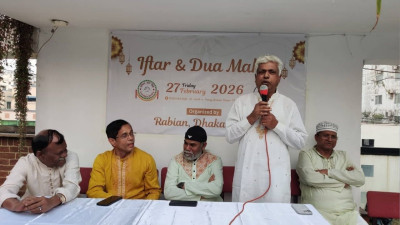
On Friday, 27 February 2026, the Raga Art Café in Uttara was transformed into a hub of nostalgia and...
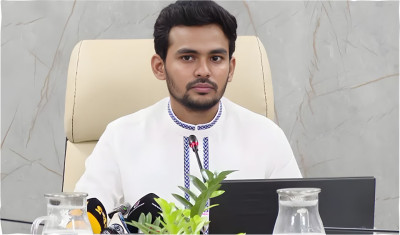
Dhaka – A group of supporters of former cricketer and ex-MP Shakib Al Hasan created a commotion at t...
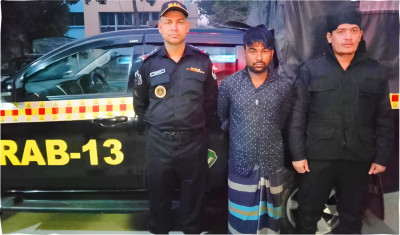
The Rapid Action Battalion (RAB) has apprehended the alleged murderer of a divorced woman in Joydebp...
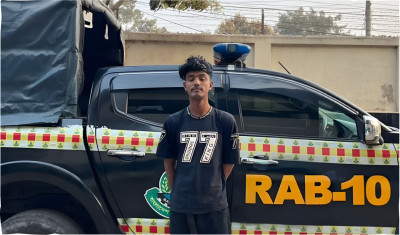
In a shocking incident in Boalmari Upazila, Faridpur District, a teenage worker was fatally injured...
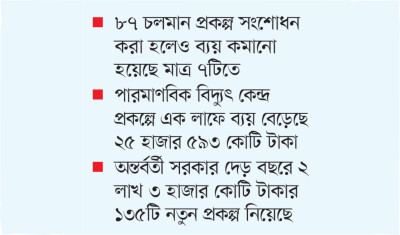
Dr. Muhammad Yunus’s interim government assumed office on 8 August 2024, following the July–August m...

Kushtia-3 (Sadar) MP Amir Hamza has asserted direct control over his constituency’s public hospitals...
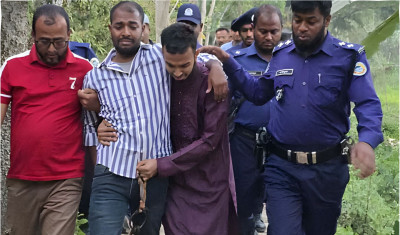
In Jhalokathi’s Nalchiti Upazila, a detained leader of the student wing of a political party was tem...

NARSINGDI — Police have filed a case against nine individuals in connection with the abduction and s...

A passenger bus erupted into flames early Friday morning following a collision with a motorcycle in...

Renowned young Bangladeshi band Nisorg is set to release a fresh original composition that promises...

Prime Minister Tarique Rahman presented the nation’s second-highest civilian honour, the Ekushey Pad...
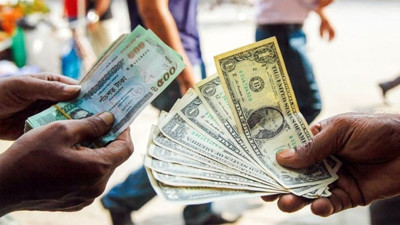
The latest exchange rates of the Bangladeshi Taka (BDT) against major foreign currencies have been r...


Availabe for iphone & ipads

Available in google play
 বাংলা
বাংলা