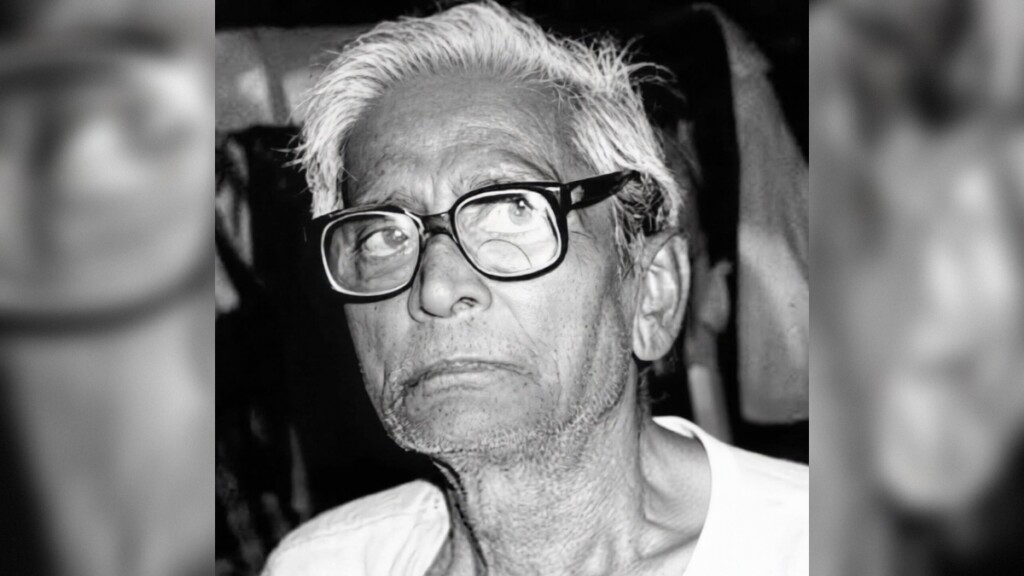
Ravi Niyogi, a revolutionary, remains an unforgettable name in the history of Bengali struggle for independence.
He was born on 29 April 1909 in the village of Gridhanarayanpur in Sherpur district of greater Mymensingh, into a distinguished landlord family. His father, Ramesh Chandra Niyogi, and his mother, Surabala Niyogi, were both associated with the Congress political movement of the time, which sowed the seeds of his political consciousness in early childhood.
After passing his matriculation examination in 1926 from Sherpur Govinda Kumar Peace Memorial High School, he enrolled at Anand Mohan College. However, due to his involvement in political activities, he was expelled and subsequently admitted to Vidyasagar College in Kolkata. It was there that he came into contact with the revolutionary Jugantar group, which marked a turning point in his life.
In 1930, he was arrested for the first time for his active participation in the Congress-led Satyagraha movement. In the same year, following the Chittagong armoury raid, he was arrested again due to his association with the leadership of the Jugantar group in Mymensingh.
In 1931, in connection with an operation by the Jugantar group at the Salda zamindar house, he was sentenced to seven years’ imprisonment. He was initially held in Rajshahi Jail and later transferred to the Cellular Jail in the Andamans as a “dangerous prisoner”, where he endured inhumane torture but never deviated from his ideals.
After his release in 1937, he joined the Communist Party of India and devoted himself entirely to the struggle for the rights of peasants and workers. He was one of the principal organisers of the Provincial Peasants’ Conference in Nalitabari in 1943 and the All-India Peasants’ Conference in Netrokona in 1945.
After the Partition of India, he became an important leader of the East Pakistan Communist Party, and following Bangladesh’s independence, he continued his long struggle as a senior figure in the Communist Party of Bangladesh.
His long and dedicated life of struggle came to an end on 10 May 2002 in Sherpur.
His life teaches us that ideals, courage, and sacrifice are never in vain.
Deep respect and humble tribute to Revolutionary Ravi Niyogi.