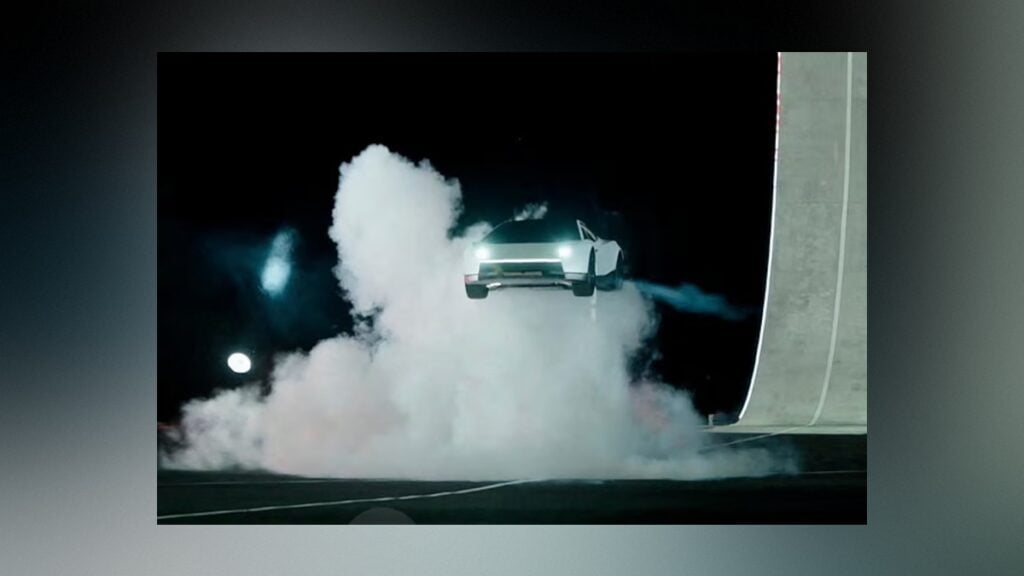
Tesla chief executive Elon Musk has reignited debate about flying cars after showcasing a Roadster capable of rising into the air and performing an aerial manoeuvre. The idea, which once attracted laughter and scepticism, dates back to 2018, when Musk discussed his ambitions during an appearance on popular podcaster Joe Rogan’s programme.
Eight years later, the concept has returned to the spotlight following a demonstration at a SpaceX facility in McGregor, Texas, in the United States, last Thursday. Footage showed a specially designed Tesla Roadster lifting off the ground, briefly remaining airborne, performing a flip and then descending safely.
Musk shared the video on X, formerly known as Twitter, with the caption: “Looks like the future will have flying cars after all.”
The demonstration has attracted renewed attention to Musk’s long-standing ambition to combine electric-car engineering with technology associated with spaceflight. However, questions remain about the vehicle’s capabilities, safety and suitability for everyday use.
An idea first revealed in 2018
Musk first discussed the possibility of developing a flying Roadster during an appearance on The Joe Rogan Experience podcast in 2018. He suggested that the next-generation sports car could incorporate technology developed by SpaceX, including rocket or cold-gas thrusters.
Cold-gas thrusters generate force by releasing compressed gas in a controlled direction. The technology is used in spacecraft to adjust their orientation and movement. Musk proposed that a similar approach could potentially allow the Roadster to lift off the ground or hover briefly, giving a conventional electric supercar capabilities beyond those of ordinary road vehicles.
At the time, the proposal appeared far-fetched to many observers. Combining a high-performance electric car with propulsion technology associated with spacecraft seemed closer to science fiction than a practical automotive development.
Rogan reportedly reacted with amusement when Musk discussed the concept. Nevertheless, the Tesla chief continued to express confidence in the idea in subsequent years.
Musk insisted he was serious
In 2020, Musk revisited the subject during a conversation with Jay Leno, the American television presenter and well-known car enthusiast.
Leno remarked that it could be difficult to tell when Musk was joking and when he was serious about his ambitions. Musk, however, made clear that he was entirely serious about exploring the flying-car concept.
The latest demonstration has brought those earlier remarks back into focus. While the footage appears to show the vehicle rising into the air and performing an aerial manoeuvre, the available information does not establish precisely how the demonstration was conducted or which propulsion and control systems were used.
It is also unclear how long the vehicle could remain airborne, how its flight would be controlled in different conditions or whether the demonstrated capabilities could be incorporated into a production model.
Commercial production planned for 2028
Musk has indicated that the redesigned Roadster is expected to enter commercial production in 2028. However, it remains uncertain whether the version intended for ordinary customers will include the proposed rocket-thruster technology.
Further details about the final design, pricing, safety arrangements and operational limitations have yet to be fully confirmed.
The distinction between a successful demonstration and a commercially viable vehicle is significant. A prototype that can lift off in a controlled environment does not automatically establish that the same technology can be used reliably for everyday transport.
Turning the concept into a practical vehicle would require extensive engineering and testing. Developers would need to address propulsion efficiency, stability, flight control, passenger protection and emergency landing procedures. The risks associated with operating such a vehicle near buildings, pedestrians and other road users would also need careful consideration.
Safety and regulation remain major challenges
The concept of flying cars has attracted engineers and technology companies for decades. Various projects have explored vehicles capable of travelling on roads while also taking to the air. Yet making such vehicles suitable for widespread use involves challenges beyond simply achieving lift-off.
A commercially viable flying car would need dependable controls, robust safety systems and clear procedures for handling mechanical failures. Maintenance requirements, operating costs and the energy needed for take-off and landing would also affect its practicality.
Rocket or cold-gas propulsion presents additional questions. A system that works during a brief demonstration may not necessarily be suitable for frequent journeys or routine urban transport. Engineers would need to establish whether the technology could operate efficiently and safely under a range of real-world conditions.
Regulatory approval would be another important consideration. Depending on the vehicle’s final design and intended use, it could face requirements associated with both road transport and aviation.
Musk’s latest demonstration has renewed interest in his ambitious vision, but it should not yet be regarded as definitive proof that flying cars are ready for everyday use. More information about the technology, further testing and appropriate safety assessments will be necessary before its practical potential can be established.
The proposed 2028 production timeline could mark an important stage in the Roadster’s development. Whether the vehicle eventually reaches customers with genuine flying capabilities, however, remains uncertain. For now, the demonstration offers a glimpse of an unconventional automotive concept rather than evidence that flying cars are ready for public roads.