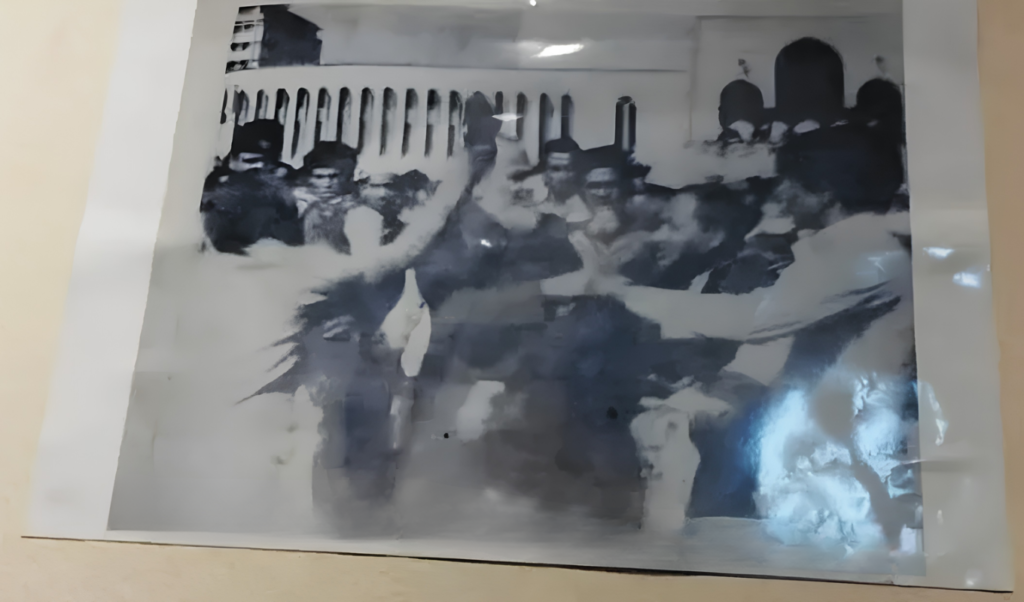
Controversy surrounding the Dhaka University Central Students’ Union (DUCSU) archive escalated on Monday, 14 September, as members of the Bangladesh Chhatra Federation displayed a historical photograph showing Jamaat-e-Islami leader Ghulam Azam being pelted with shoes by an angry crowd. The action followed mounting tension over the recent exhibition of portraits depicting Pakistan’s founder, Muhammad Ali Jinnah, within the same premises.
The newly displayed photograph dates back to the 1980s, capturing a iconic moment near the Baitul Mukarram National Mosque where onlookers hurled footwear at Ghulam Azam to protest his anti-liberation stance during the 1971 war. Activists installed the image inside the archive to counter the earlier inclusion of Jinnah’s portraits, an addition that sparked widespread outrage across the campus community.
The initial dispute began when students and political groups noticed Jinnah’s photographs displayed inside the DUCSU archive, accompanied by allegations that historical photographs of Sheikh Mujibur Rahman and key Liberation War moments had been quietly removed. The development drew sharp criticism from Bangladesh Jatiyatabadi Chhatra Dal (BJCD). Representatives from the student organisation met with the Vice-Chancellor of Dhaka University, issuing a strict ultimatum demanding the immediate removal of Jinnah’s portraits and formal disciplinary measures against those responsible for managing the archive.
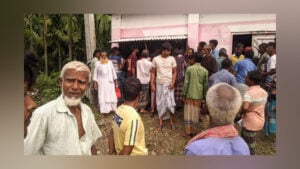
Tensions culminated around 2:00 pm on Monday when Taiyeb Haldar, a former student of Dhaka University, entered the DUCSU archive building. Haldar physically tore down the displayed portraits of Jinnah from the walls before security personnel intervened.
Shortly after Haldar destroyed the portraits, members of the Chhatra Federation arrived to mount the photograph of Ghulam Azam, reshaping the debate over historical representation within university spaces. The series of events has sparked intense discussion among faculty, student bodies, and alumni regarding the preservation of national history and the management guidelines governing historical exhibits at the university.