Khaborwala Online Desk
Published: 29 Mar 2026, 12:41 pm
Iran has introduced a new condition in its ongoing discussions with the United States and Israel to halt regional hostilities. Tehran is now insisting on full recognition of its sovereignty over the strategic Strait of Hormuz, one of the world’s most crucial maritime routes. In addition, Iran plans to impose regular tolls on vessels passing through the strait—a measure projected to generate hundreds of millions of dollars in annual revenue.
The narrow waterway handles nearly one-fifth of global crude oil and liquefied natural gas (LNG) shipments. For decades, Iran has leveraged control over the strait as a potent geopolitical tool. Disruptions in shipping caused by ongoing tensions have already created significant instability in global trade. Now, Tehran aims to convert this strategic chokepoint into a consistent source of economic leverage.
Photographs released by Iran’s semi-official Mehr News Agency show Iranian naval vessels patrolling the strait, signalling Tehran’s intent to assert control.
Dina Esfandiary, Middle East Director at Bloomberg Economics, commented, “Iran has realised just how easily global economic flows can be disrupted. They are now seeking to monetise this leverage as a new source of revenue.”
The proposal has sparked strong concerns in Washington. U.S. Secretary of State Marco Rubio described Iran’s move as “illegal and dangerous,” warning that no nation should be allowed to unilaterally impose fees on international shipping lanes.
Meanwhile, Iran’s new Supreme Leader, Ayatollah Mojtaba Khamenei, stated in his inaugural address that the nation would not forgo any opportunity to block or control passage through the strait. Analysts suggest that if toll collection is implemented, Iran’s monthly revenue could surpass that of the Suez Canal in Egypt.
According to CNN estimates, charging $2 million per large tanker passing through daily could generate over $80 million in monthly revenue.
| Parameter | Estimate |
|---|---|
| Share of global oil & LNG via Hormuz | ~20% |
| Fee per large tanker | $2 million |
| Estimated monthly revenue | >$80 million |
| Potential annual revenue | Several hundred million dollars |
| Comparison | Could exceed Suez Canal monthly income |
International maritime law experts, including James Kraska, emphasise that no legal framework currently allows toll collection in international waters. However, reports suggest some shipping companies may already be paying unofficial fees to ensure safe passage, adding further tension to the crisis.
The world now watches closely as Tehran positions the Strait of Hormuz not only as a geopolitical lever but also as a potential financial windfall.

> Twelve Tonnes of KitKats Stolen
> Trump Hails, Teases Saudi Crown Prince
> Wife Fatally Stabbed by Husband
> Dolonchapa Express Derails at Setabganj
> Bus–Truck Crash Claims Two Lives in Dinajpur
> Iran Hits US Surveillance Aircraft in Saudi
> Insurance Industry Strengthens Through Innovation, Partnerships
> Russia Plans Petrol Export Halt
> Education Minister’s Stern Warning Against Cheating
> Small Deposits Fuel Bangladesh Banking Growth
> Data Centre Insurance Risks Surge Globally
> Gold Prices Surge Again Within Hours

Speaking at a Saudi-backed investment forum in Florida, US President Donald Trump made a series of s...
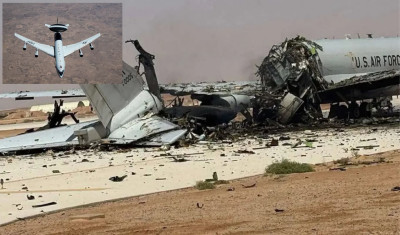
In a dramatic escalation of the ongoing Iran‑US regional confrontation, an Iranian missile and drone...

Large-scale demonstrations swept across the United States on Saturday, as hundreds of thousands of c...

Iraq, a nation long beset by political instability, armed conflict, economic fragility, pervasive co...
Ongoing tensions around the strategic Hormuz Strait are beginning to exert pressure on Bangladesh’s...
_1774755578.jpg)
The proportion of non-performing loans in Bangladesh’s banking sector has risen sharply, reaching 31...

In an era defined by vast marketing budgets, polished branding, and global expansion, it is often as...

A bizarre technical anomaly has reportedly caused calls made to the White House switchboard to displ...

The Chief of Staff of the Israel Defence Forces (IDF), Lieutenant General Eyal Zamir, has issued an...

A breathtaking high-scoring contest in the Pakistan Super League saw Peshawar Zalmi defeat Rawalpind...

The global insurance sector experienced a week of notable activity between 23 and 27 March, marked b...
Bank of America has agreed to pay 72.5 million dollars (approximately £57 million) to settle a propo...


Availabe for iphone & ipads

Available in google play
 বাংলা
বাংলা