khaborwala online desk
Published: 26 Mar 2026, 03:48 pm

A leading international relations scholar has argued that the United States has long underestimated Iran’s capability and willingness to disrupt maritime traffic through the Strait of Hormuz, a critical global energy corridor.
Professor Mehran Kamrava of Georgetown University in Qatar stated in an interview with Al Jazeera that Washington’s failure to properly assess Tehran’s strategic leverage in the narrow waterway is “astonishing”. According to him, Iran’s capacity to either fully close the Strait or selectively restrict navigation has been evident for years, yet has not been taken seriously enough by US policymakers.
He explained that Iran possesses not only the operational capability to obstruct shipping but also the strategic flexibility to impose varying levels of disruption. This ranges from complete closure to a system of controlled passage, allowing only selected vessels to transit under Iranian conditions.
Kamrava further suggested that the current geopolitical climate has strengthened Tehran’s position. Statements attributed to former US President Donald Trump, alleging that the United Arab Emirates, Saudi Arabia and Qatar were supporting American and Israeli military efforts, have, in his view, provided Iran with additional justification to intensify pressure in the region. This, he argued, increases the likelihood of Iran asserting greater control over maritime movement in the Strait.
He also noted that such threats are not new. Since the end of the Iran–Iraq War in the 1980s, Iranian officials have periodically raised the possibility of disrupting traffic through Hormuz as part of their broader strategic deterrence framework. However, Western governments—particularly in Washington—have often treated these warnings as rhetorical rather than operationally credible.
In a further development adding to regional tensions, it has been reported that the United States has presented Iran with a 15-point proposal that includes conditions related to reopening and securing the Strait of Hormuz. Tehran has acknowledged receipt of the proposal but has formally rejected its terms, signalling continued resistance to external pressure.
The Strait of Hormuz remains one of the world’s most vital maritime chokepoints, through which a significant proportion of global oil exports are transported daily. Any disruption in this passage would have immediate and far-reaching consequences for international energy markets, shipping insurance costs, and global economic stability.
| Aspect | Details |
|---|---|
| Strategic location | Strait of Hormuz, key global oil transit route |
| Iran’s capability | Full closure or selective restriction of shipping |
| US assessment | Alleged historical underestimation of Iranian leverage |
| Expert view | Prof. Mehran Kamrava highlights strategic oversight |
| Recent diplomatic move | US presented 15-point proposal to Iran |
| Iran’s response | Proposal acknowledged but firmly rejected |
| Regional context | Heightened tensions involving Gulf states and major powers |
| Potential impact | Global energy supply disruption and market volatility |
Analysts suggest that the situation reflects a deeper structural tension between deterrence and diplomacy in the Gulf region. While the United States continues to rely on diplomatic and economic pressure mechanisms, Iran appears increasingly willing to use geographic leverage as a strategic instrument. This divergence in approaches raises the risk of further escalation in an already volatile geopolitical environment.

> Mbappé: A World Cup Without Neymar is Unthinkable
> Bangladesh Foreign Exchange Rates Update
> Warfaze Lead Independence Concert
> Nachiketa Sings Bhalobasho Composition
> Bangladesh and Five Other Nations’ Ships Safe in Hormuz: Iran Announces
> Four Dead, 41 Missing After Bus Sinks at Daulatdia Ferry Terminal
> Road Deaths Spike During Eid Holiday: Discrepancies Highlighted
> Nabin Fashion Branches Remain Open Amid Controversy
> Fuel Card Rule Enforced for Motorcyclists
> Shepherd Secures $42M to Transform Commercial Insurance
> Flights Suspended Amid Regional Tensions


As the footballing world turns its eyes to Foxborough, Massachusetts, a titanic clash awaits at the...

Iran’s Islamic Revolutionary Guard Corps (IRGC) has claimed that it successfully targeted and downed...
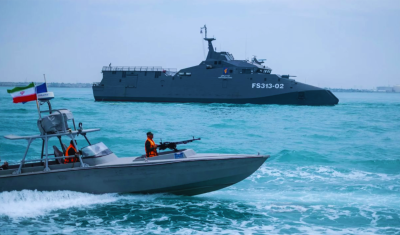
Amid escalating tensions in the Middle East, Iran has announced that it will allow “friendly nations...

Following disappointment at the 1954 World Cup, Italy appointed Alfredo Foni, a manager who had alre...
The United States diplomatic mission in Iraq has issued an urgent directive advising all American ci...

As part of their build-up to the 2026 FIFA World Cup, Argentina are set to play two international fr...

Pakistan has extended warm felicitations to Bangladesh on the occasion of its Independence Day, reaf...

A consortium of high-profile American investors has emerged as the leading bidder to acquire the Raj...
In a message marking the occasion of Bangladesh’s Independence Day, United States Secretary of State...
Western intelligence agencies have reported that the Russian Federation is providing significant ass...
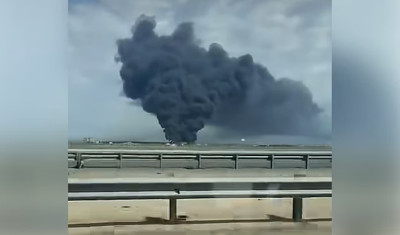
A protracted blaze continues to engulf a fuel storage facility at Kuwait International Airport more...

In celebration of its 25th anniversary, Allianz Malaysia Berhad has launched a year-long campaign gr...


Availabe for iphone & ipads

Available in google play
 বাংলা
বাংলা