More than four lakh farmers in Rajshahi are facing difficulties obtaining fertiliser during the peak Aman cultivation season, with farmers reporting long queues, inadequate supplies and unusually high prices in parts of the retail market.
At Darusha Bazar in Paba upazila on Sunday morning, farmer Sazzad went to a dealer’s shop seeking 20kg of fertiliser. After waiting in a queue for around two hours, he received only 5kg.
He said the long wait was disrupting his agricultural work, while the quantity supplied was far below what he needed for his fields.
More than 100 farmers were reportedly waiting outside the shop of Bangladesh Agricultural Development Corporation (BADC) fertiliser dealer Jibon Kumar at the time. Farmers said DAP and TSP fertiliser were particularly difficult to obtain, forcing many to spend hours at dealers’ outlets.
Farmer Hazrat Ali alleged that fertiliser was also being sold at significantly higher prices in retail shops. Another farmer, Shamsur Rahman, blamed traders for contributing to the shortage and said farmers were bearing the consequences.
Farmers report sharp price differences
According to farmers, the difference between government-set prices and prices in some retail outlets has become substantial.
A 50kg bag of urea, officially priced at Tk1,350, is reportedly being sold for as much as Tk2,600 in some shops. MOP, whose official price is Tk1,000 per bag, is allegedly being sold for around Tk1,300.
The reported price of TSP has risen even more sharply in some places. Although its official price is Tk1,350 per 50kg bag, farmers say they have been asked to pay up to Tk3,000. DAP, officially priced at Tk1,050, is reportedly being sold for between Tk1,800 and Tk2,000.
Farmers say they have little choice but to purchase fertiliser at inflated prices because delaying application during the cultivation season could affect their crops.
Jibon Kumar, the dealer at Darusha Bazar, said the allocation he received was insufficient to meet demand.
“We are not receiving fertiliser according to demand. The allocation is very low,” he said, adding that although he had received an allocation of 20 tonnes, only 66 bags of DAP had arrived and those had already been distributed.
He called for larger allocations to dealers in areas where demand is high.
TSP allocation raises questions
The allocation figures have fuelled concerns among fertiliser dealers and farmers. Rajshahi has around 412,000 farmers, while only 1,045 tonnes of TSP have been allocated for September.
If one 50kg bag were distributed to each farmer, the available TSP would cover only about 20,900 farmers. If the entire allocation were divided equally among all 412,000 farmers, each would receive only about 2.5kg.
On the same basis, each farmer would receive roughly 4kg of MOP and 7kg of DAP from the September allocations.
The figures have prompted the Rajshahi district unit of the Bangladesh Fertiliser Association (BFA) to call for a review of the allocation system.
At a press conference at the organisation’s office in the Railgate area of Rajshahi city on Sunday, district president Md Osman Ali said there was no reason for panic over stocks in government warehouses. He said sufficient fertiliser was available in buffer and BADC warehouses, but the problem lay in the mismatch between actual demand and government allocations.
According to information presented by the association, Rajshahi has around 185,000 hectares of cultivable land. For September, the district has been allocated 1,045 tonnes of TSP, 1,629 tonnes of MOP and 3,015 tonnes of DAP.
The association argued that allocations should reflect farmers’ actual requirements and local cultivation patterns.
Dealers and farmers offer different explanations
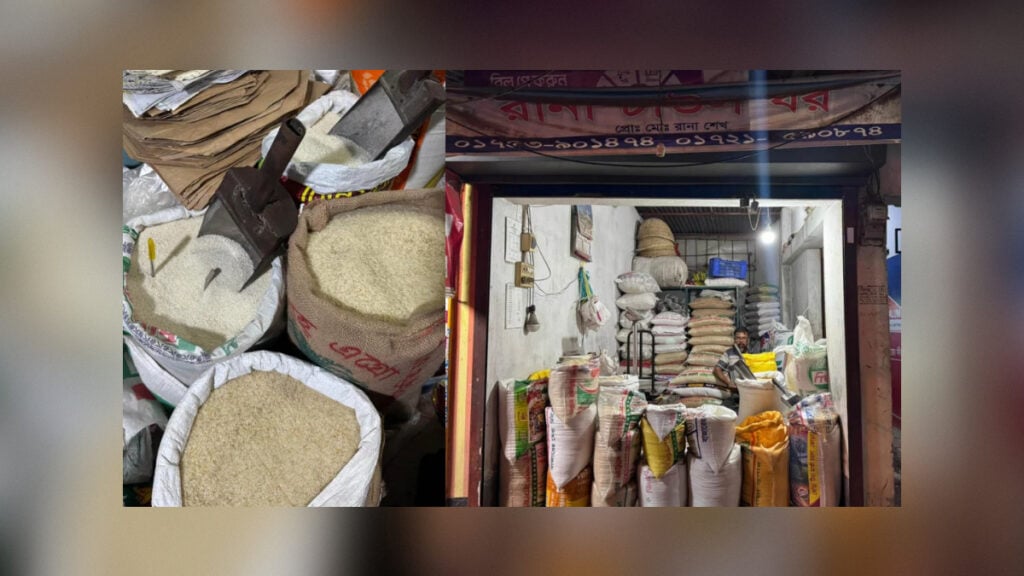
Rajshahi has 216 fertiliser dealers, including 86 dealers under the Bangladesh Chemical Industries Corporation and 130 under BADC. There are also 475 card-holding retail sellers.
Dealers maintain that they collect fertiliser according to their government allocations and sell it at the prescribed prices. They argue that individual irregularities, if found, should not be attributed to the entire dealer network.
Dealers have also raised concerns about advance purchasing. According to them, some farmers are buying fertiliser ahead of their immediate requirements in anticipation of potato and onion cultivation in November. Such advance purchases, they say, are increasing pressure on supplies during the current season.
They also claim that some farmers use more fertiliser than recommended by agricultural officials, increasing demand unnecessarily. Excessive fertiliser application can also affect soil fertility, they said, and farmers should therefore be encouraged to follow scientifically recommended application rates.
The BFA has called for a number of measures, including higher allocations based on actual demand, rapid supplementary allocations to areas facing shortages, separate fertiliser allocations for fish-farming ponds, a review of dealers’ commissions and greater agricultural advice on the scientific use of fertiliser.
Demand for separate allocation for fish farming
The association estimates that fish are cultivated in around 14,000 hectares of ponds across Rajshahi. Dealers say fertiliser requirements for aquaculture should be considered separately when allocations are planned.
They reiterated that they were willing to sell fertiliser at government-set prices. At present, the official price is Tk1,350 per 50kg bag for both urea and TSP, Tk1,050 for DAP and Tk1,000 for MOP.
Farmers, however, say their experience at the market level is different. Some claim they have visited several dealer warehouses without finding fertiliser, while others allege that certain outlets remain closed or that supplies are being kept outside shops.
Farmers have also accused some retailers of deliberately withholding fertiliser and releasing it only to customers willing to pay substantially higher prices. These allegations have contributed to concerns about possible artificial shortages, although the claims have not been independently established.
Agriculture department disputes shortage claims
Rajshahi District Agriculture Extension Department Deputy Director Mostafa Kamal Hossain offered a different assessment of the situation.
He said the total number of farmers in the district should not be equated with the number cultivating Aman rice, as not all farmers are necessarily engaged in the crop during the current season.
According to him, Rajshahi has received a larger fertiliser allocation this year than it did last year. If additional supplies are found to be necessary, the department will submit a fresh demand. He said a higher requirement had already been communicated to the authorities.
Hossain also pointed out that urea is the fertiliser currently required for Aman rice at this stage, while TSP and DAP are not needed in the same quantities at present.
He suggested that some farmers may be purchasing fertiliser in advance for the forthcoming potato and onion season, creating the impression of a shortage.
The contrasting accounts indicate that the immediate problem may involve several factors, including allocation levels, distribution, advance purchasing and retail pricing. For farmers, however, the central concern remains straightforward: obtaining the fertiliser they need, at the authorised price, without spending hours in queues or paying excessive amounts.