Despite these concerns, 89 per cent of households reported improvements in their quality of life as a result of access to electricity. The findings highlight the benefits of electrification while exposing the financial and service-related challenges that continue to affect low-income consumers.
The survey results were presented at a public dialogue held at the Dhaka Reporters’ Unity (DRU) in the capital on Wednesday, 28 October. The discussion focused on electricity affordability, the reliability of supplies, targeted support for low-income consumers and the potential for expanding renewable energy.
Electricity transforms household living standards
The survey covered 556 households, including 334 in Rajshahi City Corporation and 222 in Shailkupa Municipality in Jhenaidah district. It examined changes in electricity consumption and living conditions among marginalised households, including those classified as lifeline consumers.
The findings showed that electricity consumption had increased over the past decade among a substantial proportion of respondents. Around 85 per cent reported higher electricity use, while 77 per cent said their households had increased their use of electrical appliances.
Refrigerator ownership rose from 10 per cent to 40 per cent, while television use increased from 34 per cent to 48 per cent.
The benefits extended beyond household convenience. Some 76 per cent of families reported improvements in the environment for children’s education, while 97 per cent said access to electricity had enhanced their sense of security at night.
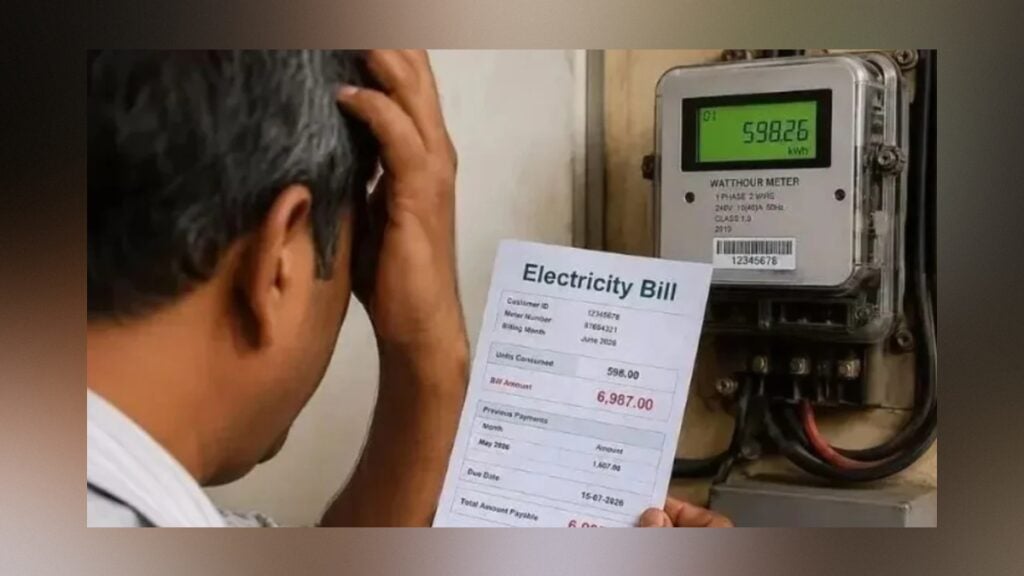
These findings suggest that electricity has become an increasingly important part of everyday life, supporting education, food storage and other domestic activities. However, as households become more dependent on electrical appliances, rising bills can place additional pressure on limited budgets.
For low-income families, the challenge is not simply gaining access to electricity but ensuring that it remains affordable and reliably available.
Rooftop solar could generate 132.28 MWp
The survey also highlighted considerable potential for expanding renewable energy through rooftop solar installations on public buildings.
According to CAB, a combined capacity of 132.28 megawatt-peak (MWp) could be developed across selected government institutions and local authorities. The estimated potential includes 52.50 MWp across 31 public universities and 51.12 MWp across 150 colleges.
Rajshahi City Corporation accounts for a further estimated 24.60 MWp, while Shailkupa Municipality has potential for 4.06 MWp.
CAB suggested that public-private partnerships (PPPs) could help turn this potential into operational solar power projects. Such initiatives could increase electricity generation while creating employment opportunities in installation, maintenance and related services.
Rooftop solar offers a way to utilise existing buildings rather than requiring large areas of additional land. Public institutions, in particular, could provide suitable spaces for installations, subject to technical assessments and project feasibility.
However, turning the identified potential into actual generation would require investment, appropriate policy support, skilled workers and safeguards for investors. Effective implementation would also depend on clear arrangements for financing, maintenance and the long-term operation of the systems.
CAB proposes using electricity data to identify poverty
CAB has proposed analysing household electricity consumption data as a possible way to identify poor families and improve the targeting of government assistance.
In its main presentation, the organisation outlined a 12-point action plan intended to help identify eligible households while reducing unnecessary public expenditure.
CAB claimed that implementing the proposed approach could save expenditure associated with separate projects worth Tk 2,699 crore under the Ministry of Social Welfare and Tk 216 crore under the Ministry of Finance.
The proposal drew caution from participants, who pointed out that electricity consumption alone cannot reliably determine a household’s financial circumstances.
Many people in remote areas and riverine char regions still lack access to electricity. Their absence from electricity consumption records could therefore prevent them from being identified through a system based on usage data.
Shared electricity meters present another difficulty. Several low-income families may use a single meter, making it harder to distinguish individual households and assess their respective financial situations.
A household’s electricity consumption can also vary for reasons unrelated to income. Consequently, low consumption does not necessarily indicate poverty, just as higher consumption does not automatically mean that a household is financially secure.
These limitations suggest that electricity data would need to be assessed alongside other socioeconomic information before being used to determine eligibility for public assistance. Any system would also need safeguards to ensure that vulnerable families without electricity connections are not excluded.
Speakers call for accountability and alternative energy
Addressing the dialogue as the chief guest, BNP acting secretary-general and Prime Minister’s political adviser Ruhul Kabir Rizvi strongly criticised the previous government’s indemnity law relating to the power sector.
He called for accountability across all sectors and stressed the need to strengthen alternative energy sources and attract foreign investment.
His remarks placed emphasis on transparency and oversight in the electricity sector, alongside efforts to diversify energy sources and improve long-term planning.
Alamgir Kabir, general secretary of the Bangladesh Poribesh Andolon (BAPA), called for effective government policies and incentives to promote renewable energy. Supportive regulations and appropriate incentives, he argued, would be important in expanding the sector.
Shihab Uddin, a teacher at Stamford University Bangladesh, highlighted the need to protect investment in solar power projects and develop a skilled workforce capable of supporting their implementation.
The discussion reflected the need to address immediate consumer concerns while developing longer-term solutions to the country’s energy challenges. Expanding renewable energy could contribute to electricity generation, but its success would depend on investment, technical expertise and a supportive policy environment.
Three recommendations submitted to the government
At the end of the dialogue, CAB submitted three key recommendations to the government:
-
Reassess support arrangements for lifeline electricity consumers to ensure that assistance reflects their needs.
-
Improve the reliability of electricity supplies.
-
Expand rooftop solar power generation.
The event was chaired by CAB general secretary Humayun Kabir Bhuiyan, while the main paper was presented by the organisation’s energy adviser, Professor M Shamsul Alam.
The survey presents a mixed picture of Bangladesh’s progress in expanding access to electricity. For many low-income households, electricity has brought tangible improvements in education, domestic life and personal security. Yet the financial burden of bills and concerns over supply reliability continue to limit the benefits.
Addressing these problems will require policies that balance affordability, service quality and the financial sustainability of the electricity sector. Better-targeted assistance could help protect vulnerable consumers, while rooftop solar and other renewable energy initiatives could broaden the country’s generation options.
Any reform, however, will need to account for households that remain outside the electricity network and those whose living arrangements make consumption data difficult to interpret. Ensuring that support reaches the people who need it most will be essential to making the benefits of electrification more equitable.