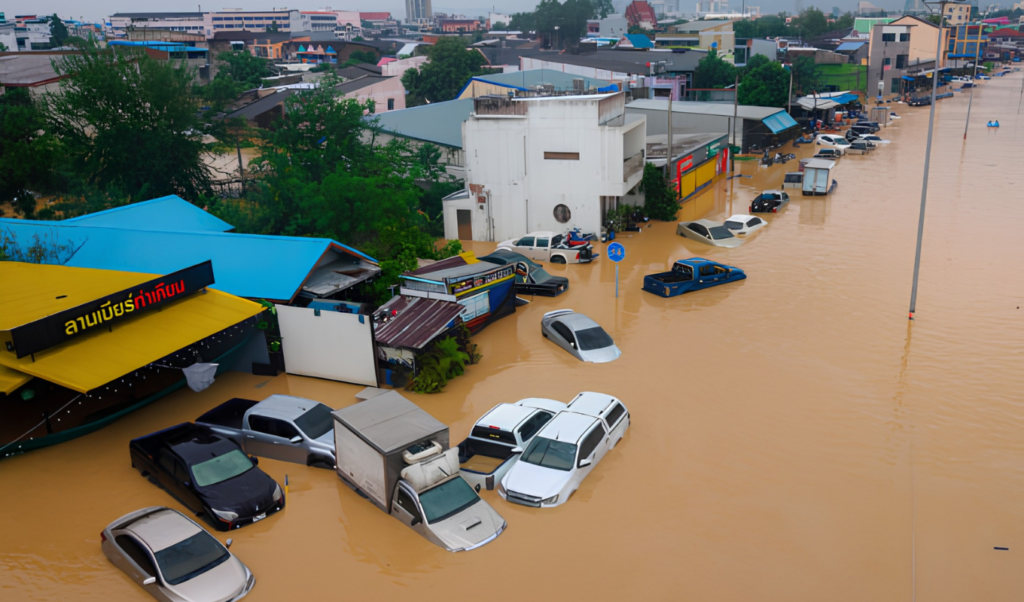
Thailand has approved a major national disaster insurance initiative designed to shield approximately 30 million households in vulnerable regions while transferring a substantial portion of catastrophic financial risks to private underwriters.
Prime Minister Anutin Charnvirakul announced on Tuesday that the cabinet had sanctioned an annual budget of 15.5 billion baht ($467 million) to fund the public-private protection framework. Under the scheme, households across the country will be insured against natural calamities, including severe floods, tropical storms, and earthquakes.
Official estimates indicate that the Thai government currently spends at least 30 billion baht annually from state coffers on direct emergency relief and post-disaster household compensation. The newly approved programme will establish a total annual coverage pool of roughly 75 billion baht. By capping the direct financial exposure of state treasuries, the framework passes excess liability above government limits to private insurers and reinsurers, easing the long-term burden on Thai taxpayers.
Government spokeswoman Rachada Dhnadirek outlined the payout structure, emphasizing rapid financial relief for affected families. Eligible households will receive initial payments within 15 days of filing claims:
-
Flood Damage: Initial emergency payout of 10,000 baht.
-
Storm or Earthquake Damage: Initial emergency payout of 5,000 baht.
-
Maximum Claim Limit: Overall compensation capped at 100,000 baht per household for a single disaster event.
-
Casualty Benefits: A fixed payment of 2 million baht provided to families for each disaster-related fatality.
The policy shift comes as nations across Asia grapple with escalating economic losses driven by rapid urbanization and climate-induced extreme weather patterns. A significant portion of disaster-inflicted damage across the region continues to go uninsured, straining public finances when catastrophes strike.
Recent weather events underscore Thailand’s exposure to natural hazards. Last month, torrential rainfall triggered flash floods in northern provinces, killing three people and disrupting the lives of 25,000 residents. In November, severe flooding swept across southern Thailand, impacting over one million people and severely disrupting Hat Yai, a crucial commercial and tourism hub.
To ensure seamless execution, the nationwide programme will be jointly developed and managed by the Department of Disaster Prevention and Mitigation, the Ministry of Finance, the Office of Insurance Commission, and the Thai General Insurance Association.