khaborwala online desk
Published: 01 Apr 2026, 02:37 pm
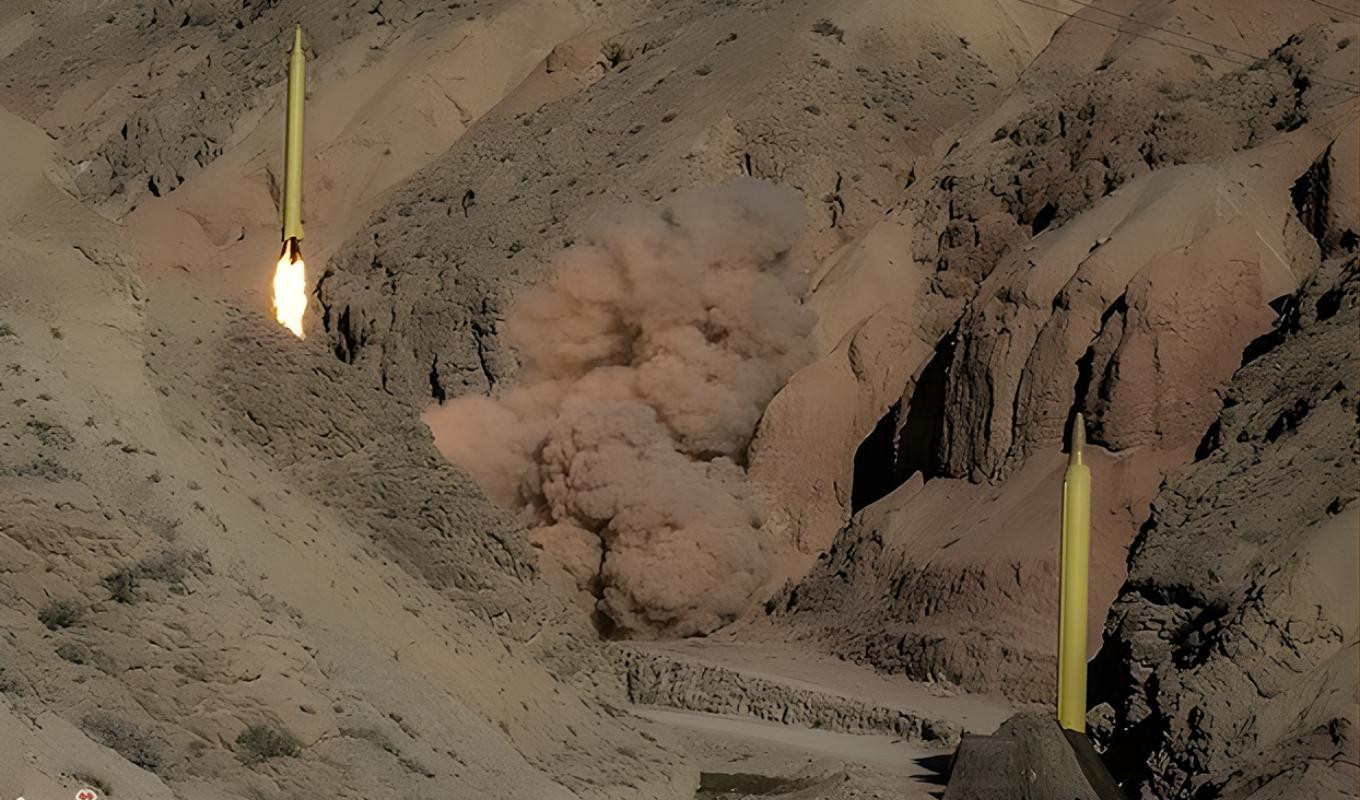
The apparent military imbalance between the United States and Iran suggests a swift and decisive outcome would be inevitable. Washington commands the world’s most powerful armed forces, supported by advanced intelligence networks and, in this context, close cooperation with Israel’s battle-hardened military. By contrast, Iran is economically constrained and militarily outmatched in conventional terms. Yet the conflict has demonstrated that overwhelming force has not translated into strategic success for the United States.
Instead, Iran has leveraged asymmetric tools to transform its limitations into strategic pressure points. While enduring severe domestic strain, it has managed to remain operationally resilient and, according to several analysts, has even gained a form of strategic leverage over the pace and direction of the conflict. The war, now extending beyond a month, has evolved into a contest of endurance and bargaining power rather than battlefield dominance.
A central flashpoint remains the Strait of Hormuz, through which a significant portion of global oil exports flows. Iran’s ability to threaten or partially disrupt this maritime artery has introduced instability into global energy markets and heightened political risks for Washington. Even limited disruption has forced diplomatic engagement that appears, to critics, disproportionate for a superpower.
| Factor | United States | Iran |
|---|---|---|
| Conventional military power | Global dominance | Regionally limited |
| Economic resilience | Highly diversified economy | Heavily sanction-constrained |
| Strategic leverage | Military superiority | Hormuz Strait control |
| Political risk tolerance | Low for prolonged casualties | High domestic tolerance |
| Escalation capability | Large-scale conventional war | Asymmetric disruption |
The United States retains the capacity to forcibly reopen shipping routes or target Iranian infrastructure. However, each escalation carries significant risks. Naval confrontation in the Strait of Hormuz could result in symbolic Iranian victories even in tactical defeat, especially if any US vessel were damaged. Conversely, a land intervention would carry severe political and human costs, undermining domestic support in Washington.
Iran’s deterrence strategy is not based on winning a conventional war but on raising the cost of victory for its adversaries. Even limited missile or maritime actions can generate disproportionate global economic shock, particularly affecting energy-dependent economies in Asia and Africa.
Washington’s public framing of diplomatic progress has also drawn scrutiny. Claims that limited tanker movements through Hormuz represent a diplomatic breakthrough are viewed by analysts as marginal compared with pre-war traffic levels, when over a hundred vessels transited daily. In this context, current figures are seen less as success and more as partial mitigation of a crisis already created by escalation.
The conflict has also revived concerns about broader regional destabilisation. US allies in the Gulf, heavily invested in long-term diversification projects beyond oil, now face renewed vulnerability. Infrastructure such as desalination facilities and energy terminals has become potential strategic pressure points, raising fears of catastrophic humanitarian and economic consequences if targeted.
Ultimately, Iran’s strategy rests on prolongation and selective disruption, while the United States faces mounting political and economic costs the longer the conflict persists. Analysts warn that as the war drags on, bargaining power may gradually shift, forcing Washington towards a negotiated settlement that could be politically framed as a compromise rather than victory.
The central paradox remains unresolved: overwhelming military superiority has not guaranteed strategic control. Instead, the conflict illustrates how asymmetric leverage, geographic chokepoints, and political constraints can significantly limit even the most powerful military force in the world.

> Moored Launch Sinks at Chormain Ghat
> Iraq Secure Historic World Cup Return After Forty Years
> Two Arrested in Junayed Murder
> Savar Drug Dealer Arrested With Yaba Haul
> American Journalist Abducted in Baghdad
> Abandoned Trunk Reveals Female Body
> Former Child Star Simrin Lubaba Marries Spiritual Transformation
> UN Peacekeepers Killed in Lebanon Strikes
> Brazil Vs. Croatia: Clash After 1,208 Days
> Japan Post Deepens KKR Alliance
> Life Insurance Payout Crisis Deepens
> Dhaka Raid Nets Liquor Worth Tk 70 Lakh in Kafrul

A moored passenger launch, Manik-4, sank on Wednesday afternoon at Chormain Ghat in Chormain Ghat af...

The final whistle at the Guadalupe Stadium in Mexico did not merely signal the end of a football mat...

Police in Srimongol Moulvibazar, have arrested two suspects in connection with the murder of 14-year...

A professional drug trafficker has been arrested in Savar, on the outskirts of Dhaka, following a ta...

An American freelance journalist has been abducted in the Iraqi capital, Baghdad, prompting a large-...

An unidentified female body was discovered inside an abandoned trunk left by the roadside in Shreebo...

New Zealand’s women’s cricket team produced a sensational display on Wednesday, achieving the highes...

Three Bangladeshi youths who had earlier been trafficked and subsequently detained in India have bee...

With less than two and a half months to go, the stage is set for the FIFA Football World Cup across...

A disturbing incident in Cumilla’s Daudkandi municipality has led to the arrest of a teenager accuse...

A ten-month-old infant has died after showing symptoms consistent with measles at Shaheed Ziaur Rahm...

The ongoing conflict involving , , and has effectively paralysed the , a crucial artery for global o...


Availabe for iphone & ipads

Available in google play
 বাংলা
বাংলা