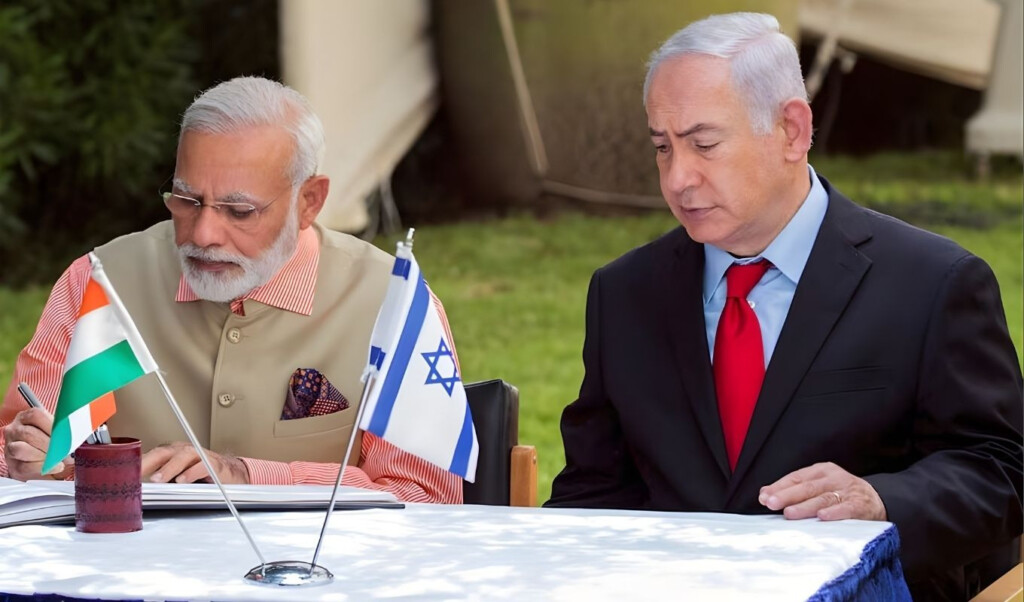
Amid escalating tensions between the United States and Iran, regional security concerns have intensified. In this context, Indian Prime Minister Narendra Modi arrived in Israel on Wednesday for a two-day visit, a trip that both nations regard as a vital opportunity to deepen bilateral ties.
This marks Modi’s second visit to Israel as Prime Minister, following his historic first trip in 2017. The following year, Israeli Prime Minister Benjamin Netanyahu reciprocated with a visit to India, laying the foundation for increasingly robust relations.
Last week, Netanyahu announced, “We are working to strengthen our alliances. Next week, my close friend, Indian Prime Minister Narendra Modi, will visit Israel.” The visit underscores both countries’ intent to expand cooperation across technology, agriculture, security, and other strategic sectors.
Key Focus Areas of the Visit
| Sector | India-Israel Cooperation Highlights |
|---|---|
| Technology | Joint initiatives in cybersecurity and AI applications |
| Agriculture | Sharing of water management techniques and advanced farming methods |
| Security | Collaboration on defence technology, counter-terrorism, and intelligence sharing |
| Cultural & Diplomatic | Modi to address the Knesset; visit Yad Vashem Holocaust memorial |
An Israeli government official commented, “This visit will pave the way for new partnerships and avenues of collaboration.” The Ministry of Foreign Affairs in Israel indicated that Modi is expected to deliver a speech at the Knesset and lay a wreath at Yad Vashem, Israel’s official Holocaust memorial.
However, the visit has generated mixed reactions within India, with public opinion divided over its timing and implications. Observers note that the trip coincides with a sensitive regional context: the United States has deployed a substantial naval presence along Iran’s coastline, including an aircraft carrier in the Mediterranean, amid stalled talks over Tehran’s nuclear programme. In the event of a US strike, Iran could retaliate, potentially targeting US military installations in Israel and Gulf countries—regions home to millions of Indian expatriates who contribute billions of dollars in remittances annually.
Kabir Taneja, a senior analyst at the Observer Research Foundation, said, “New Delhi does not wish to see conflict in the region. The government will likely convey this message during the visit.” An Israeli official added that discussions may include a regional dimension, with Netanyahu previously describing India as a future “axis” during a cabinet meeting earlier this week.
While India has expressed interest in acquiring Israeli military technology, Taneja noted that New Delhi’s historical policy of non-alignment in international affairs makes it unlikely to formally join any military alliances.
With security, diplomacy, and technological cooperation at the forefront, Modi’s visit underscores India’s strategic balancing act amid one of the region’s most volatile periods in recent years.