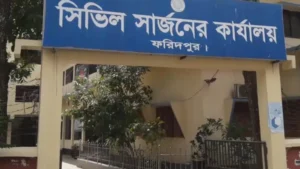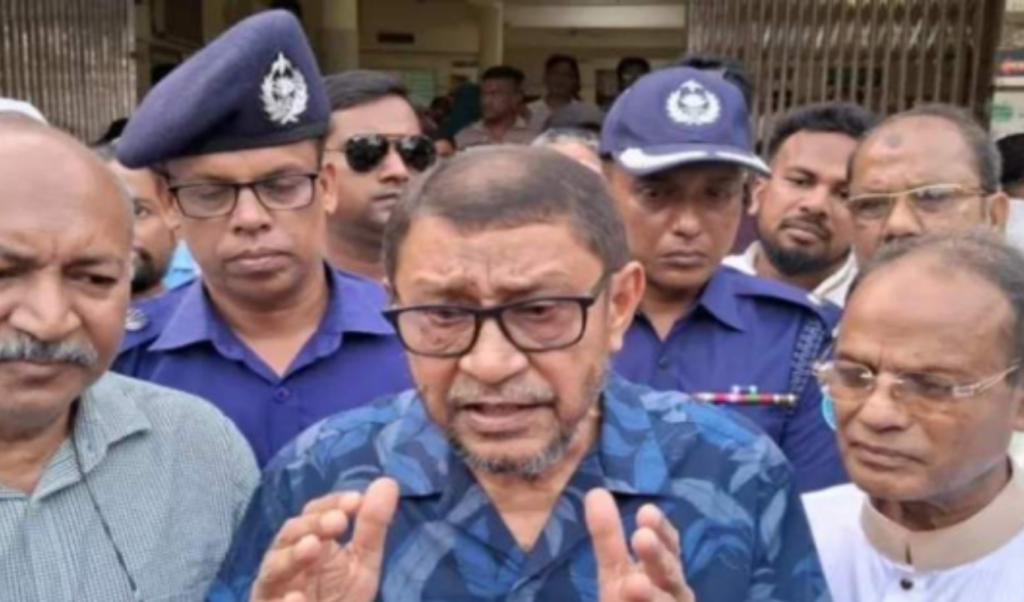
In a move that has sparked significant debate within the national healthcare administration, the Minister for Health, Sardar Mohammad Sakhawat Hossain Bakul, has announced disciplinary measures against senior health officials in Munshiganj. The decision follows public statements made to the media regarding a critical shortage of vaccines, specifically the anti-rabies vaccine. During a visit to a Munshiganj hospital on Friday, 24 April 2026, the Minister declared that the District Civil Surgeon and the Hospital Superintendent would be removed from their posts or face departmental action for allegedly damaging the government’s reputation.
The controversy arose after health officials provided interviews to BBC Bangla, confirming that the facility was unable to provide free anti-rabies vaccinations due to a lack of supply. Despite the Minister’s public announcement of their dismissal or withdrawal, the Civil Surgeon of Munshiganj stated on Saturday that no formal letter of termination or reassignment had been received.
Allegations of “State Sabotage” and Government Rebuttal
The Health Minister’s punitive measures are based on the premise that officials failed to manage local resources and provided “misleading” information to the press. Minister Bakul characterised the Superintendent’s interview as an “anti-state activity” and a form of “sabotage.” Speaking to journalists, the Minister asserted:
“The interview given by the Superintendent is a total damage to the government. Claiming there are no vaccines is sabotage. If there was a shortage, they should have informed the Director General (DG) or the Deputy Commissioner (DC). There are MSR (Medical Surgical Requisition) funds and local Members of Parliament available to assist. He cannot give such an interview. We have ‘closed’ the Superintendent.”
The Minister further insisted that the government maintains a six-month stockpile of all essential vaccines, including those under the Expanded Programme on Immunisation (EPI). He stated categorically that any shortage was a result of local administrative failure rather than a central supply issue.
Contradictory Evidence and Field-Level Realities
Despite the Minister’s assurances, reports from patients and local officials suggest a systemic scarcity. Relatives of patients at the Munshiganj 250-bed General Hospital informed the media that they were forced to purchase anti-rabies vaccines from private pharmacies at high costs, despite the service being legally mandated as free of charge.
Information from the health department indicates that the National Rabies Elimination Programme, launched in 2011, began facing severe supply disruptions in early 2025. This crisis has been attributed to the absence of a five-year Operational Plan (OP), a strategic framework for procurement that was discontinued in 2024. While the government has attempted to procure vaccines through the Central Medical Stores Depot (CMSD) under special allocations, the supply has reportedly remained insufficient.
Internal documents and official accounts suggest that:
-
Pre-emptive Warnings: Local health offices had informed higher authorities of the impending vaccine shortages months in advance.
-
Funding Instructions: The Health Department had previously advised district offices to divert funds from other procurement tenders to purchase vaccines locally—a directive that many found difficult to execute as most tenders for the fiscal year had already been concluded by December.
-
Supply Disparity: While the district requires approximately 2,600 vials of rabies vaccine per month, the central hospital reportedly had only 26 vials (each containing four doses) at the time of the Minister’s visit, with উপজেলা (sub-district) clinics possessing none.
Institutional Backlash and Public Health Expert Opinion
The decision to penalise field-level officials for central procurement failures has drawn criticism from public health specialists and fellow civil surgeons. Dr Mushtaq Hussain, a prominent public health expert and former director at the Directorate General of Health Services (DGHS), described the Minister’s actions as a “bad precedent.” He argued that the responsibility for ensuring a steady supply of vaccines lies with the central authorities, who possess the expertise for large-scale procurement.
Experts warn that shifting the blame onto local officials will have several negative ramifications:
-
Demoralisation: Field-level staff may become discouraged from participating in public health programmes if they are held liable for systemic shortages.
-
Lack of Transparency: Officials may become reluctant to speak truthfully about resource gaps, leading to a breakdown in accurate data reporting.
-
Governance Issues: Public health specialists noted that Civil Surgeons are tasked with service delivery, not the complex task of centrally-managed vaccine procurement.
While the Health Minister continues to maintain that there is “not a single vaccine shortage” in the country, reports of scarcity persist beyond Munshiganj, with intermittent shortages of Polio and Measles vaccines reported in parts of the capital, Dhaka. As of Saturday evening, the Ministry of Health has not responded to further enquiries regarding the formal status of the sanctioned officials.