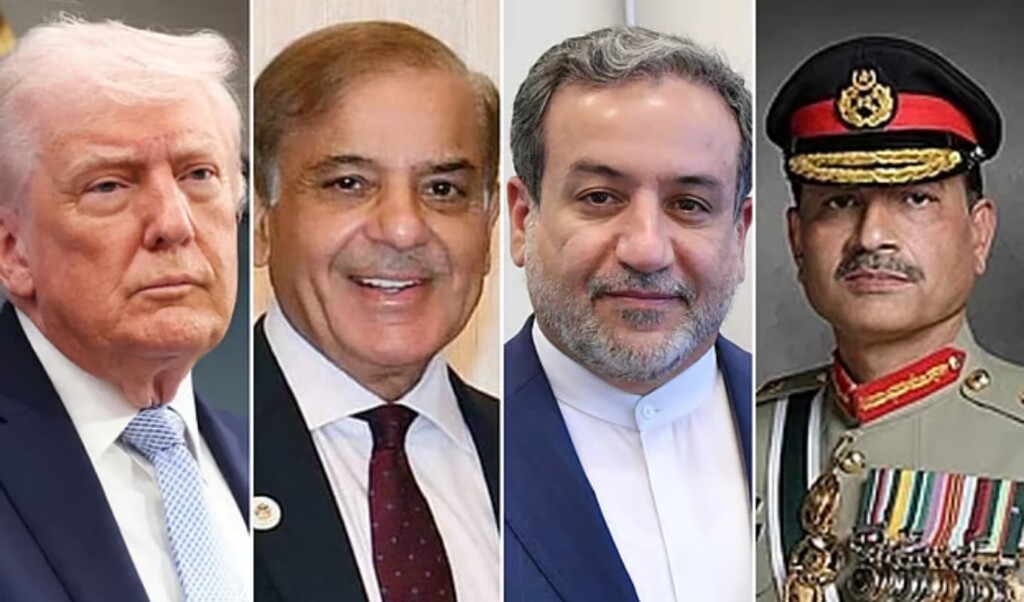
In a significant diplomatic development in the Middle East, a two-week ceasefire between the United States and Iran has been confirmed. Iran’s Foreign Minister, Seyed Abbas Araghchi, expressed his profound gratitude on social media to Pakistan’s Prime Minister Shahbaz Sharif and Chief of Army Staff Asim Munir, addressing them as “my dear brothers” and acknowledging their “tireless efforts.” U.S. President Donald Trump subsequently shared Araghchi’s message on his platform, signalling Washington’s approval of Islamabad’s facilitation.
Following this, Prime Minister Sharif announced on X (formerly Twitter) that, “With utmost humility, I declare that Iran and the United States have agreed to an immediate ceasefire across all theatres, including Lebanon, which will now take effect.” Sharif welcomed this farsighted initiative, extended gratitude to both nations’ leadership, and invited delegations from Iran and the United States to Islamabad on 10 April for comprehensive negotiations aimed at achieving a sustainable resolution.
According to CBS News, prior to the finalisation of the two-week ceasefire, President Trump had consulted with Israeli Prime Minister Benjamin Netanyahu and Pakistan’s Field Marshal Munir. Throughout the night, Field Marshal Munir maintained direct communication with U.S. Vice President JD Vance, special envoy Steve Witkoff, and Araghchi, coordinating critical negotiations.
Key Diplomatic Interactions
| Date | Participants | Role / Action | Outcome |
|---|---|---|---|
| 29 March | Pakistan, Turkey, Saudi Arabia, Egypt | Pre-ceasefire meeting | Pakistan positioned as central mediator |
| Early April | Field Marshal Munir & U.S./Iran officials | Night-long communications | Draft ceasefire agreement exchanged |
| 7–8 April | Trump, Netanyahu, Munir | Strategic consultations | Finalisation of two-week ceasefire |
Islamabad’s diplomacy proved decisive due to deep bilateral trust. Iran remains wary of Gulf nations closely allied with the U.S., while Pakistan shares a border and long-standing relations with Iran, and maintains no formal ties with Israel—boosting Tehran’s confidence. For the United States, relations with Pakistan have strengthened over the past year, with Islamabad participating in the “Board of Peace” initiative focused on Gaza.
For Pakistan, the ceasefire is not merely strategic but vital. The country relies heavily on Middle Eastern oil and remittances from its expatriate workforce. Escalating hostilities had previously triggered energy price surges and domestic instability. Additionally, ongoing tensions with Afghanistan and India further emphasise the need for regional stability.
However, the ceasefire remains fragile. Any breakdown could damage Pakistan’s credibility as a mediator and drag the country into renewed conflict, with limited leverage to influence either side. Islamabad’s challenge will be sustaining peace without compromising its own domestic or geopolitical security.