Bangladesh’s newly enacted Bank Resolution Act has ignited intense debate across financial and political circles, after a controversial provision opened the door for former owners of failed or merged banks to reclaim control—under relatively lenient conditions.
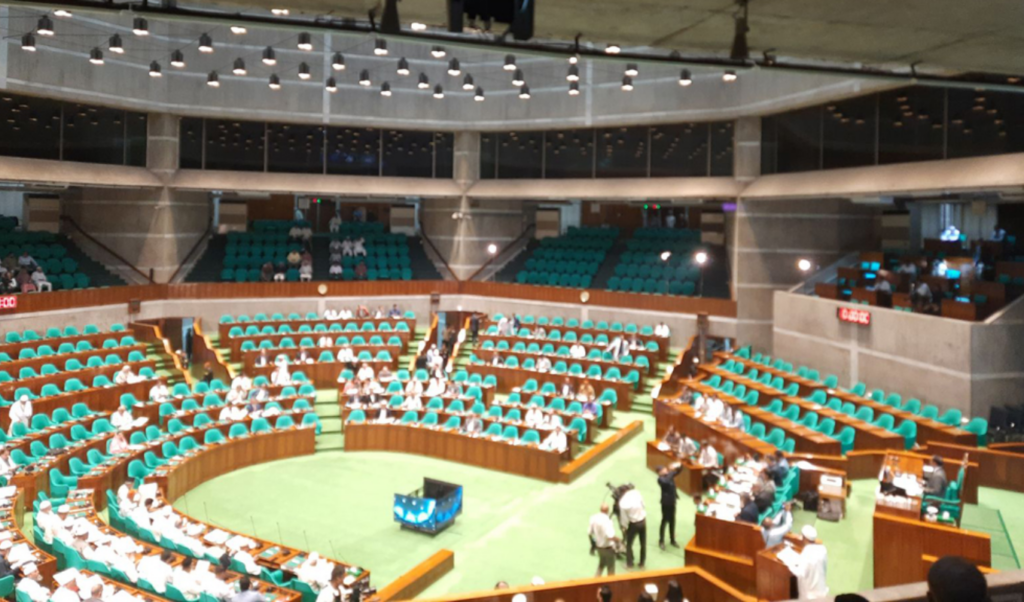
The law, which replaces an earlier ordinance introduced during the interim administration, was recently passed in parliament with most of its original framework intact. However, the inclusion of a new clause—widely referred to as Section 18(a)—has raised serious concerns among economists, regulators, and the general public.
A Controversial Provision
Under the new provision, former shareholders or owners of banks that were previously placed under resolution or merged due to financial distress may apply to regain ownership. This can be done by submitting a formal application to the central bank, which acts as the resolution authority.
Critically, the law allows these former stakeholders to reclaim control by initially paying only 7.5 per cent of the total financial support injected by the government or the central bank to rescue the institution. The remaining 92.5 per cent can be repaid over a two-year period, with a simple interest rate of 10 per cent.
This relatively low upfront requirement has triggered alarm, as many of the same owners were previously accused of mismanagement, irregularities, or financial misconduct that contributed to the banks’ collapse.
Key Financial Terms of Ownership Restoration
| Condition | Requirement |
|---|---|
| Initial payment | 7.5% of total public funds injected |
| Remaining repayment | 92.5% within two years |
| Interest rate | 10% simple interest |
| Application process | Formal undertaking to central bank |
| Additional obligations | Full repayment of liabilities, taxes, and depositor claims |
Obligations and Conditions
To regain ownership, applicants must submit a formal undertaking committing to several conditions, including:
- Full repayment of all government and central bank financial assistance
- Injection of fresh capital to restore financial stability
- Settlement of all depositor claims, domestic and foreign liabilities
- Payment of all outstanding taxes and statutory dues
However, critics argue that these commitments are largely declaratory at the initial stage, allowing controversial owners to regain control before fulfilling their obligations in full.
Concerns Over Financial Governance
Financial analysts have expressed deep concern that the provision could undermine ongoing banking sector reforms. One senior official from Bangladesh Bank, speaking anonymously, warned that the clause effectively enables former owners to “re-enter the system at minimal cost”, potentially reversing progress made in stabilising distressed banks.
Experts caution that once ownership is restored, removing such stakeholders again could prove extremely difficult, particularly in Bangladesh’s complex financial and legal environment.
Background: Banking Sector Crisis and Mergers
The law comes in the wake of significant restructuring within the banking sector. Several troubled banks—including EXIM Bank, Social Islami Bank, First Security Islami Bank, Union Bank, and Global Islami Bank—were merged into a single entity known as “Combined Islami Bank”.
This consolidation followed prolonged financial instability, during which these institutions struggled to meet depositor obligations. The government eventually intervened, injecting substantial funds and placing the merged entity under administrative control.
Financial Overview of Merged Banking Structure
| Component | Amount (BDT) |
|---|---|
| Total capital base | 35,000 crore |
| Government contribution | 20,000 crore |
| Depositor support allocation | 15,000 crore |
| Deposit insurance payout | 12,000 crore |
| Number of depositors affected | Approx. 7.8 million |
Legislative Process and Dispute
Interestingly, sources indicate that the controversial clause was not part of the original draft reviewed by a 10-member committee comprising officials from the finance ministry, legal division, and central bank. The provision was reportedly inserted shortly before the bill was tabled in parliament.
Members of the review committee are said to have opposed such a clause, recommending stricter conditions—such as full repayment of liabilities before any ownership restoration and permanent disqualification of those responsible for financial misconduct. These recommendations, however, were not fully incorporated.
Broader Implications
Beyond the immediate controversy, the law grants sweeping powers to Bangladesh Bank to manage failing banks. These include appointing administrators, increasing capital, transferring assets and liabilities, establishing bridge banks, and even liquidating institutions where necessary.
While these measures are widely seen as essential tools for crisis management, the inclusion of the ownership restoration clause has overshadowed the broader reform agenda.
Public Reaction and Future Outlook
Public reaction has been mixed but largely critical. Many fear that allowing previously discredited owners back into the system could erode trust in the banking sector and expose depositors to renewed risks.
Economists stress that safeguarding financial stability requires not only strong regulatory frameworks but also accountability for past failures. Without strict enforcement, they warn, the new law could inadvertently incentivise reckless behaviour.
As the law takes effect, its implementation—and particularly the handling of ownership restoration applications—will be closely monitored. The coming months may prove decisive in determining whether the legislation strengthens the banking system or deepens existing vulnerabilities.