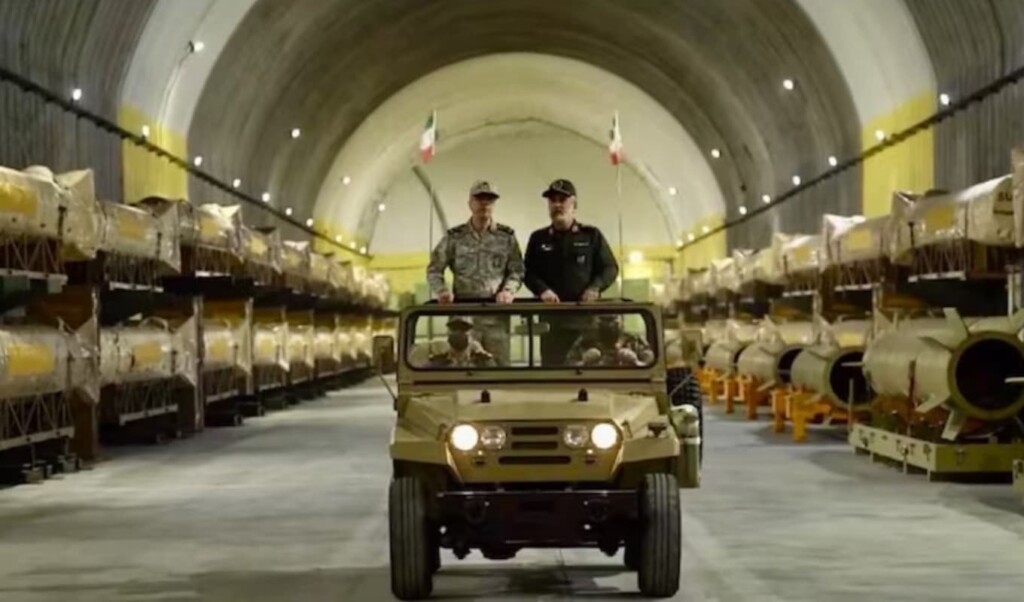
Tehran has rapidly rehabilitated its heavily bombed subterranean ballistic missile networks, rendering the infrastructure fully operational despite intensive air campaigns conducted by United States and Israeli forces. The swift restoration of these underground sites ensures that Iran retains the capacity to launch long-range missiles across the region, specifically targeting Israel and other neighboring states. According to a detailed investigative report published by CNN, military analysts view this rapid recovery as clear evidence of the structural limitations inherent in Western strategic bombing campaigns.
Asymmetrical Engineering Countermeasures Defy Allied Air Power
A comprehensive evaluation of high-resolution satellite imagery by CNN indicates that Iran effectively neutralised million-dollar Western precision strikes through the deployment of basic, low-cost engineering equipment, including commercial bulldozers and standard dump trucks. Aerospace and defense specialists noted that targeting the external entrance portals of heavily fortified underground networks fails to cause permanent damage to the primary assets stored deep within the mountains.
Sam Lair, a research associate at the James Martin Center for Nonproliferation Studies, assessed the operational outcomes of the allied strikes:
“The United States military demonstrates exceptional competence in achieving immediate tactical victories, and trapping the Iranian missile fleet beneath collapsed tunnel mouths was a clear example of that. However, when an extensive air campaign is executed without a realistic strategic objective or a long-term plan for a durable victory, it ultimately results in a significant strategic failure.”
Taimur Kadashev, a senior researcher at the Institute for Peace Research and Security Policy at the University of Hamburg, characterized the situation as a technological misalignment. He explained that Western forces expended highly advanced, fiscally draining precision weapons to collapse the facilities, whereas Iranian engineers cleared the obstructions using cheap, readily available construction methods.
Satellite Analysis Verifies Scale of Facility Reconstruction
Iranian engineering units continued their excavation efforts under hazardous conditions throughout the active conflict, even when allied forces directly targeted the active construction machinery. Following the formal execution of a bilateral ceasefire on 8 April 2026, these reconstruction activities intensified across the country.
The data compiled by CNN reveals that out of 69 tunnel entrances located across 18 separate underground missile bases that had been successfully obstructed by allied bombardments, 50 have been completely cleared and returned to active service.
Reconstruction Status of Subterranean Missile Portals
| Operational Parameter | Verified Statistical Data |
| Identified Subterranean Missile Installations | 18 Base Locations |
| Tunnel Portals Successfully Sealed by Air Strikes | 69 Entrances |
| Portals Cleared and Reopened Post-Ceasefire | 50 Entrances |
| Remaining Blocked Intakes Under Repair | 19 Entrances |
| Surviving Deep-Rock Long-Range Missiles | ~1,000 Total Units |
Satellite data collected in early May 2026 from a major missile base in Isfahan illustrated the speed of these repairs. Allied forces had previously dropped 18 precision guided missiles to destroy four adjacent tunnel entrances at the site; however, the imagery showed fleet trucks filling the bomb craters with soil and crews repaving the disrupted access roads. At the Khamenei military facility, separate satellite passes from mid-April captured a fleet of 10 heavy construction vehicles working simultaneously to reinforce and reopen the collapsed entrances.
Conflict of Strategic Objectives and Intelligence Data
The rapid recovery of the underground installations contradicts the explicit wartime promises made by Western political leaders. US President Donald Trump frequently designated the Iranian missile program as a core justification for military intervention. In a March 2026 social media post, President Trump specified that a non-negotiable objective of the operation was the “complete and absolute destruction of Iran’s missile infrastructure and mobile launchers.”
Similarly, US Defense Secretary Pete Hegseth claimed during a press brief last month that Iran’s domestic defense production capabilities had been entirely wiped out, asserting that while old ordnance could be pulled from surviving tunnels, Tehran lacked the industrial capacity to build new units.
Independent intelligence assessments strongly dispute these declarations. Because the main storage hangars are positioned hundreds of metres beneath solid rock, the core missile stockpiles remained entirely unaffected by the surface explosions. Modern estimates confirm that at least 1,000 long-range ballistic missiles remain secure within the deep complexes. Furthermore, data compiled by the United States Intelligence Community (IC) demonstrates that Iran has rebuilt its drone manufacturing facilities and mobile missile launcher production lines far more rapidly than Western military planners had anticipated.