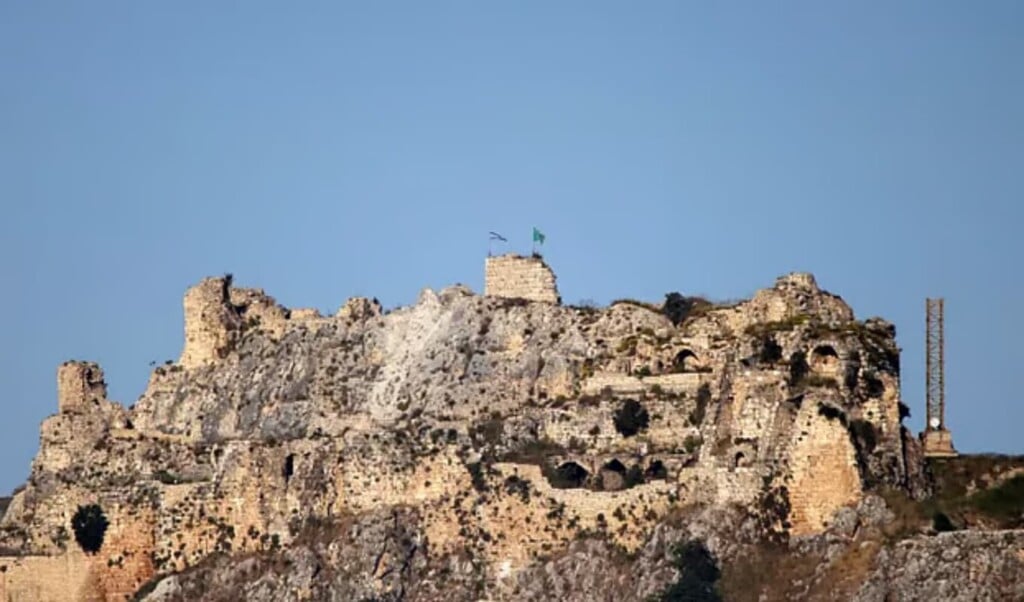
The Israeli military has captured the medieval Beaufort Castle, a historic mountaintop fortress located in southern Lebanon. The seizure of this 900-year-old landmark occurred as part of Israel’s widening military campaign against the Lebanese armed group, Hezbollah.
The official announcement regarding the capture of the fortress was made on Sunday, 31 May 2026, amid ongoing diplomatic talks aimed at a potential Israel-Lebanon ceasefire. On that day, Israeli Defence Minister Israel Katz attended a memorial service commemorating soldiers who fell during the 1982 Lebanon War. During his address, Katz noted that the Israeli flag had been raised once more over the strategic ridges that overlook communities in the northern Galilee region, according to a report by The Times of Israel. He confirmed that frontline infantry units had secured the perimeter to maintain the site as part of an active military security zone inside Lebanese territory.
Chronology and Strategic Geography of Beaufort Castle
Known locally in Arabic as Kalaat al-Shaqif, the fortress represents one of the most significant defensive high points in the region.
-
12th Century Foundation: Built by European Crusaders, who named the structure Beaufort—derived from Old French for “beautiful fort”—the stronghold occupies a rocky ridge approximately 700 metres (2,300 feet) above sea level.
-
Topographical Command: The castle sits adjacent to Lebanon’s fifth-largest city, Nabatieh, and directly overlooks the Litani River, offering line-of-sight visibility across vast territorial expanses.
-
Historical Transitions: Over the centuries, control of the site has repeatedly changed hands between Crusader rulers, the Ottoman Empire, and various regional factions.
-
Modern Warfare: In the latter half of the 20th century, Palestinian fighters utilized the fortress as a military base. It was subsequently captured by Israeli forces during the 1982 invasion of Lebanon and held until the withdrawal of the Israel Defence Forces (IDF) in the year 2000.
Geopolitical and Tactical Surveillance Map
By taking control of the Beaufort ridge and its adjacent high ground, the IDF has established a central observation hub. The table below details the strategic regions monitored directly from this location:
| Observation Zone | Geographic Direction | Tactical Significance to IDF |
| Nabatieh Municipality | Immediate Vicinity | Overlook across regional towns and village networks |
| Western Beqaa Valley | North-East Axis | Monitoring of regional lowlands and transit routes |
| Occupied Golan Heights | Eastern Axis | Visual link to established defensive borders |
| Northern Galilee | Southern Axis | Early warning oversight for northern Israeli border towns |
Current Conflict Dynamics and Displacement
The capture of Beaufort Castle was preceded by days of intense infantry clashes and supporting air strikes as the IDF advanced through the rugged terrain of Nabatieh to dislodge embedded Hezbollah forces. The broader conflict escalated sharply following 28 February 2026, when joint United States and Israeli operations against Iran commenced. Israeli forces have since established control over approximately 2,000 square kilometres of southern Lebanon, representing roughly one-fifth of the country’s total land area.
This latest phase of warfare began on 2 March 2026, when Hezbollah ended a period of relative calm—maintained since a prior ceasefire in November 2024—by launching rocket and drone strikes against an Israeli missile defence facility near Haifa. According to data verified by the Lebanese Ministry of Public Health, Israeli military operations since 2 March 2026 have resulted in approximately 3,412 fatalities and 10,269 injuries in the region. On the day Beaufort Castle was captured, separate monitoring by Al Jazeera recorded more than 36 distinct strikes across southern Lebanon, causing at least 12 deaths and wounding 35 individuals.
Following instructions from Prime Minister Benjamin Netanyahu to expand operations and solidify control over former Hezbollah strongholds, the IDF issued immediate forced evacuation orders for seven southern villages: Houmine Al Fawqa, Bnaafoul, Arab Salim, Roumin, Azzi, Arki, and Jaba. Colonel Avichay Adraee, the Arabic-language spokesman for the Israeli military, published the directive on the social media platform X, warning residents to immediately evacuate their homes and move at least 1,000 metres away in anticipation of imminent combat operations.