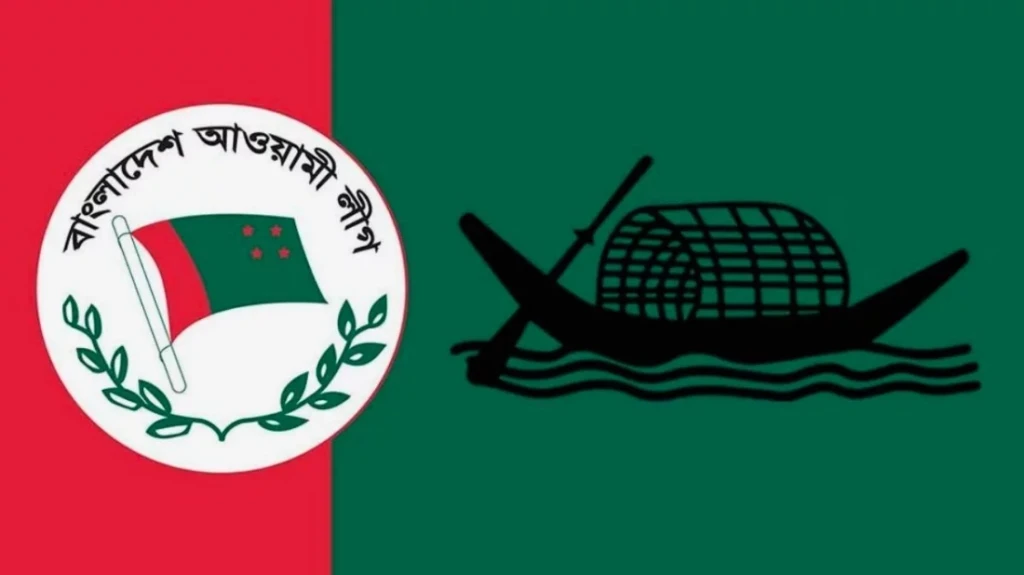
The 77th founding anniversary of the Awami League is being observed today, marking a significant milestone in the political history of what is now Bangladesh. The party traces its origins to 23 June 1949, when it was established as the East Pakistan Awami Muslim League at the historic Rose Garden in KM Das Lane in Old Dhaka. At the time, it emerged as one of the earliest major opposition political forces in then Pakistan, advocating for greater political representation and rights for the people of East Bengal.
During its inaugural council, veteran political leader Maulana Abdul Hamid Khan Bhashani was elected president and Shamsul Huq became the general secretary. Notably, Sheikh Mujibur Rahman—later the founding leader of Bangladesh—was imprisoned at the time but was unanimously elected as one of the party’s joint general secretaries, reflecting his growing influence even in his early political career.
The party’s second council was held in 1953 in Mymensingh, where Sheikh Mujibur Rahman assumed the role of general secretary while Maulana Bhashani continued as president. A further ideological and organisational transformation took place during the third council session in October 1955 at Rupmahal Cinema Hall in Dhaka’s Sadarghat area. It was here that the term “Muslim” was dropped from the party’s name, leading to its rebranding as the East Pakistan Awami League, signalling a shift towards a more inclusive political identity.
Following Bangladesh’s independence in 1971, the organisation adopted its current name, the Awami League. Sheikh Mujibur Rahman played a central role in shaping its political direction, particularly after he was elected president of the party on the eve of the historic Six-Point Movement in 1966, a programme that became a defining framework for autonomy demands in East Pakistan.
After his assassination in 1975, leadership dynamics shifted significantly. In 1981, Sheikh Hasina was elected president of the party while in exile, and she has since remained at its helm, guiding its political trajectory over subsequent decades.
At present, the party’s political activities remain under restriction, adding a complex contemporary dimension to its long and eventful history.
Key milestones in the history of the Awami League
| Year | Event | Significance |
|---|---|---|
| 1949 | Formation at Rose Garden, Dhaka | Establishment as East Pakistan opposition party |
| 1953 | Mymensingh council | Leadership restructuring under Bhashani and Mujib |
| 1955 | Renaming in Dhaka | Removal of “Muslim” signifying inclusive identity |
| 1966 | Six-Point Movement leadership | Push for regional autonomy |
| 1971 | Bangladesh independence | Transition to national ruling party identity |
| 1981 | Sheikh Hasina elected president | Long-term leadership continuity |
The anniversary is widely regarded as a moment of reflection on the party’s historical evolution, ideological shifts, and its enduring influence on the political development of Bangladesh.