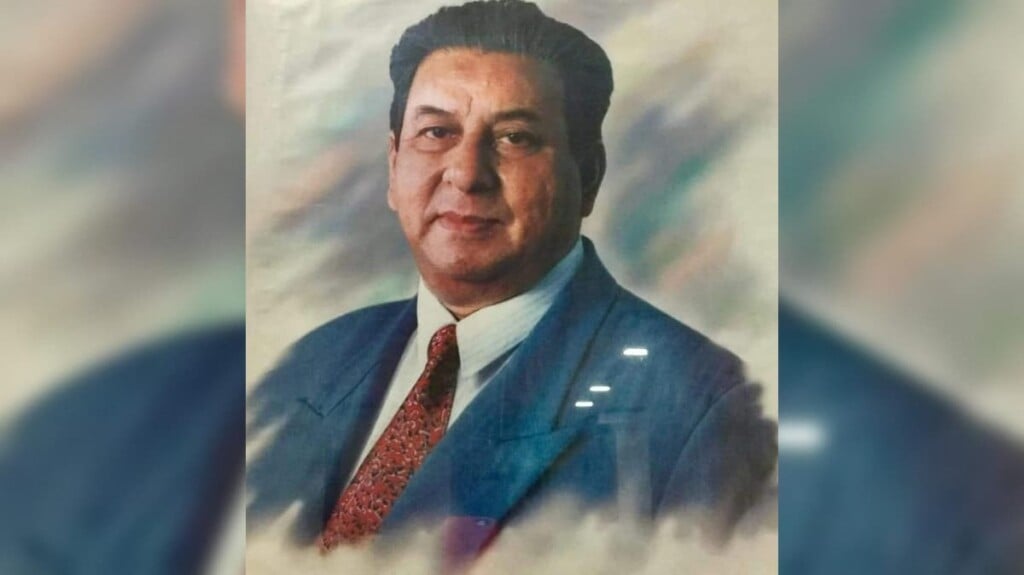
Today marks the 13th death anniversary of Lutfar Rahman Sarkar, a legendary figure in the Bangladeshi financial sector, a decorated literary mind, and a devoted patriot. Remembered fondly as the nation’s “Revolutionary Banker”, Sarkar left an indelible mark on the country’s socio-economic landscape through his progressive, honest, and innovative approach to institutional finance. Over his illustrious career, he served as the sixth Governor of Bangladesh Bank, the Managing Director of Sonali Bank and Agrani Bank, and a passionate educator.
Born on 1 February 1934 in the village of Phulkote, within the Amrul Union of Bogra’s Shajahanpur Upazila, Sarkar spent his entire life championing the cause of human welfare, economic justice, and financial inclusion.
Redefining the Philosophy of Banking
Sarkar fervently believed that commercial banking should transcend the mere pursuit of corporate profit. To him, financial institutions were powerful vehicles meant for elevating human living standards, generating employment, and establishing social equity. He was notoriously critical of conventional financial structures, famously observing:
“The banking system in Bangladesh is akin to oiling an already oily head. Those who possess wealth are given more, whereas banking ought to be dedicated to providing for those who have nothing. The duty of a bank is not to make the rich richer, but to make the poor self-reliant.”
He did not merely preach these ideals; he actively institutionalised them. Whilst steering Sonali Bank as its Managing Director, he conceived and launched the groundbreaking “University Employment Project (Bikalpa)” to combat rampant youth unemployment and instil the dignity of labour. Under this scheme, highly educated yet unemployed youths were granted loans solely on the credit of their Master’s degree certificates, transforming thousands of graduates into successful entrepreneurs. He concurrently introduced highly accessible education loans and part-time employment schemes for students—initiatives that triggered a profound social transformation across the country.
A Pioneer of Modern Financial Products
Many of the savings instruments and welfare-oriented schemes widely utilised across contemporary Bangladeshi banking trace their origins back to Sarkar’s visionary foresight. He was the pioneer of collateral-free micro-credit lines designed specifically for small-scale entrepreneurs, a framework that serves as the bedrock for today’s Small and Medium Enterprise (SME) banking loans.
Driven by a desire to curb student dropout rates among impoverished but meritorious youth, his education loan programmes provided vital safety nets. Furthermore, he extended simplified credit facilities to the healthcare sector, allowing doctors to establish modern clinics, diagnostic centres, and hospitals. A substantial number of today’s prominent medical professionals and healthcare infrastructure flourished directly due to his institutional backing.
Beyond finance, Sarkar possessed a deep-rooted passion for literature and the arts. He was a recipient of the prestigious Adamjee Award for literature, a founding Vice-President of the National Poetry Council, and a former President of the Greater Bogra Association. He utilised his position to generously patronise newspapers, literary periodicals (Little Magazines), and creative publishing houses by extending low-interest, soft loans to bolster the national creative economy.
Defiance Against Autocracy and Financial Corruption
Lutfar Rahman Sarkar was a man of unyielding moral rectitude. During the autocratic regime of military ruler Hussain Muhammad Ershad, the dictator proposed rebranding the highly popular “Bikalpa” project under his own name. Sarkar flatly refused to capitulate. In retaliation, the military regime arrested him and several of his colleagues, sentencing them to two years’ imprisonment via a military court. However, following fierce, widespread student-led public protests, the regime was compelled to release them.
Sarkar stood out as the only high-ranking banker in Bangladesh to publicly defy military autocracy. Years later, he displayed similar courage by initiating high-profile legal lawsuits against influential business tycoons involved in massive bank fraud. He consistently refused to bow to political power or corporate influence, remaining steadfast in his defence of justice and public interest.
Educational Background and Professional Timeline
Sarkar obtained his Master of Arts degree in Political Science from the University of Dhaka in 1955. He initially commenced his professional journey with Radio Pakistan before transitioning into the banking sector, where he rapidly rose through the ranks due to his exceptional acumen.
Over the decades, he held pivotal leadership roles across several top-tier financial institutions, culminating in his appointment as the head of the central bank. He also shared his profound field knowledge with the next generation by serving as a part-time lecturer in the Department of Finance and Banking at the University of Dhaka for many years.
-
1955: Graduated with an MA in Political Science from the University of Dhaka.
-
Early Career: Served at Radio Pakistan, followed by senior roles at Habib Bank, Standard Bank, and Rupali Bank.
-
Key Executive Roles: Served as the Managing Director of Agrani Bank and subsequently Sonali Bank.
-
21 November 1996 – 21 November 1998: Served as the 6th Governor of Bangladesh Bank.
-
24 June 2013: Breathed his last at the age of 80 whilst undergoing treatment at Apollo Hospital in Dhaka.
Thirteen years after his passing, Lutfar Rahman Sarkar’s vision of a humane, development-oriented, and public-facing banking ecosystem remains deeply relevant as Bangladesh continues to navigate complex financial reforms.
Author: Editor and Publisher - Zee Live 24 and Khabarwala