The government has initiated a major international asset-recovery drive to reclaim billions in defaulted loans smuggled abroad through systemic banking fraud and corruption. Dhaka has signed Non-Disclosure Agreements (NDAs) with nine prominent international law firms to track, freeze, and repatriate these stolen assets on a “no win, no fee” basis. The legal offensive will initially target high-profile cases connected to roughly 30 damaged banks, focusing first on six prominent entities and individuals: former Land Minister Saifuzzaman Chowdhury, controversial tycoon S. Alam, and major corporate conglomerates Beximco, Sikdar, Nassa, and Orion.
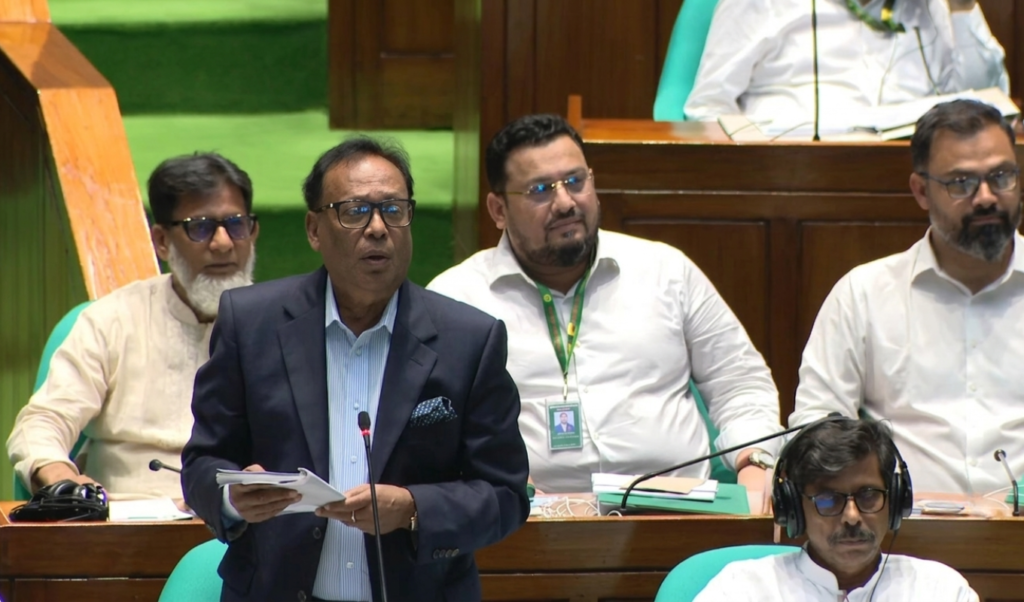
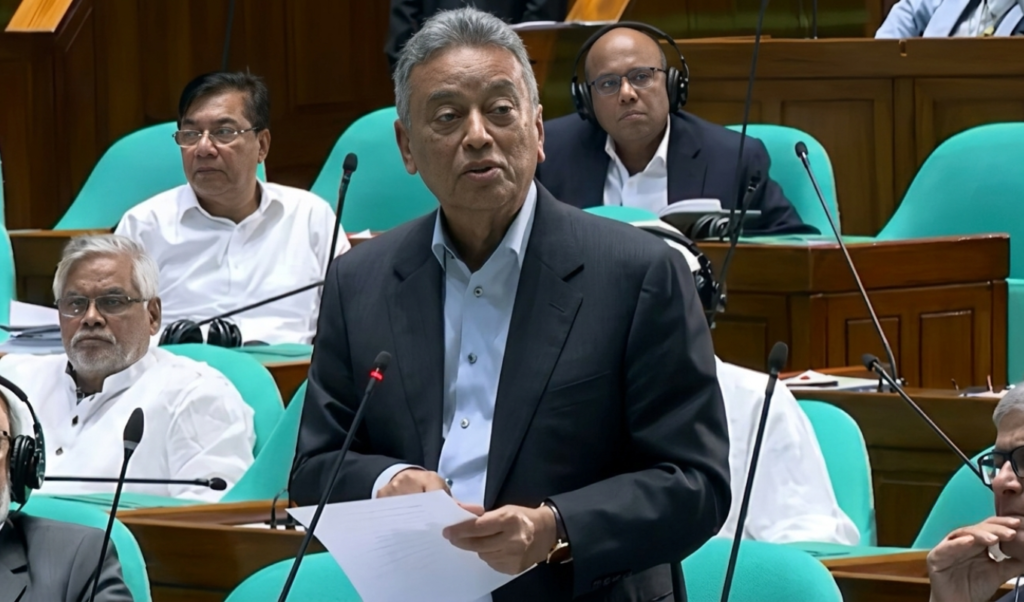
Finance Minister Amir Khasru Mahmud Chowdhury disclosed the strategy in Parliament on Wednesday during a question-and-answer session presided over by Speaker Hafiz Uddin Ahmed. Replying to a query from Kurigram-1 MP Anwarul Islam, the Finance Minister explained that these global firms will provide comprehensive legal support to domestic banks. Their primary task is to identify overseas wealth networks created by accused defaulters. The administration plans to expand this recovery framework to cover more individuals in subsequent phases.
A Comprehensive Overview of the Financial Sector
During the parliamentary session, the Finance Minister faced an array of inquiries regarding the state of the national economy. To provide a clear overview of the substantial statistical data placed before the house, the following table consolidates key figures across banking, national debt, tax revenue, and relief programmes.
| Economic Matrix & Key Performance Indicators | Quantitative Value / Statistical Metric |
| Total Registered Bank Accounts | 193,251,232 accounts |
| Total Savings Accounts | 177,950,465 accounts |
| Total Active Loan Accounts | 15,300,767 accounts |
| National Financial Inclusion Rate (NFIS Goal) | 64.50% (Targeting 100% adults by 2026) |
| External Debt Stock (As of March 2026) | $78,233.448 million ($78.23 billion) |
| Concessional Loans (Soft Terms Share) | 61.97% of total foreign debt |
| Non-Concessional Loans (Hard Terms Share) | 38.03% of total foreign debt |
| Registered Taxpayers (Individuals & Firms) | 13,829,486 (An 11.86% year-on-year increase) |
| Agricultural Debt Waiver Allocation | 1,567.96 crore Taka (Loans up to 10,000 Taka) |
| Farmers Benefiting from Loan Waivers | 1,414,431 individuals |
| Emergency Liquidity Support to Distressed Banks | 75,903.11 crore Taka (Disbursed up to 15 June) |
| Total Commercial Banks Operating | 63 institutions |
| National Bank Branch Network | 11,326 standard branches and 4,929 sub-branches |
| Targeted Revenue Collection (FY 2024-25) | 171,495 crore Taka |
| Actual Revenue Realised (FY 2024-25) | 129,090.45 crore Taka (75.30% target achievement) |
| Total Value Added Tax (VAT) Revenue (FY 2024-25) | 141,586 crore Taka |
Restructuring Islamic Banks and Protecting Depositors
Addressing queries regarding the severe liquidity crisis gripping the financial sector, the Finance Minister confirmed that five troubled Sharia-compliant institutions—Exim Bank, First Security Islami Bank, Global Islami Bank, Social Islami Bank, and Union Bank—have been placed under the Bank Resolution Scheme 2025.
To reassure panicked savers, the Minister noted that the statutory payout threshold under the newly enacted Deposit Protection Act 2026 has been doubled from 100,000 Taka to 200,000 Taka. This statutory guarantee ensures that depositors receive immediate compensation up to this limit during restructuring. Furthermore, the central bank has already injected 12,000 crore Taka from the Deposit Protection Fund into the current accounts of the Combined Islamic Bank network to restore operational stability. Central bank departments are reviewing other illiquid lenders, and further intervention under the Bank Resolution Act 2026 remains on the table if necessary.
Widening the Tax Net to Local High Streets
Looking ahead to the upcoming 2026-27 fiscal year, the government intends to expand its domestic tax revenue base significantly by introducing structural changes to the Value Added Tax framework. The proposed expansion will bring several consumer-facing retail sectors under the mandatory VAT net, directly affecting neighbourhood grocery shops and high-street establishments.
The upcoming fiscal policy will apply to clothing retailers, confectioneries, cosmetics boutiques, plastic and ceramic household shops, footwear outlets, and hardware businesses. Additionally, firms selling electronic equipment—such as mobile phones, air conditioners, refrigerators, and ovens—will face standard VAT compliance alongside suppliers of paints, sanitary fittings, tiles, corrugated iron sheets, iron rods, and cement. Confectioners, furniture showrooms, and restaurants will also be integrated into this revenue collection programme.