Jerusalem, 6 July 2025 – Israeli President Isaac Herzog has called on Prime Minister Benjamin Netanyahu to exhibit the political courage necessary to make “painful and complex” concessions in pursuit of a ceasefire and hostage deal in Gaza. The appeal comes as Netanyahu travels to Washington for a pivotal meeting with US President Donald Trump.
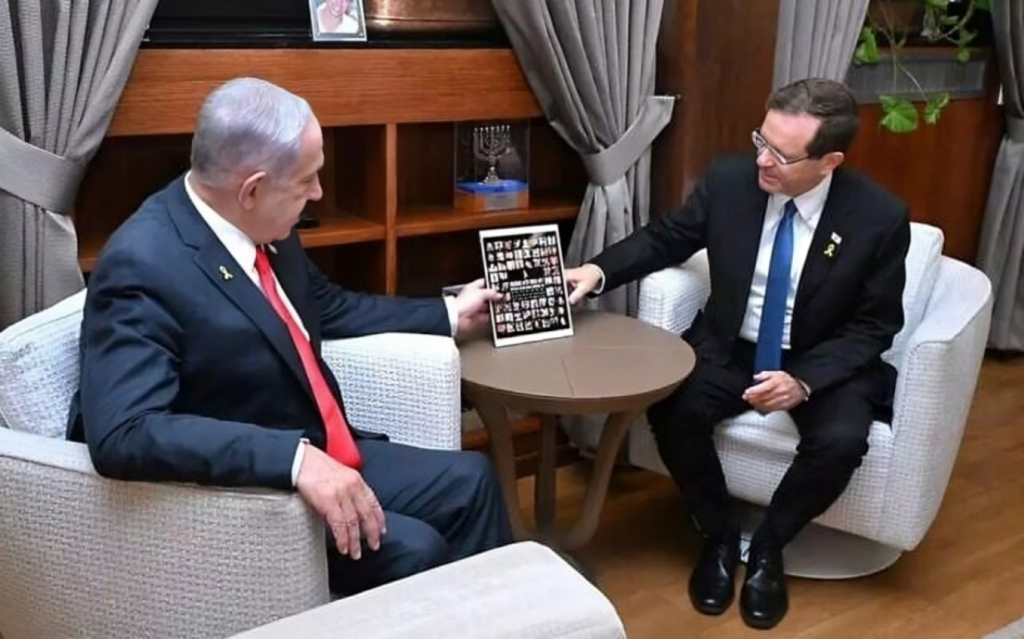
During a rare meeting between the two leaders in Jerusalem, Herzog underscored the urgency of reaching a breakthrough in negotiations aimed at returning Israeli hostages and ending the war in Gaza. A photograph of the captives, many of whom have been held in Gaza since the October 2023 attacks, was visibly placed on the table between them.
“I fully support these efforts, even when they involve difficult, complex, and painful decisions,” Herzog said in a statement from his office. “The cost is not simple, but I am confident that the cabinet and security establishment will rise to the challenge, as they have done so far.”
The Prime Minister’s Office declined to comment on the meeting.
Hostage Negotiations Intensify
As Netanyahu departed for the United States, a senior Israeli negotiating team was en route to Qatar for indirect talks with Hamas, following the group’s “positive” response to a US- and Israel-backed framework agreement.
According to Army Radio, the Israeli delegation includes Gal Hirsch, the government’s special envoy for hostages; Ophir Falk, Netanyahu’s political adviser; the deputy head of the Shin Bet, known only as “Mem”; and a senior Mossad official. Notably absent from the team are Mossad chief David Barnea, acting Shin Bet head “Shin,” and Strategic Affairs Minister Ron Dermer — key figures in earlier negotiations.
President Herzog wished the team success and urged global partners to exert maximum diplomatic pressure: “We have no time to waste.”
Proposal Details Emerge
Sources familiar with the mediation efforts revealed that the proposed agreement would unfold over 60 days in five stages. It includes the return of around half of the living hostages and half of the confirmed deceased captives.
Eight living hostages would be released on day one, followed by incremental returns: five bodies on day seven, another five on day 30, and eight more on day 60. Two additional living hostages would be released on day 50. This would leave 22 captives in Gaza, 10 of whom are believed to be alive. It remains unclear who will determine the specific individuals to be released.
However, Hamas has attached further conditions, including a commitment to continued negotiations for a permanent ceasefire, full resumption of humanitarian aid under UN oversight, and Israeli withdrawal to positions held before the March ceasefire collapsed.
Netanyahu’s office has labelled these terms “unacceptable.”
Political Stakes and Internal Tensions
The previous ceasefire collapsed after Netanyahu rejected the next phase of talks, which would have entailed a full IDF withdrawal and discussions on ending the war — a step vehemently opposed by his far-right coalition partners.
Hardliners in Netanyahu’s government insist on the war continuing until Hamas is eradicated. Their position aligns with Netanyahu’s long-standing stance, though in recent days he has hinted at a shift, suggesting that the release of the remaining hostages — estimated at 50 — is now a national priority.
Meanwhile, demonstrators have continued to rally in Tel Aviv and other cities, demanding the government secure a deal to bring the hostages home.
Trump, Iran, and Regional Diplomacy
Herzog’s appeal comes ahead of Netanyahu’s high-stakes discussions with President Trump, where the Gaza conflict will be the primary focus. Also expected on the agenda are Iran and the broader regional realignment, including potential normalisation deals with Saudi Arabia and Syria.
In a statement, Herzog thanked Trump for his “unwavering support for Israel” and for backing Israeli efforts to neutralise Iran’s nuclear capabilities during last month’s 12-day military campaign.
According to Herzog’s office, he and Netanyahu also discussed prospects for expanding the Abraham Accords — the 2020 agreements brokered by Trump that normalised ties between Israel and several Arab nations.
Reports suggest Netanyahu is collaborating with Trump on a broader framework that would formally end the Gaza war, reintroduce commitment to a two-state solution, and normalise diplomatic ties with both Riyadh and Damascus. However, Netanyahu has not publicly confirmed such plans.
Despite opposition from key coalition members, Netanyahu reaffirmed his twin objectives in a recent speech: “There will be no Hamas. There will be no Hamastan. We are not going back to that. It is over. We will release all our hostages.”
— Compiled from reporting by Nava Freiberg and Times of Israel staff