khaborwala online desk
Published: 24 Feb 2026, 09:26 pm
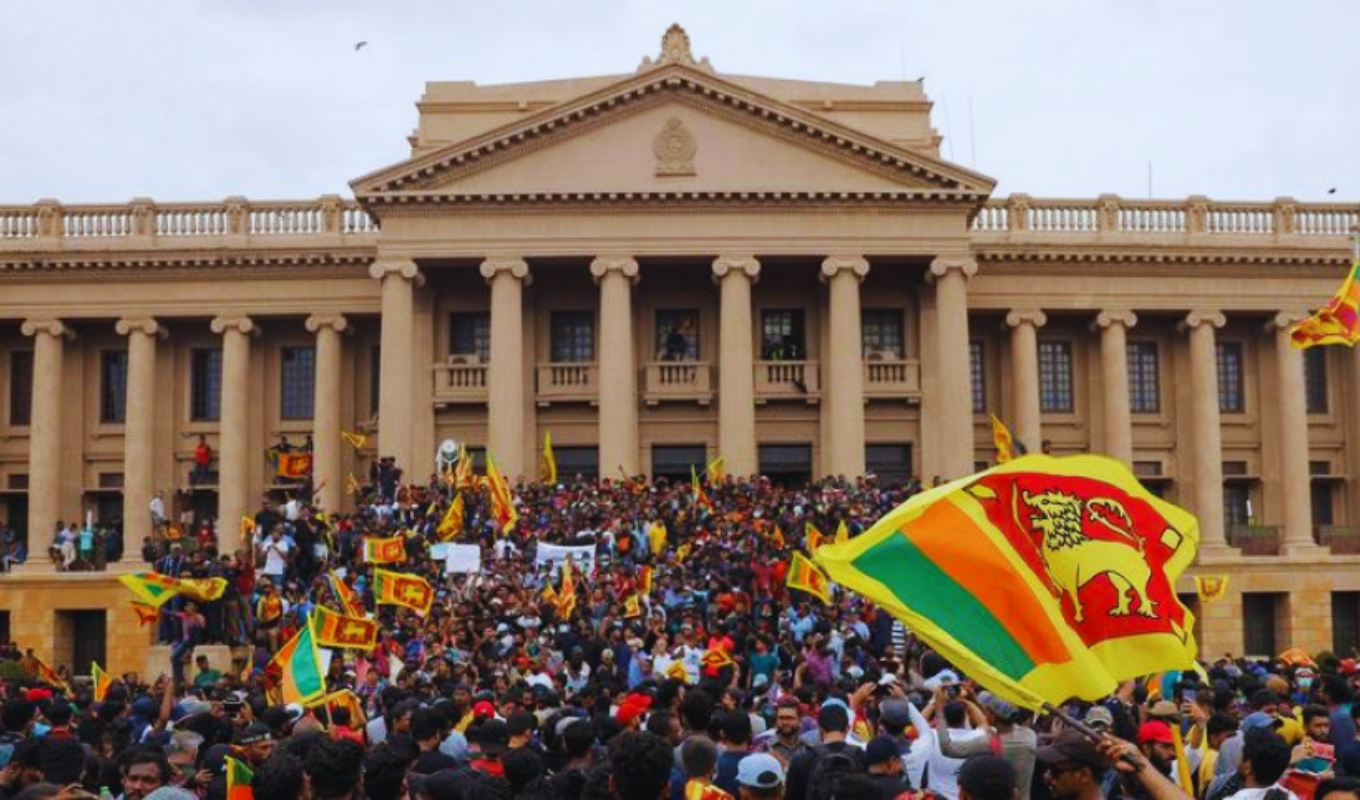
When governments fail to deliver stability, prosperity and dignity, public frustration can swell into mass protest. At times, that protest matures into revolution, toppling even the most entrenched regimes. Yet the true test comes afterwards: whether elections held in the wake of upheaval can translate popular energy into durable democratic governance. The recent experiences of five countries illustrate how varied — and fragile — that transition can be.
In 2022, Sri Lanka endured its gravest economic crisis since independence. Foreign reserves dwindled to near zero, inflation soared beyond 70 per cent at its peak, and shortages of fuel, medicine and basic commodities paralysed daily life. The “Aragalaya” protest movement forced President Gotabaya Rajapaksa to flee the country in July 2022, images of demonstrators occupying the presidential residence circulating worldwide.
Two years later, voters sought a fresh mandate. In the 2024 presidential election, left-leaning leader Anura Kumara Dissanayake secured victory, while his coalition, National People’s Power, emerged as a dominant parliamentary force. Backed by an International Monetary Fund recovery programme, the new administration pledged fiscal reform, anti-corruption measures and social protection. Since then, Sri Lanka has regained a degree of macroeconomic stability, though living costs remain high and structural vulnerabilities persist.
The 2010–11 uprising in Tunisia ignited what became known as the Arab Spring. After 23 years in power, President Zine El Abidine Ben Ali fled on 14 January 2011. Later that year, Tunisians voted in their first genuinely competitive election to form a constituent assembly tasked with drafting a new constitution.
Although Tunisia was initially hailed as the Arab Spring’s lone democratic success, persistent economic stagnation, unemployment and political fragmentation eroded public confidence. Subsequent constitutional changes and the consolidation of executive authority have led many observers to argue that the revolutionary promise has dimmed, with democratic institutions weakened rather than strengthened.
Inspired by events in Tunisia, Egyptians took to the streets in 2011, compelling President Hosni Mubarak to resign after nearly 30 years in office. Parliamentary elections in 2011–12 delivered over 70 per cent of seats to Islamist parties, including the Muslim Brotherhood. In 2012, Mohamed Morsi became Egypt’s first democratically elected civilian president.
However, political polarisation and economic strain culminated in a 2013 military intervention. General Abdel Fattah el-Sisi assumed power, marking a return to military-backed rule. Egypt’s democratic experiment had lasted scarcely a year.
The 2004 presidential election in Ukraine triggered the Orange Revolution, after allegations of electoral fraud favoured Viktor Yanukovych over pro-European candidate Viktor Yushchenko. Following weeks of mass protest, the Supreme Court annulled the result and ordered a re-run, which Yushchenko won.
While the revolution strengthened civil society and electoral oversight, it also deepened geopolitical divisions between Russia and the European Union — tensions that have profoundly shaped Ukraine’s subsequent trajectory.
In 2003, allegations of vote rigging sparked Georgia’s peaceful Rose Revolution. Opposition leader Mikheil Saakashvili swept to power in 2004 with an overwhelming majority, promising sweeping reforms and anti-corruption drives.
Although early reforms modernised state institutions and curbed petty corruption, critics later accused Saakashvili’s administration of centralising authority. Political alternation through elections did eventually occur, yet stability has remained uneven.
| Country | Year of Uprising | First Post-Revolution Election | Immediate Outcome | Longer-Term Trajectory |
|---|---|---|---|---|
| Sri Lanka | 2022 | 2024 Presidential | Reformist victory | Gradual stabilisation under IMF programme |
| Tunisia | 2011 | 2011 Constituent Assembly | Democratic transition | Institutional backsliding |
| Egypt | 2011 | 2011–12 Parliamentary | Islamist majority | Military reassertion (2013) |
| Ukraine | 2004 | 2004 Re-run Presidential | Pro-EU victory | Enduring geopolitical tension |
| Georgia | 2003 | 2004 Presidential | Reformist landslide | Mixed reform record |
These five cases underscore a sobering truth: revolutions may remove leaders, but they do not automatically secure accountable governance. Elections can legitimise new beginnings, yet without resilient institutions, economic reform and political compromise, revolutionary optimism can quickly give way to renewed instability.

> From Student Leader to Scholar Shamim’s Academic Ascent
> Ballots After Revolutions: Five Lessons
> Dermot Kennedy’s Live Concert in Lancaster
> Abul Khair Group to Hire 200 Staff
> Police Seek Return to Traditional Uniforms
> Sheikh Hasina Named First Accused Pilkhana Case
> Family Card Scheme: Recipients to Receive Monthly Allowance
> Bangladesh Ready for South Africa Tour; Full Schedule Here
> "I Did Not Seek This Office," Says Foreign Minister
> Violence Erupts in Gaibandha Over Alleged Political Feuds
> Prosecutor Alleges Corruption Against Chief Prosecutor
> Four family members injured in gas cylinder explosion in Comilla
> Sheikh Hasina Named First Accused Pilkhana Case
> Retention in Health Insurance: Tangible Benefits or Trust?


Irish singer-songwriter Dermot Kennedy is set to deliver an intimate live performance in Lancaster l...

Argentine football has been plunged into turmoil in recent weeks, but the disruption is coming not f...

MICHIGAN, USA — Residents and employers across Michigan are encountering significant disruptions in...

Slovenian striker Benjamin Sesko struck a decisive goal off the bench to secure a 1–0 victory for Ma...
The 2026 British Academy Film Awards (BAFTA) celebrated excellence across the global film industry,...
In a shocking outbreak of violence in western Ecuador, seven people were fatally shot by armed assai...
The death of notorious Mexican drug lord Nemesio Oseguera Cervantes, widely known by his alias “El M...

In an era where smartphones are ubiquitous, the need for cash, notebooks, or pens has significantly...
Between 1 January and 19 February this year, Malaysia’s Immigration Department conducted extensive o...
At least 19 people, including a British tourist, lost their lives when a passenger bus veered off a...
India’s pronounced tilt towards left-handed batting at the recent ICC Men’s T20 World Cup prompted l...

When Real Madrid invested €45 million last summer to prise Franco Mastantuono away from River Plate,...


Availabe for iphone & ipads

Available in google play
 বাংলা
বাংলা