khaborwala online desk
Published: 24 Feb 2026, 07:48 pm

The legal proceedings over the 2009 Pilkhana killings remain entangled in a complex web of judicial processes, nearly 15 years after the tragic events. On 25 February 2009, a violent uprising at the Bangladesh Rifles (now Border Guard Bangladesh) headquarters claimed the lives of 57 army officers, shocking the nation and leaving families of the victims to endure years of uncertainty and distress.
The prosecution has revealed that during witness testimonies in the explosive-related case connected to the killings, several senior political figures’ names surfaced. Notably, Prime Minister Sheikh Hasina, her younger brother Sheikh Taposh, politician Mirza Azam, and former defence secretary Jahangir Kabir Nanak, along with several other ministers and Awami League leaders at the time, were implicated.
Chief Prosecutor Borhan Uddin confirmed to the media that, based on these testimonies, formal charges will be brought against them. Currently, nearly 850 individuals are named as accused under explosives laws linked to the incident.
Out of a total of 1,200 witnesses, statements from 300 have already been recorded. Crucially, these testimonies have indicated involvement by senior figures, including Sheikh Hasina, in matters relating to the BDR killings. The case remains under active trial, with further testimonies pending. Following 5 August, several hundred accused individuals were granted bail.
The scale of the 2009 tragedy shocked both the military and civilian populations. Few could have imagined that such a secure installation would witness the massacre of 57 officers in a single day.
A summary of the case verdicts and judicial outcomes is provided below:
| Judicial Stage | Death Sentences | Life Imprisonment | Fixed-Term Imprisonment | Acquittals |
|---|---|---|---|---|
| Trial Court (2013) | 152 | 160 | 256 | – |
| High Court Appeal | 139 | 185 | 228 | 283 |
The Pilkhana case exemplifies the intersection of military insurrection and political accountability in Bangladesh. The inclusion of the sitting Prime Minister as the first-ever accused in this high-profile trial adds an unprecedented dimension to the proceedings, highlighting the long-lasting ramifications of the 2009 events.
With testimony collection ongoing and hundreds of defendants still navigating the legal system, the case continues to test the patience of all parties involved, especially the families of the slain officers, who await justice after more than a decade of legal wrangling.

> From Student Leader to Scholar Shamim’s Academic Ascent
> Ballots After Revolutions: Five Lessons
> Dermot Kennedy’s Live Concert in Lancaster
> Abul Khair Group to Hire 200 Staff
> Police Seek Return to Traditional Uniforms
> Sheikh Hasina Named First Accused Pilkhana Case
> Family Card Scheme: Recipients to Receive Monthly Allowance
> Bangladesh Ready for South Africa Tour; Full Schedule Here
> "I Did Not Seek This Office," Says Foreign Minister
> Violence Erupts in Gaibandha Over Alleged Political Feuds
> Prosecutor Alleges Corruption Against Chief Prosecutor
> Four family members injured in gas cylinder explosion in Comilla
> Sheikh Hasina Named First Accused Pilkhana Case
> Retention in Health Insurance: Tangible Benefits or Trust?


In a notable transition from student politics to the ivory tower, Shamim Hossain, a former prominent...

Abul Khair Group, one of Bangladesh’s prominent business conglomerates, has announced a major recrui...
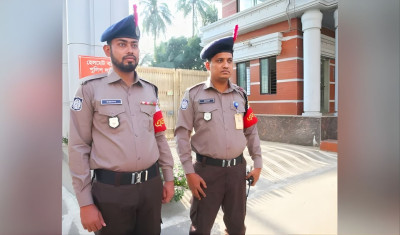
Concerns have resurfaced among field-level police personnel regarding the recently introduced unifor...
The Government of Bangladesh is set to launch a pilot programme for the much-anticipated Family Card...
In the realms of Bengali language, literature, and thought, Dr. Ahmed Sharif shone as a brilliant an...
In a harrowing incident in Jhalkathi, a police Sub-Inspector (SI) sustained injuries while attemptin...

The Bangladesh High Court has directed a formal investigation into unprecedented allegations of corr...
Students of Dhaka University have staged a protest outside Shahbagh Police Station, demanding legal...
Renowned Bangladeshi singer Mainul Ahsan Nobel was granted bail on Tuesday following his arrest the...
Sheikh Kabir Hossain, a towering figure in Bangladesh’s insurance sector and former President of the...
The High Commissioner of Bangladesh to Malaysia, Monjurul Karim Khan Chowdhury, has formally appeale...
Dhaka: Ali Hossain Fakir has been appointed as the new Inspector General of Police (IGP), succeeding...


Availabe for iphone & ipads

Available in google play
 বাংলা
বাংলা