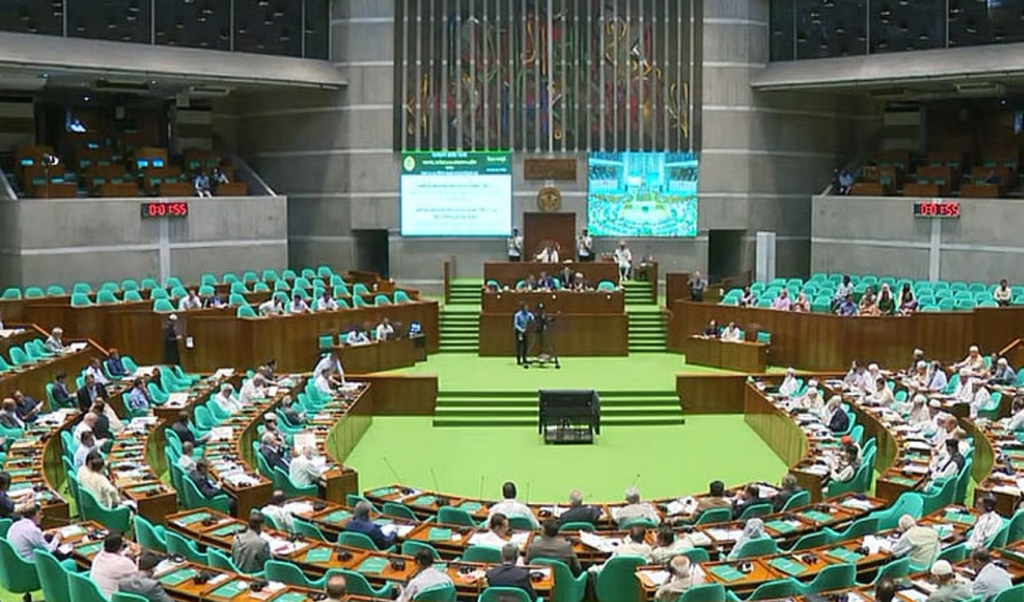
The Bangladesh Jatiya Sangsad has passed a legislative amendment making the capital penalty the maximum punishment for narcotic offences conducted via digital media. Home Minister Salahuddin Ahmed introduced the Narcotics Control (Amendment) Bill on Monday, which was subsequently approved by lawmakers in a voice vote. Beyond addressing cyber-facilitated illicit trades, the newly passed statute empowers the Department of Narcotics Control (DNC) with firearm privileges and paves the way for dedicated special tribunals.
While existing legislation already mandated the death penalty for direct production, smuggling, and distribution of contraband, this amendment updates the country’s legal apparatus to counter sophisticated cyber space operations. Under the newly enacted provisions, utilizing social media, websites, mobile applications, or any alternative electronic network to market, procure, supply, or broker illicit substances is classified as a severe criminal offence.
Financial Vectors and Evidence Thresholds Altered
The updated regulatory framework addresses the evolving financial mechanisms utilized by modern syndicates. Illicit transactions facilitated through digital payment systems, electronic wallets, and cryptocurrencies or virtual assets are explicitly criminalised under the law.
Crucially, the legislation removes a traditional legal bottleneck by explicitly stating that physical recovery of narcotics from a suspect’s custody is no longer mandatory to secure a conviction for digital offences. Electronic trails, transactional metadata, and communication records can serve as sufficient evidence in a court of law.
Proven offenders face varying terms of imprisonment or the maximum penalty of death. The judiciary has also been empowered to levy financial penalties up to 2,000,000 Taka. However, should an offence involve international networks or organised cross-border syndicates, the financial penalty ceiling rises to 50,000,000 Taka, alongside long-term custodial sentences.
Institutional Overhaul and Law Enforcement Accountability
To boost the operational capabilities of the Department of Narcotics Control, the bill authorises the creation of specialized internal units. The department can now establish its own canine tracking squads, and its personnel have been formally authorised to carry firearms during operations. Furthermore, while the jurisdiction of ordinary courts remains active, the government can now institute dedicated Narcotics Crime Suppression Tribunals in high-risk zones to ensure the swift disposal of backlogged cases.
Before the legislation passed on Monday, proposals to refer the bill to a public scrutiny and vetting committee were formally rejected after floor debates. During parliamentary discussions, some lawmakers voiced concerns regarding reports of law enforcement personnel occasionally colluding with drug cartels.
Responding directly to these concerns, Home Minister Salahuddin Ahmed assured parliament that strict administrative actions are being enforced, emphasizing that no member of the security forces found guilty of facilitating the illicit narcotics trade will be granted exemption from prosecution.