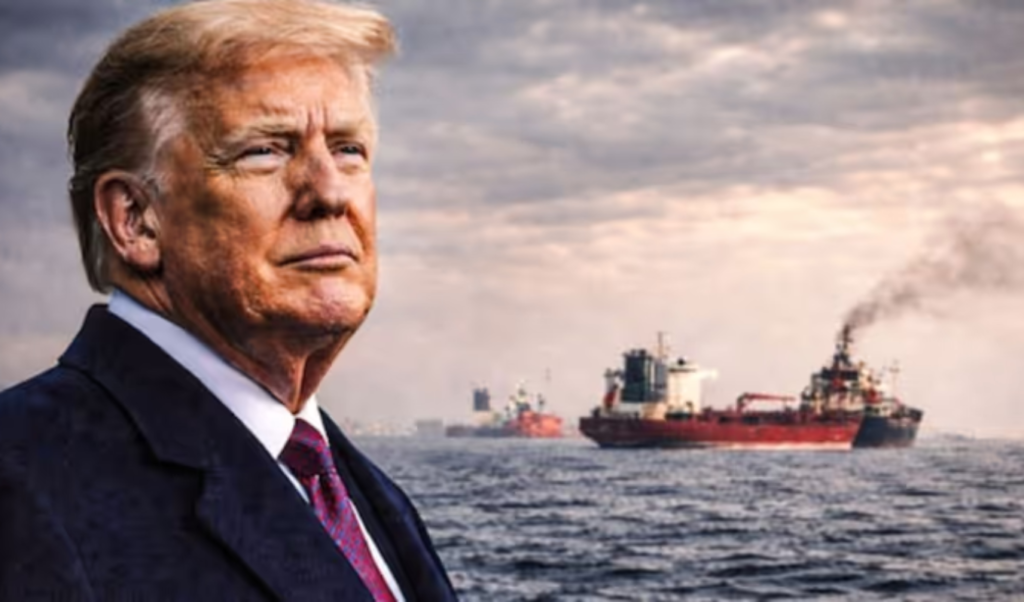
Military tensions between Iran and the United States have taken an unprecedented turn. US President Donald Trump has announced a controversial plan to seize control of the Strait of Hormuz, one of the world’s most critical and sensitive maritime energy chokepoints. In a move that has sent shockwaves through international shipping corridors, the US President also revealed proposals to levy a 20 per cent tariff or transit fee on all commercial vessels navigating through the waterway. According to Trump, this money will be collected from foreign nations to offset the immense costs incurred by the American military in guaranteeing security across the volatile region.
The explosive declarations were made during a high-profile interview with Fox News on Monday morning. Trump asserted that the United States would effectively become the sole guardian and protector of the Strait of Hormuz. He stated that Washington is prepared to strike Iran with extreme force and would very soon take physical custody of the strategic waterway to fully control its operational administration. This aggressive rhetorical escalation follows hot on the heels of a fierce exchange of gunfire between Iranian and US military forces in the Middle Eastern waters over the weekend.
Tariffs in the Name of Fair Security Costs
Following his televised interview, the US President took to his proprietary social media platform, Truth Social, to provide further details regarding the proposed operation. He indicated that the US administration is preparing to reimpose a draconian regime of economic and military sanctions against Iran. Whilst he maintained that the maritime route would remain open to other nations to ensure unhindered and fair passage, this freedom of navigation would carry a heavy financial price. Trump argued that a sense of “fairness” dictated that all cargo ships and commercial tankers pay a 20 per cent fee to cover the expansive security umbrella provided by the US military in the risk-heavy zone.
Located between the Persian Gulf and the Gulf of Oman, the Strait of Hormuz is universally recognized as the primary artery of the global energy market. A vast percentage of the world’s petroleum and liquefied natural gas is transported through this narrow channel daily. Consequently, any prolonged operational disruption or threat of blockade in these waters has historically triggered sharp spikes in global oil prices and severe shocks across international financial markets.
Global Trade Specialists Warn of Severe Escalation
International relations specialists and global trade analysts have reacted with deep concern, warning that Trump’s unilateral declaration could destabilise the geopolitical landscape. Legal experts have quickly questioned the statutory basis under international maritime law for a single nation to occupy an international strait and arbitrarily enforce transit taxes on sovereign commercial fleets.
With the long-standing shadow war between Washington and Tehran rapidly transitioning into direct conventional skirmishes, the Strait of Hormuz has increasingly come to resemble an active combat zone. The implementation of a mandatory American transit fee, coupled with the threat of direct territorial seizure, is widely expected to trigger retaliatory measures from Iran, whilst complicating diplomatic relations between the US and major energy-importing nations across Europe and Asia.