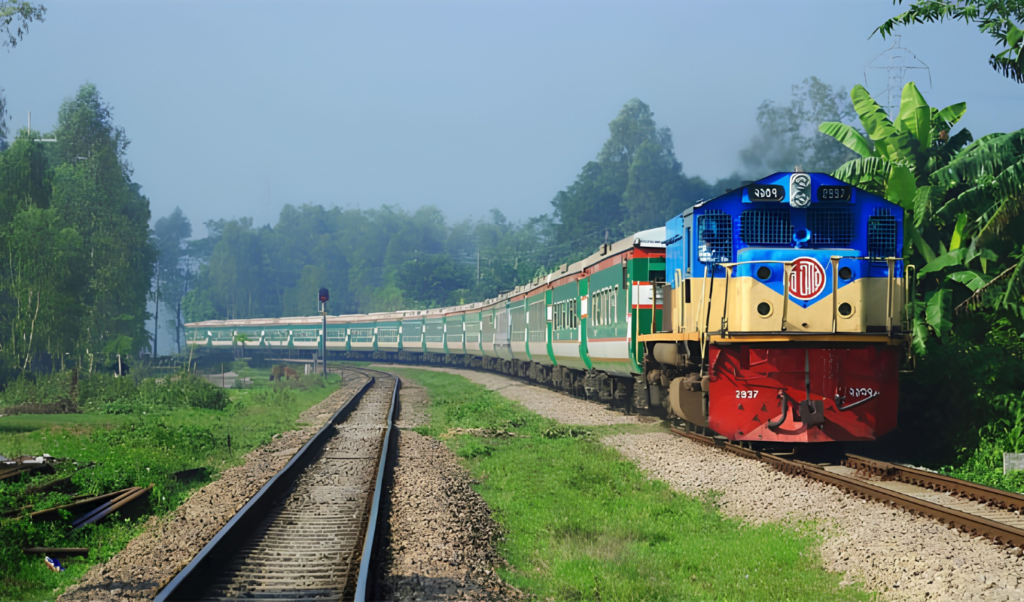
Bangladesh Railway has initiated plans to lease out an additional eleven mail and local trains in its Western Zone to private operators. A formal proposal seeking privatisation approval has already been dispatched to the railway headquarters. Officials state that the primary objective behind this strategic shift is to curb mounting operational losses and bolster stagnating revenue collection.
According to sources within the railway network, the Western Zone currently operates a total of 135 trains. This fleet comprises six international trains, 62 intercity services, 55 mail and commuter trains, and 12 local services. Out of these, 24 mail, commuter, and local trains have already been leased to private operators. The regional authorities have highlighted that running local and commuter trains under state management incurs expenditure that vastly exceeds generated income. Privatisation has emerged as a viable solution to navigate this financial deficit. Initial assessments indicate that the existing leased trains yield a net profit of approximately 13.3 million Taka per month after accounting for all operational costs. This financial turnaround prompted the decision to expand the leasing initiative to eleven more trains.
Financial statistics reveal that the Western Zone has consistently failed to meet its revenue targets despite transporting 37.6 million passengers and significant volumes of freight. During the 2023-24 financial year, the railway earned 6.49 billion Taka against a target of 10.77 billion Taka. The deficit widened in the 2024-25 financial year, where earnings dropped to 6.21 billion Taka against a higher target of 1.16 billion Taka. The downward trend persists into the current 2025-26 financial year; data from the first ten months up to February shows earnings of 5.66 billion Taka against a target of 8.25 billion Taka.
Senior railway officials blame severe manpower shortages and ticketless travel for these persistent losses. Ansar Ali, the Additional Chief Commercial Manager of the Western Zone, stated that the region faces acute staffing constraints. Recruiting additional permanent staff would further escalate operational overheads, worsening the financial strain. He also noted that passengers on local routes frequently evade paying fares, severely depressing revenue. Privatisation ensures strict ticket enforcement through private management.
Ahsan Ullah Bhuiyan, the Chief Commercial Manager, echoed these concerns, explaining that limited staff makes comprehensive ticket inspections on mail and local services nearly impossible. This regulatory gap causes significant financial leakage. He clarified that individual profit-and-loss accounts for each mail or local train are not maintained independently. Instead, all income and expenditure figures are integrated into a centralised system. Private leasing is seen as a pragmatic step to stabilise the network’s finances without increasing the state’s administrative burden.