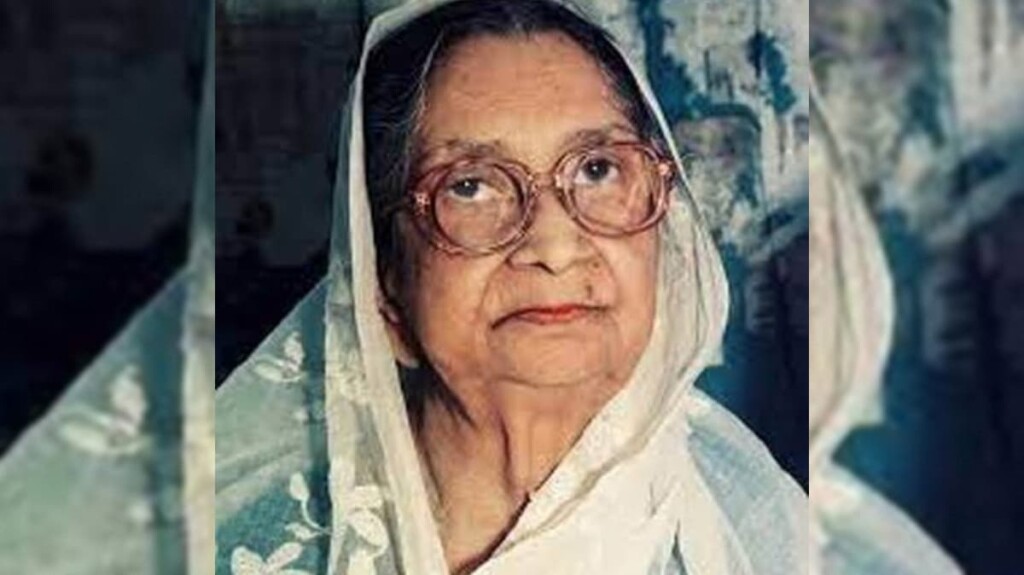
The narrative of Bengali literature, progressive culture, and the advancement of women’s rights is inextricably linked with the life of Begum Sufia Kamal. As an influential poet, essayist, social reformer, educator, and cultural organiser, she remained an uncompromising voice against social injustice and oppression. While her poetry beautifully articulated themes of nature, romanticism, humanism, and secular values, her public life was characterised by structural activism and a lifelong commitment to civil liberties.
Early Struggles and Intellectual Development
Born into a conservative, aristocratic family in Shaistabad, Barisal, on 20 June 1911, Sufia Kamal spent her youth in an era when social customs, particularly the practice of purdah, strictly curtailed the mobility and formal education of Muslim women. Lacking the opportunity to attend standard academic institutions, she engaged in rigorous self-education at home. She gained her initial literacy in Bengali from her mother, Sabera Khatun, and persistently pursued knowledge despite widespread societal resistance to female erudition.
At the age of thirteen, in 1924, she was wed to her cousin, Syed Nehal Hossein. Hossein was a man of liberal and modern outlook who actively nurtured her creative talents. Through his encouragement, she gained access to the works of prominent contemporary writers, including the Nobel laureate Rabindranath Tagore and the rebel poet Kazi Nazrul Islam, which laid the foundation for her independent literary career.
Literary Contributions and National Movements
Sufia Kamal entered the Bengali literary scene in 1926 when her debut poem, Basanti, was published in the esteemed journal Saogat. Her editorial capabilities were later cemented when she became the first editor of Begum, a pioneering weekly magazine that provided a vital platform for the intellectual and literary expression of Muslim women in Bengal.
Following the 1947 partition of British India, she moved from Calcutta to Dhaka, where she immediately immersed herself in regional geopolitical movements. During the Bengali Language Movement of the 1950s, she actively organised resistance and encouraged women to step outside domestic confines to defend their linguistic rights. During the 1971 Bangladesh Liberation War, she risked her personal safety by remaining in occupied Dhaka, openly opposing the atrocities of the Pakistani military and assisting pro-liberation activists.
Following the birth of Bangladesh, she stood at the vanguard of campaigns for democracy, human rights, and secularism, serving as the founding president of the premier women’s rights organisation, the Bangladesh Mahila Parishad.
Bibliography and Distinguished Distinctions
Over her multi-decade career, Begum Sufia Kamal produced a substantial body of work and received the highest civilian accolades of the nation.
| Creative Domain | Core Works and Direct Achievements |
| Poetic Anthologies | Sanjher Maya, Maya Kajal, Mon O Jibon, Udatto Prithibi, Shanti O Prarthona |
| Prose and Travel Literature | Keyar Kanta (Short Story Collection), Soviet Dinguli (Travel Memoir) |
| War Documentation | Ekattorer Diary (The Diaries of ’71 — a definitive historical record of the war) |
| State and Literary Honours | Independence Award, Ekushey Padak, Bangla Academy Literary Award, Begum Rokeya Padak, National Poetry Award |
Begum Sufia Kamal passed away on 20 November 1999. Her life was spent in constant pursuit of the ideal she so frequently championed: that women must be afforded the absolute right to shape their own destinies. Her legacy endures as an essential guide for humanitarian values and gender equality in the region.