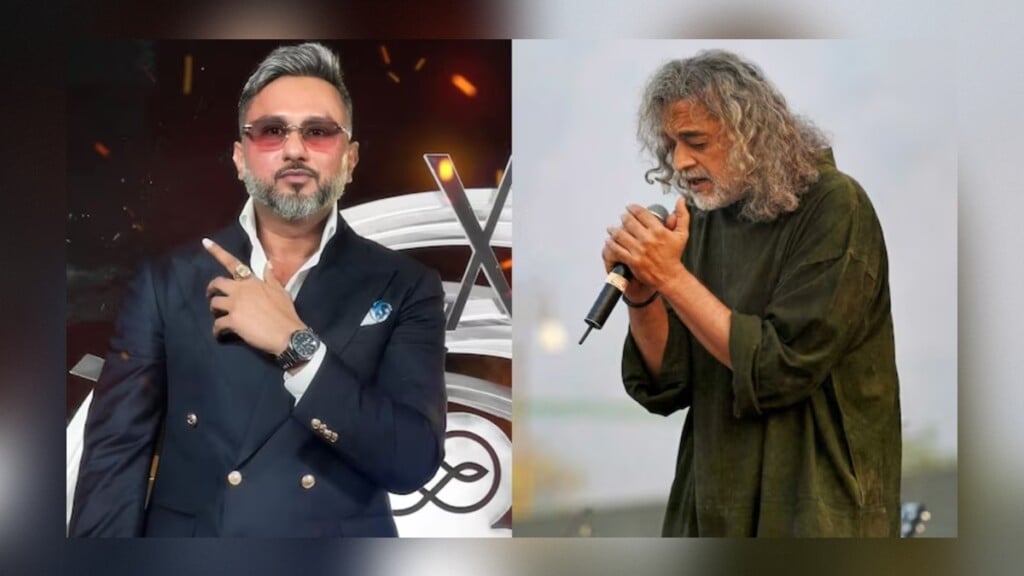
Indian rapper Yo Yo Honey Singh was among the audience at Lucky Ali’s concert in Dubai on 16 August, where he watched the veteran singer perform from the front row and later publicly praised him as a ‘legend’.
The concert was held at Coca-Cola Arena in Dubai, bringing Lucky Ali’s distinctive voice and long-established repertoire to the stage. Several of his best-known songs were performed during the evening, with members of the audience singing along to music that has remained familiar to listeners across generations.
Honey Singh was seen recording parts of the performance and capturing moments from the stage on his mobile phone. He later shared a video from the concert on social media, accompanying it with a tribute to Lucky Ali. In his message, Singh described Ali as a legend and acknowledged the singer’s enduring contribution to music.
The rapper’s tribute also highlighted the significance of independent musical expression. Lucky Ali has built much of his career around a distinctive artistic identity rather than relying solely on mainstream film music. His understated vocal style, melodic approach and personal songwriting have helped him establish a lasting connection with audiences.
Lucky Ali rose to wider prominence during the 1990s, particularly following the release of his 1996 album Sunoh. The album became an important milestone in his career and helped establish him as one of the recognisable voices of India’s independent music scene. Its songs stood apart from much of the commercial music of the period, both in sound and presentation.
Among his best-known works is O Sanam, a song that became closely associated with Lucky Ali and remains one of the defining tracks of his career. His voice also reached a broader audience through film music, including songs such as Ek Pal Ka Jeena and Na Tum Jaano Na Hum. Later, Safarnama introduced his distinctive vocal character to another generation of listeners.
A key feature of Lucky Ali’s career has been his ability to retain his individual musical identity over several decades. While Indian popular music has undergone significant changes in production, sound and audience preferences, his work has continued to be recognised for its simplicity and personal character.
Honey Singh represents a markedly different chapter in contemporary Indian music. He became widely known for bringing rap and modern urban sounds into mainstream popular culture, reaching a large audience through songs and commercial releases. His public appreciation of Lucky Ali therefore brings together two artists associated with different musical eras and styles.
The Dubai appearance also reflects Lucky Ali’s continuing relevance beyond the period in which many of his most celebrated songs were first released. His music has continued to circulate among listeners well beyond the 1990s, while live performances have provided opportunities for longtime fans and younger audiences to experience his work on stage.
For Honey Singh, attending the concert was not simply an appearance at another artist’s show. His decision to share footage from the event and describe Lucky Ali as a legend placed his admiration in the public domain and offered recognition from one generation of Indian musicians to another.
The moment in Dubai thus brought together two distinct strands of Indian popular music: Lucky Ali’s enduring independent musical identity and Honey Singh’s modern rap-driven approach. Singh’s tribute underlined the respect that Lucky Ali continues to command within India’s wider music community, decades after he first established himself as a distinctive voice.