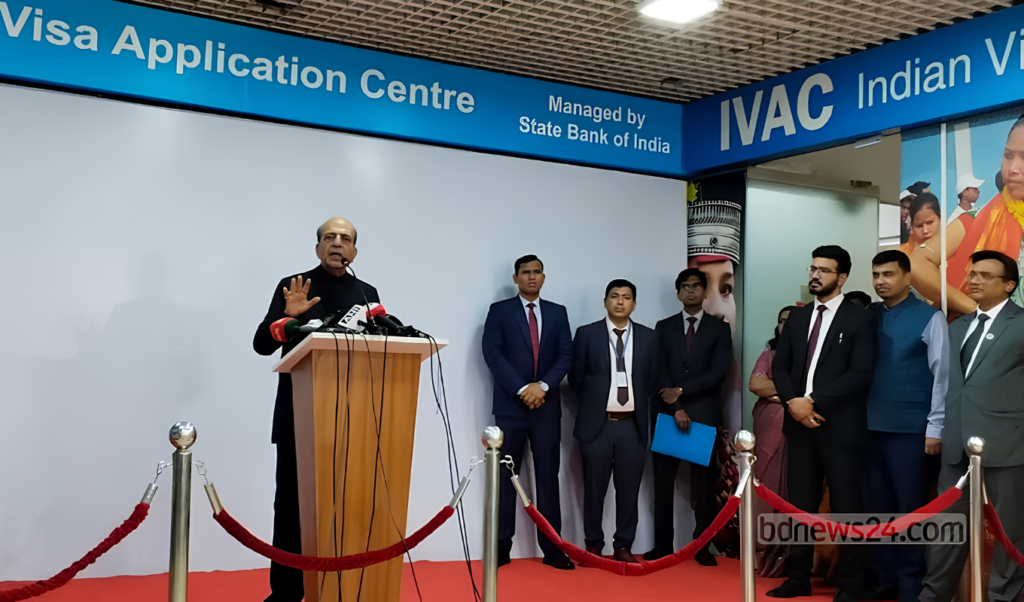
In a significant move aimed at normalising bilateral relations, India has announced the resumption of tourist visa services for Bangladeshi nationals. The newly appointed Indian High Commissioner to Bangladesh, Dinesh Trivedi, confirmed that Bangladeshi citizens can submit their tourist visa applications starting from 28 June. Initially, the service will be rolled out across five selected Indian Visa Application Centres (IVACs) before expanding nationwide.
The announcement was made during a press conference held at the premier IVAC situated within the Jamuna Future Park complex in Dhaka. Earlier that day, High Commissioner Trivedi had formally commenced his diplomatic mission by presenting his credentials to President Mohammed Shahabuddin at the Bangabhaban. Moving directly from his official induction to the visa centre, the diplomat expressed his satisfaction at reviving the service. He noted that normal tourist visa operations would resume for applications on Sunday, 28 June, while the prioritisation of emergency medical visas would remain steadfast on humanitarian grounds.
The initiative will initially operate through the visa application hubs located in major regional cities, namely Dhaka, Chittagong, Rajshahi, Sylhet, and Khulna. Operations will eventually scale up to include centres in other towns. Trivedi emphasised that the restoration of these travel facilities is expected to reinforce the historical people-to-people ties connecting the two sovereign nations.
The suspension of these services traces back to mid-2024. Amidst the widespread violence surrounding the anti-discrimination student movement, all Indian visa application centres were closed on 18 July 2024. Following the subsequent resignation of the Awami League government on 5 August, prolonged political instability forced an indefinite suspension of standard consular services. Although centres partially reopened in mid-August, the Indian Ministry of External Affairs, represented by spokesperson Randhir Jaiswal, maintained that operations would remain restricted to emergency medical cases until domestic security situation fully stabilised.
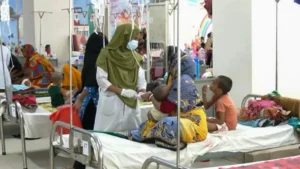
This extended freeze left thousands of Bangladeshi nationals facing immense hurdles. Business travellers found themselves unable to cross the border, whilst individuals requiring advanced medical treatment struggled to secure appointment slots despite the limited availability of medical visas. The diplomatic logjam persisted throughout the 18-month tenure of the interim government led by Muhammad Yunus. A breakthrough finally emerged following the general elections in February, where the Bangladesh Nationalist Party (BNP) secured an absolute majority. The political shift paved the way for renewed diplomatic engagement, culminating in early indicators by mid-May that tourist travel routes would soon reopen.
High Commissioner Trivedi recalled his arrival in the country via the Benapole land port on 12 June, where local journalists immediately raised queries regarding the visa crisis. Recognising it as a matter of public priority, he toured the Dhaka facility on his first day in office to interact with applicants. He stated that addressal of the issue was a mutually beneficial step that would bring immense relief to ordinary citizens.
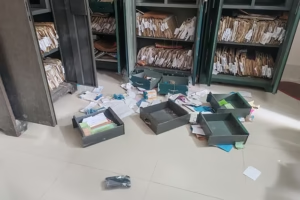
Addressing the root causes of the prior suspension, the High Commission stated that the restrictions were a direct consequence of severe security breaches during the August 2024 unrest. During the turmoil, the Indira Gandhi Cultural Centre in Dhanmondi was looted and vandalised, whilst five regional IVACs faced targeted attacks, placing Indian project officials under considerable threat. Despite these adverse security environments, the High Commission sustained baseline operations in the five principal cities to cater to critical medical needs. Throughout the period of restricted access, India continued to issue over 1,500 non-tourist visas daily, demonstrating a commitment to addressing urgent travel requirements.