khaborwala online desk
Published: 10 Mar 2026, 03:34 pm
The forthcoming national budget for the 2026–27 fiscal year faces a complex array of challenges, according to the Centre for Policy Dialogue (CPD). Rising inflation, significant shortfalls in revenue collection, sluggish investment, and delays in development project implementation are expected to exert considerable pressure on the government’s fiscal and economic management. Experts emphasise that addressing these issues will require targeted measures to control inflation, reform revenue collection, stimulate investment and employment, and strengthen social protection programmes.
The observations were presented during a media briefing held on Tuesday at CPD’s Dhaka office. The briefing featured Dr Mostafizur Rahman, CPD’s Senior Fellow, and Dr Fahmida Khatun, Executive Director, who delivered the main policy paper.
The policy paper notes that the government’s first budget is being formulated at a time when the economy is simultaneously experiencing high inflationary pressure and low revenue collection alongside investment bottlenecks. It recommends realistic measures to tackle these challenges, including:
Reforming policies to boost investment and employment
Reducing taxes on renewable energy
Increasing excise duties on tobacco products
CPD’s analysis warns of a widening revenue shortfall. From July 2025 to January 2026, the National Board of Revenue (NBR) reported only a 12.9% growth in tax collection, far below the full-year target of 34.5%. This has resulted in an estimated deficit of nearly BDT 60,000 crore. To meet the annual target, tax collection in the remaining months would need to rise by nearly 59%, a highly challenging prospect.
Implementation of the Annual Development Programme (ADP) has been slow. Between July 2025 and January 2026, only 20.3% of ADP allocations were utilised, the lowest rate in 15 years. CPD attributes this to weak project management, bureaucratic hurdles, and government decisions to limit spending on some major projects.
Meanwhile, government reliance on bank borrowing to cover the budget deficit has increased, with loans amounting to nearly BDT 59,655 crore from July to December 2025. Economists caution that excessive dependence on bank financing could crowd out private investment.
Consumer prices have remained between 8% and 9% during the first eight months of the fiscal year, driven largely by rising food prices. CPD warns that continued disruptions in fuel supply due to Middle East conflicts may exacerbate inflation.
Exports contracted by 3.2% from July 2025 to February 2026. However, remittance inflows and overseas employment have helped stabilise foreign exchange reserves, which now stand at approximately USD 30.4 billion, with the BDT remaining relatively stable against the US dollar.
CPD recommends:
Reducing Taxes on Renewable Energy: Customs duties on solar panels, wind turbines, and battery storage should be capped at 5%, with VAT reduced from 15% to 10% to encourage investment.
Increasing Tobacco Taxes: Health-related surcharges on cigarettes, bidis, and chewing tobacco should rise from 1% to 5%, VAT from 15% to 20%, and a fixed excise duty of BDT 6 per gram imposed on zarda and gul.
Strengthening Agriculture and Social Safety Nets: Prioritising fertiliser supply, agricultural production, and canal excavation, alongside effective implementation of ‘Family Card’ and ‘Farmer Card’ schemes.
Enhancing Education and Research: Increasing allocations for education, providing more research support for universities, and expanding student scholarship programmes.
CPD concludes that a combination of effective revenue reform, investment-friendly policies, and reinforced social protection can stabilise the economy. Prioritising these measures in the upcoming budget could play a pivotal role in economic recovery.
| Indicator | Target FY 2025–26 | Actual (Jul–Jan) | Shortfall / Remarks |
|---|---|---|---|
| Revenue Growth | 34.5% | 12.9% | BDT 60,000 crore deficit |
| ADP Implementation | 100% | 20.3% | Lowest in 15 years |
| Bank Borrowing | – | BDT 59,655 crore | Crowding out private investment |
| Inflation | – | 8–9% | Food prices driving cost of living |
| Export Growth | – | -3.2% | Partially offset by remittances |
| Forex Reserves | – | USD 30.4 bn | Stable BDT/USD exchange rate |

> Nine Recommendations to Reduce Eid Road Accidents
> Senior Police Officers Promoted and Transferred
> OneLife Assurance Named Zambia’s Top Life Insurer 2026
> Captain Needs Time to Build Strong Team: Miraz
> Life Insurance Sector Surges Over 20% in February
> Sons Accused of Beating Father Over Property
> OpenAI Hardware Chief Resigns Over Pentagon Deal
> Zurich Insurance Acquires RedClick from Generali
> Bruno Mars’ ‘The Romantic’ Debuts at No. 1
> Major Attack on Bahrain’s Key Oil Refinery
> Justin Bieber Clashes With Paparazzi in L.A.
> Dreams End in Four-Goal Defeat for Bangladesh
> Bangladesh Steel Prices Surge Towards Record Highs
> Bangladesh Bank Eases Share Transfer and Sale Proceeds Repatriation for Foreign Investors

Road accidents in Bangladesh tend to surge every year during the Eid holidays, claiming numerous liv...
The Government of Bangladesh has announced the promotion of three senior police officers and the tra...

Lusaka, Zambia – OneLife Assurance Limited has been officially recognised as the Best Life Insurance...
Bangladesh’s cricket captain, Mehedi Hasan Miraz, addressed the media ahead of the three-match One D...

India’s life insurance industry demonstrated robust growth in February 2026, with total premiums ris...
In Teknaf, Cox’s Bazar, two sons have been accused of fatally assaulting their 70-year-old father ov...
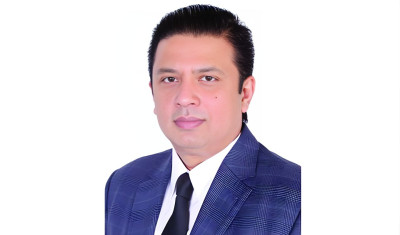
Dhaka Chamber of Commerce and Industry (DCCI) President, Taskin Ahmed, has warned that Bangladesh’s...

Shahbagh, Dhaka – Business owners in Shahbagh, a key commercial hub near major healthcare facilities...
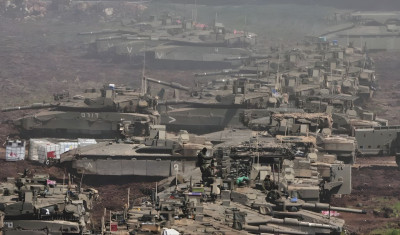
Senior Israeli officials are reportedly growing increasingly anxious over the ongoing military opera...
Eight senior officials from the Public Works Department are scheduled to travel to the United States...
The country is not facing any shortage of fuel, and there are currently no plans to increase prices,...
In a swift and coordinated operation, police in Chattogram have successfully rescued a three-year-ol...


Availabe for iphone & ipads

Available in google play
 বাংলা
বাংলা