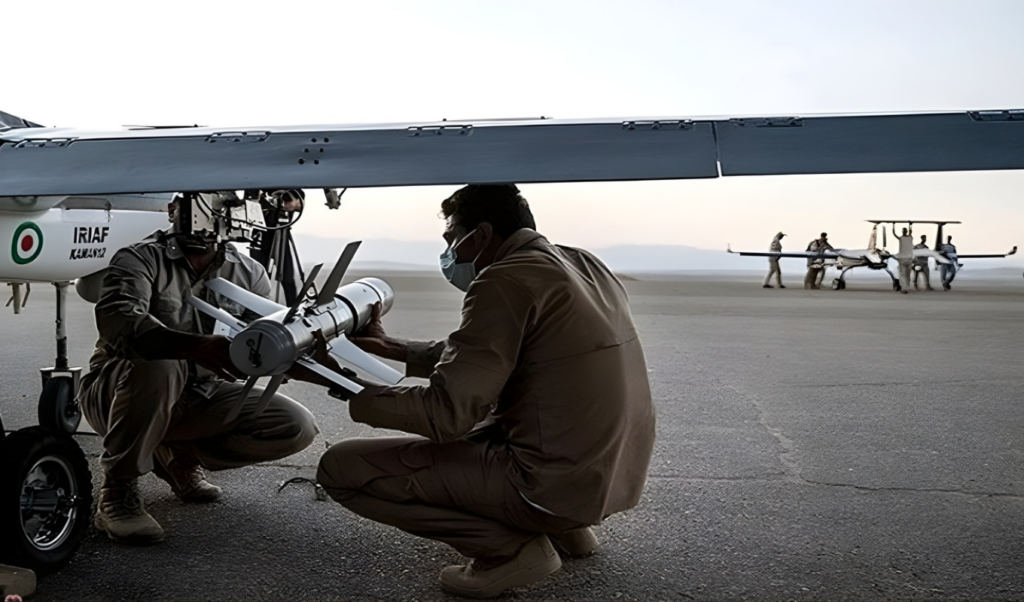
The Iranian Armed Forces have significantly expanded and refined their database of potential military targets during recent lulls in active hostilities. Speaking during a televised broadcast on Tuesday, Brigadier General Mohammad Akraminia, a spokesperson for the Iranian Army, confirmed that the military has utilised periods of relative calm to bolster its strategic readiness and modernise its arsenal in anticipation of further conflict with the United States and Israel.
Strategic Updates and Intelligence Gathering
General Akraminia asserted that the Iranian military does not consider the current cycle of regional hostilities to be concluded. He stated that whenever a ceasefire has been implemented or active fighting has paused, the Iranian Army has remained active. Due to a fundamental “mistrust of the enemy,” the military has focused on updating its “target bank”—a comprehensive database of strategic locations and assets belonging to adversaries.
This process involves:
-
Target Verification: Refining the coordinates and strategic importance of existing targets.
-
Database Expansion: Adding new high-value assets to the intelligence registry.
-
Field Intelligence: Incorporating real-time data gathered through surveillance during the cessation of active strikes.
Military Modernisation and Readiness
The spokesperson emphasised that the Iranian military has moved beyond mere maintenance, focusing heavily on the dual tracks of production and technological upgrades. According to General Akraminia, the military has integrated practical lessons learned from recent combat scenarios into their current defensive and offensive doctrines. He noted that the army’s surveillance, monitoring, and equipment-fitting operations have continued without interruption, maintaining a state of “full military readiness.”
“If the enemy launches another act of aggression,” Akraminia warned, “they will be confronted with new military equipment, revised tactics, and engagements in entirely new operational theatres.” He reiterated that for the Iranian military, the prevailing environment remains effectively a wartime footing.
Overview of Iranian Military Strategic Posture
The following table outlines the key pillars of the Iranian Army’s current operational focus as described by official military communications:
| Strategic Pillar | Action Taken | Operational Objective |
| Intelligence | Updating and enriching the ‘Target Bank’. | Ensure precision in retaliatory or preemptive strikes. |
| Technology | Upgrading existing hardware and increasing production. | Enhance the lethality and range of domestic weaponry. |
| Tactics | Integrating combat experience into training. | Adapt to modern electronic and asymmetric warfare. |
| Surveillance | Continuous monitoring of US and Israeli movements. | Prevent tactical surprises during ceasefire periods. |
| Readiness | Maintaining a ‘Full Combat’ alert status. | Immediate response capability to external aggression. |
Contextual Background
The remarks by Brigadier General Akraminia come amidst a period of heightened regional volatility involving the “Axis of Resistance” and Western-aligned forces. Iran has historically relied on a domestic military industry to circumvent international sanctions, focusing on drone technology, ballistic missiles, and naval fast-attack craft.
The Iranian Army (Artesh) and the Islamic Revolutionary Guard Corps (IRGC) have frequently signaled their intent to respond to any infringement on Iranian sovereignty. By publicly announcing the update of their target database, the military leadership aims to project a posture of deterrence, suggesting that any future escalation will be met with a more sophisticated and geographically broader military response than previously observed.