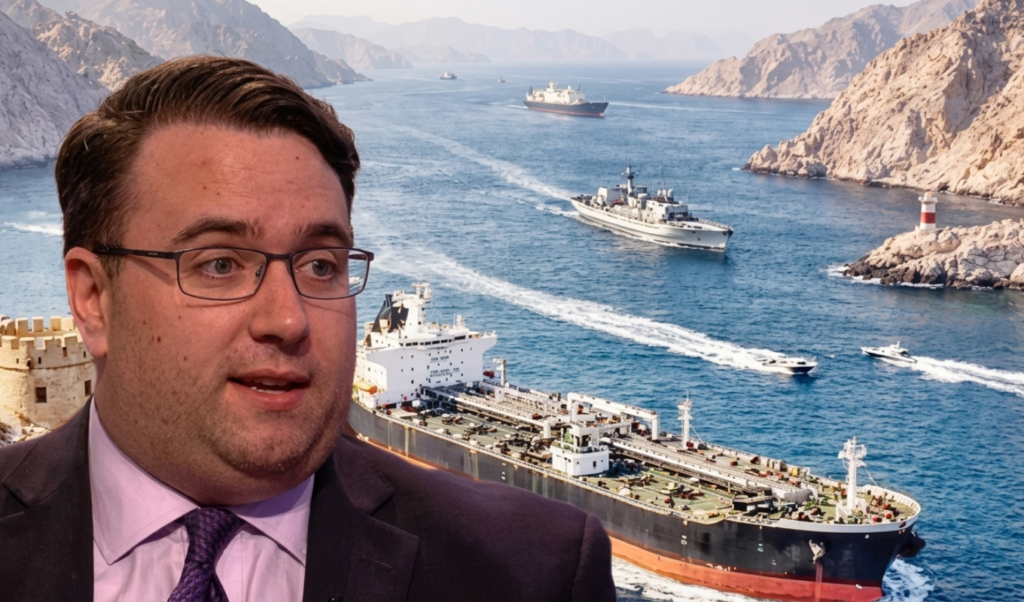
The unilateral dominance asserted by Iran over the Strait of Hormuz and its persistent attempts to disrupt maritime traffic directly contradict the established principles of international law. This assessment was articulated by Paul Musgrave, an associate professor of politics at Georgetown University in Qatar, who clarified the complex geopolitical realities surrounding this highly sensitive and critical maritime corridor.
Speaking in a formal interview with the international news broadcaster Al Jazeera on Sunday, 17 May, the political analyst emphasized that the recent operational maneuvers and assertions made by Iranian authorities run counter to the foundational legal frameworks governing global waters.
Direct Contravention of the Law of the Sea
According to Professor Musgrave, the current regulatory and military actions undertaken by Iran constitute a direct violation of the core principles enshrined within the United Nations Convention on the Law of the Sea (UNCLOS). Under international maritime law, commercial vessels belonging to all sovereign nations possess an explicit and unalienable right to free, unhindered, and safe passage through designated international waterways and straits used for international navigation.
By denying these established transit rights and actively interfering with the movement of merchant shipping, Iran is creating a highly dangerous precedent for global maritime security and international commercial trade. The academic expert warned that tolerating such state behavior threatens the rules-based international order that has secured global shipping lanes for decades.
Broader Implications for Global Shipping Chokepoints
The political analyst further observed that the operational crisis generated by Iran’s maritime policy would not remain confined within the geographical limits of the Strait of Hormuz or the immediate waters of the Persian Gulf. Instead, the strategic implications of allowing a single coastal state to exert unlawful unilateral control over an international shipping lane could rapidly proliferate across other critical maritime chokepoints worldwide.
| Global Maritime Chokepoint | Regional Location | Strategic Importance |
| Strait of Hormuz | Persian Gulf / Oman | Primary conduit for global petroleum exports |
| Strait of Malacca | Indian Ocean / Pacific Ocean | Main shipping channel between Asia and Europe |
| Suez Canal | Egypt | Crucial artificial waterway linking European and Asian markets |
| Bab al-Mandab | Red Sea / Gulf of Aden | Vital transit point for oil and commercial cargo vessels |
Professor Musgrave noted that if international law is effectively subverted by one nation without facing collective enforcement, the security of other indispensable maritime corridors—including the Strait of Malacca, the Suez Canal, and the Bab al-Mandab strait—could be placed in immediate jeopardy by other regional powers seeking to emulate these tactics.
Hypothetical Precedents and Economic Realities
To demonstrate the systemic danger of the situation, Professor Musgrave presented a comparative example, stating that if the international community accepts Iran’s unilateral actions, other powerful nations might be incentivized to make similar territorial or regulatory demands over international waters. For instance, if a nation like Spain were to independently impose arbitrary restrictions or prohibitions on commercial shipping traversing the Mediterranean Sea, it would trigger an unprecedented catastrophe for the global trading infrastructure.
Economic experts and energy analysts concurrently emphasize that the Strait of Hormuz is uniquely critical to the global economy, as approximately one-fifth of the world’s total petroleum consumption passes through this narrow waterway daily. Consequently, any prolonged political instability, military friction, or operational disruption within this specific channel is guaranteed to exert a severe and immediate destabilising impact on global financial markets, commodity pricing, and international energy security.