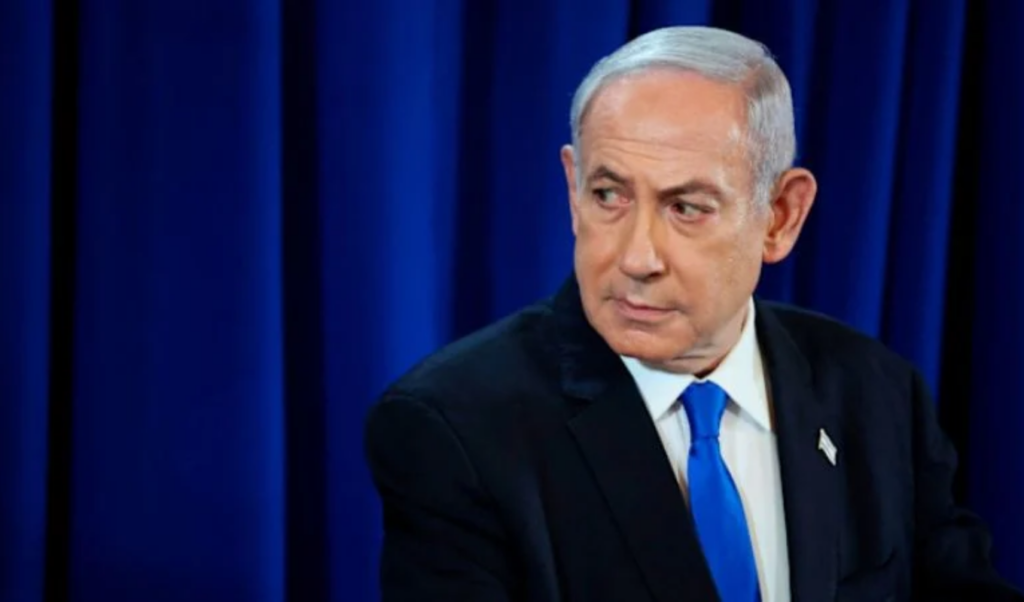
Despite the death of Ayatollah Ali Khamenei and nearly two weeks of sustained bombing campaigns, Iran’s political system remains intact. Meanwhile, U.S. President Donald Trump is reportedly considering an accelerated conclusion to the increasingly costly conflict. Amid this backdrop, multiple Israeli security sources have revealed that, during the airstrikes, there was no realistic plan to trigger a regime change in Tehran. According to these sources, Israel had hoped that the Iranian public might take to the streets in revolt following the attacks, yet the operation lacked solid intelligence support to substantiate such expectations.
Current and former Israeli intelligence officials now assert that the success of the operation largely hinges on the fate of 440 kilograms of enriched uranium. Following last year’s June escalation, this uranium has been stored beneath a mountainous region in Iran.
Analysts warn that this quantity of uranium could potentially yield materials sufficient for more than ten nuclear warheads. Should the uranium remain within Iran, the nation could rapidly advance towards the production of nuclear weapons.
A senior former Israeli defence and intelligence official with experience on Iran notes, “The 440 kilograms of enriched uranium represents one of the clearest indicators of the conflict’s outcome. Much of the operation’s success is contingent upon it.” He adds that Israel now faces two options: either remove the enriched uranium from Iranian territory or ensure the presence of a government capable of securely safeguarding the material.
Hardline factions within Iran have long argued that nuclear deterrence is the Islamic Republic’s ultimate guarantee of survival. This principle would be further strengthened if the current regime endures. Reports indicate that the United States is considering a high-risk military operation to seize the enriched uranium safely. Earlier diplomatic discussions had also suggested that Iran might be required to transfer its enriched uranium to a third country.
A former Israeli official warns that the ongoing conflict is a high-stakes gamble. Success could reshape the Middle East entirely. Conversely, if Iran retains both its regime and the 440 kilograms of uranium, the countdown to its nuclear weapon capability will begin.
Joab Rosenberg, former deputy head of Israel’s military intelligence research division, elaborates: if the uranium remains in Iranian hands, Israel’s eventual victory would amount to a ‘Pyrrhic victory’—a success that carries long-term strategic loss. In a social media statement, he emphasised that allowing 440 kilograms of enriched uranium to remain in Iran would constitute Israel’s defeat.
The assassination of Ayatollah Khamenei could further amplify Iran’s nuclear threat. He had invested substantial economic and political resources into a strategic programme but had not authorised the final step of weapon production. His son, Mojtaba Khamenei, has an unclear stance. A former senior Israeli intelligence official observes, “We had comprehensive insight into Ali Khamenei’s decision-making. With Mojtaba, there is significant uncertainty. It is assumed he may move swiftly toward nuclear weapon development.”
Ongoing hostilities might temporarily delay Iran’s nuclear programme. However, any political decision to advance would markedly heighten the threat to Israel. Israeli supporters of the campaign hope that even if the regime survives, its nuclear capability will be neutralised. They are reportedly prepared to accept long-term regional conflict, extending operations to Lebanon, Syria, or Yemen if necessary.
Potential Nuclear Capability Overview
| Component | Quantity | Potential Warheads | Strategic Implication |
|---|---|---|---|
| Enriched Uranium | 440 kg | 10+ | Rapid nuclear weapon development |
| Storage Location | Mountain Bunker | – | Difficult target, secure containment |
| Operational Risk | High | – | Requires high-risk military intervention |
This analysis underscores that the control of 440 kilograms of enriched uranium is now the decisive factor in Israel’s strategic position and the broader balance of power in the Middle East.