Khaborwala Online Desk
Published: 09 Mar 2026, 11:13 am
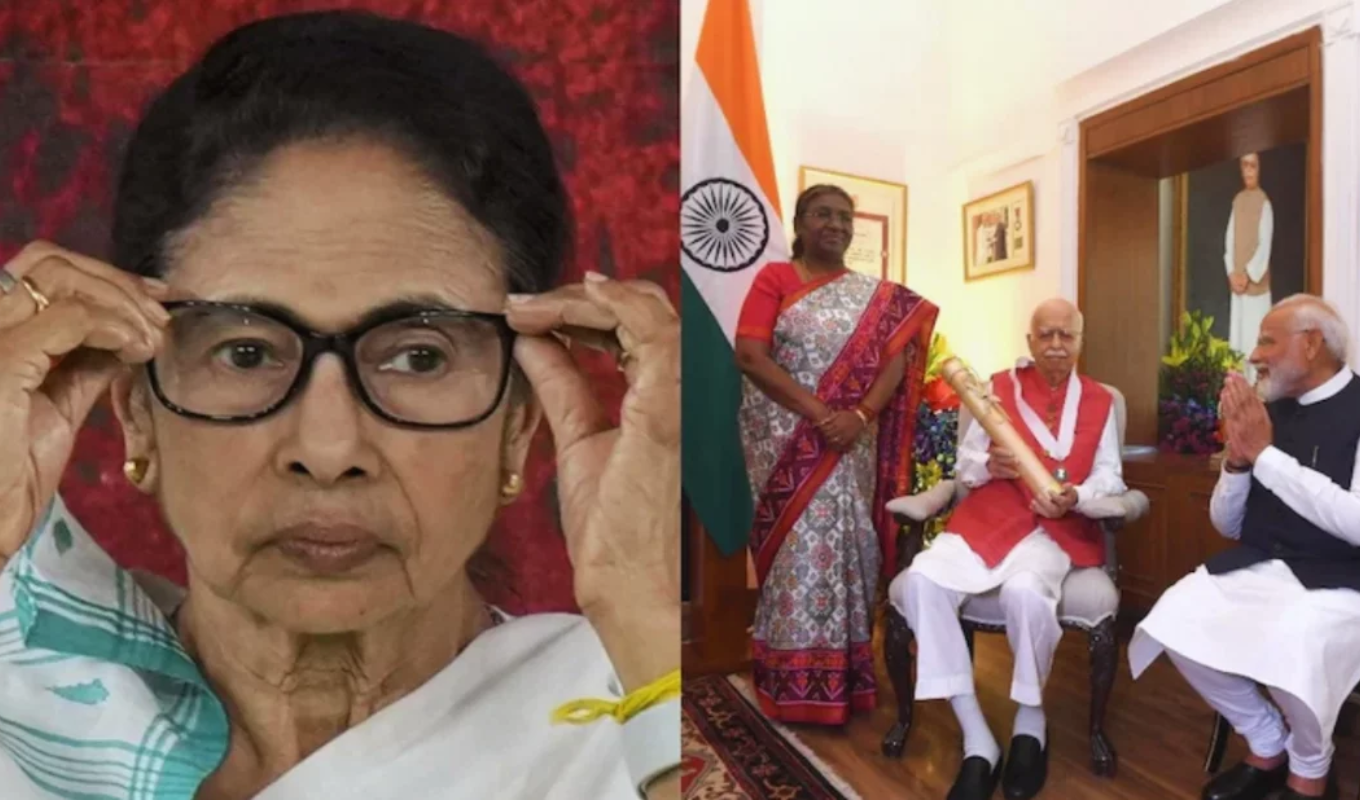
West Bengal Chief Minister Mamata Banerjee has launched a pointed rebuttal against Prime Minister Narendra Modi amid ongoing political tensions, following criticism over her handling of President Droupadi Murmu’s recent visit to Darjeeling. The exchange has added a new layer to the growing rivalry between the two leaders.
At a public rally on Sunday, 8 March, Mamata displayed a photograph from 31 March 2024, when President Murmu presented the Bharat Ratna to L. K. Advani. The image shows the President standing while Prime Minister Modi is seated beside her. Using the photograph as evidence, Mamata questioned the Prime Minister’s respect for the nation’s first tribal woman President.
Addressing Modi directly, Mamata stated: “Honourable Prime Minister, this is for you. Do you respect the President? She is a woman and a tribal leader. Then why is the President standing while you are sitting?” She argued that while the Prime Minister often speaks of respecting the office of the President, the photograph reveals who truly honours the position.
Mamata further criticised Modi for his political appearances in West Bengal during election campaigns, accusing him of speaking carelessly and using the President’s visit for political leverage. She claimed the Bharatiya Janata Party (BJP) was exploiting the country’s highest constitutional office for partisan gains.
The dispute arose when President Murmu attended the Ninth International Santhal Conference in Darjeeling. During her speech, she expressed disappointment that neither the Chief Minister nor other ministers had formally welcomed her. Addressing Mamata as her “younger sister,” the President remarked that she had come as a daughter of Bengal and was unaware why the Chief Minister had not attended. She also voiced frustration over venue changes and inadequate state support, suggesting that the state administration may not prioritise the welfare of tribal communities.
In response, Prime Minister Modi described the incident on X (formerly Twitter) as “shameful and unprecedented,” stating that the disrespect shown to a President from a tribal background deeply wounded the conscience of the Indian people. He accused the West Bengal government of violating constitutional norms and failing to uphold the dignity of the office during International Women’s Day celebrations.
Mamata denied the allegations of protocol violations, explaining that the event was organised by a private entity, the International Santhal Council, and that the district administration had formally informed the President’s office that the organisers lacked the capacity to manage such an important function. She confirmed that the Mayor of Siliguri and the Police Commissioner had welcomed the President, while the Chief Minister’s name did not appear on the approved protocol list, explaining her absence.
Meanwhile, the Union Home Secretary, Govind Mohan, has reportedly asked the West Bengal Chief Secretary to submit a report regarding potential breaches of protocol during the President’s visit.
| Detail | Information |
|---|---|
| Event | Controversy over President Droupadi Murmu’s visit to Darjeeling |
| Date | 8 March 2026 |
| Chief Minister | Mamata Banerjee (West Bengal) |
| Prime Minister | Narendra Modi |
| President | Droupadi Murmu, first tribal woman President of India |
| Location | Darjeeling, West Bengal |
| Photo Referenced | 31 March 2024, Bharat Ratna presentation to L.K. Advani |
| Main Issue | Alleged protocol breach and respect for the President |
| Official Clarification | Chief Minister absent as per approved protocol list; private organisers held responsibility |
The incident has reignited debates on the respect accorded to constitutional offices, tribal representation, and the intersection of politics and protocol in India. Analysts note that the episode illustrates the growing political polarisation in West Bengal and the central government’s involvement in state affairs, raising questions about protocol, courtesy, and political optics.

> Asif Akbar Cleared in Foreign Liquor Case
> Messi’s “Last Dance” That Never Happened
> Oil Prices Surge Amid Global Supply Concerns
> Tangail Man Killed in Saudi Missile Attack
> Barcelona Leads La Liga, PSG Faces Lens Pressure
> Minab School Attack: Truth Behind The Tragedy
> NHCX Set to Transform Health Insurance Claims
> Nina Ong Transforms Great Eastern Life Indonesia
> Arrests in India of Suspects in Hadi Killing
> Xavi Claims Laporta Blocked Messi’s Barcelona Return
> Iran Claims US Soldiers Detained, Trump Denies
> Sri Lanka Offers Free Visa to Rescued Iranian Sailors


Lionel Messi reportedly wanted to return to Barcelona—but why did the eagerly anticipated “last danc...
Global oil markets have been thrown into turmoil following Iran’s retaliatory strikes in response to...

The European football title races are heating up across the continent, with several leagues witnessi...
On 28 February, a catastrophic incident shook the city of Minab in Iran, when a primary school was h...

The distance spanned nearly four thousand kilometres, from Sydney to Perth. While the Western Sydney...
Iran’s Foreign Ministry spokesperson, Esmaeil Baghaei, has launched a sharp critique of the United S...

The enthusiasm of devoted fans often reflects the deep admiration that public figures inspire. Yet w...
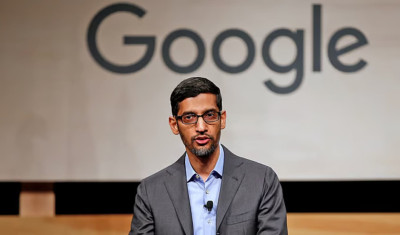
In the rapidly evolving world of technology, artificial intelligence (AI) is taking centre stage, re...

In an increasingly globalised world, the search for alternative citizenship or residence options has...

As tensions escalate in the Gulf, the White House is considering an unexpected mechanism to keep oil...
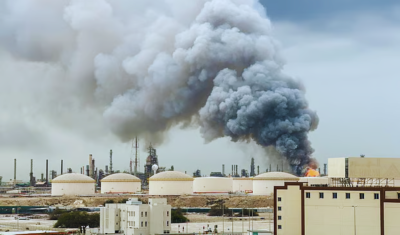
Bahrain’s principal oil refinery has been struck in a significant attack, sending thick plumes of sm...
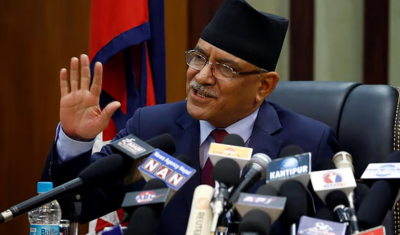
In Nepal’s general elections, the Rastriya Swatantra Party (RSP) is on the brink of a historic victo...


Availabe for iphone & ipads

Available in google play
 বাংলা
বাংলা