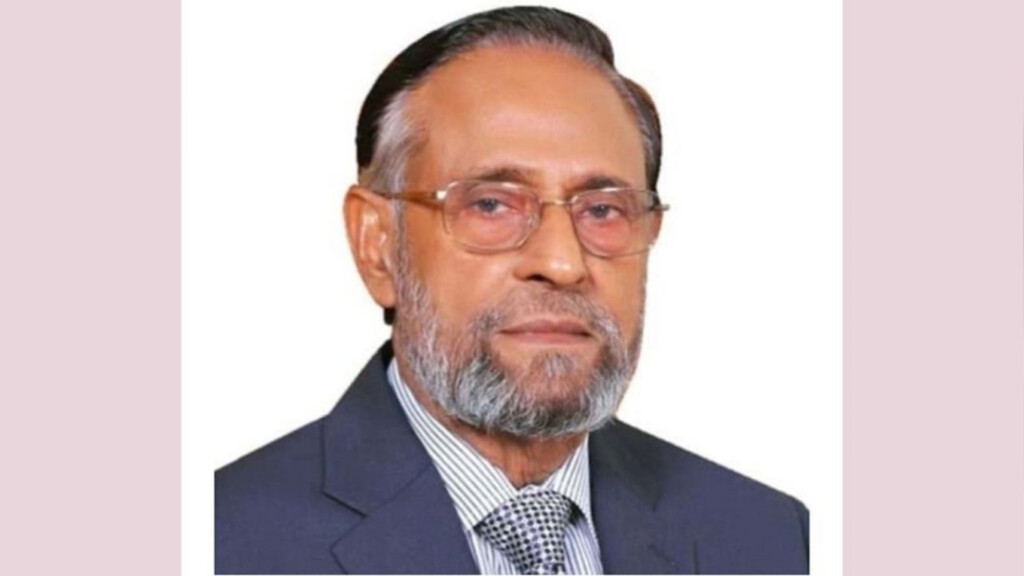
In a tectonic shift within the political landscape of South Chittagong, the nearly 50-year dominance of Colonel (Retd) Oli Ahmed has come to an abrupt and ignominious end. The Chittagong-14 (Chandanaish) constituency, long regarded as the personal fortress of the Liberal Democratic Party (LDP) chief, witnessed the defeat of his son and hand-picked successor, Omar Faruk, in the 13th National Parliamentary Election.
A Dynasty Overthrown
For decades, Colonel Oli Ahmed was synonymous with Chandanaish. Having served as a valiant freedom fighter and later as a high-profile Communications Minister in the 1991 BNP cabinet, his influence over the region’s infrastructure and local psyche was deemed unassailable. However, the recent election results tell a story of strategic miscalculation and a changing electorate.
Omar Faruk, contesting under the LDP’s ‘Umbrella’ symbol as part of an 11-party alliance, was narrowly defeated by the BNP’s ‘Sheaf of Paddy’ candidate, Jasim Uddin Ahmed. The margin of defeat—a mere 1,026 votes—marks not just a personal loss for Faruk, but the symbolic ‘political sacrifice’ of a dynasty at the hands of its patriarch.
Election Results: Chittagong-14 (Chandanaish)
| Candidate | Party / Symbol | Votes Received | Outcome |
|---|---|---|---|
| Jasim Uddin Ahmed | BNP (Sheaf of Paddy) | 76,493 | Winner |
| Omar Faruk | LDP (Umbrella) | 75,467 | Runner-up |
| Total Voters | — | 313,513 | — |
| Winning Margin | — | 1,026 | — |
The Mechanics of Defeat
Analysts and locals point to several critical factors that led to this historic upset. At 87 years of age, Colonel Oli’s decision to align himself with a coalition led by Jamaat-e-Islami proved to be a bitter pill for many voters. Having spent the majority of his career as a vocal critic of Jamaat, his late-career pivot was viewed by many as an act of ideological desperation.
Furthermore, his complex relationship with the BNP—the party that initially launched his political career—haunted the campaign. His historical claims regarding the declaration of independence and his public friction with BNP leadership alienated the core nationalist vote. The presence of a BNP rebel candidate, Mizanul Haque Chowdhury, further fractured the opposition base, inadvertently clearing a path for Jasim Uddin Ahmed.
A Legacy in Transition
Colonel Oli’s journey began in 1981, winning six terms and even securing two seats simultaneously in 1996. His defection from the BNP in 2006 to form the LDP was a gamble that initially paid off but eventually left him isolated. By fielding his son in a seat he once commanded with absolute authority, Oli sought to secure a legacy; instead, observers suggest he has overseen its liquidation.
As the BNP reclaims its “fortress” after nearly two decades, the sun sets on the era of the ‘Colonel’ in Chandanaish. With age no longer on his side, this defeat likely signals the permanent conclusion of one of the most enduring chapters in Bangladeshi parliamentary history.