In 1972, as Apollo 17 commander Eugene Cernan prepared to leave the lunar surface, he reflected, “As I take mankind’s last steps from the Moon and head home, I believe it is not for too long.” Half a century later, those steps have not been repeated. No human has ventured beyond Earth’s lower orbit since then. Yet, the long wait is finally nearing its end.
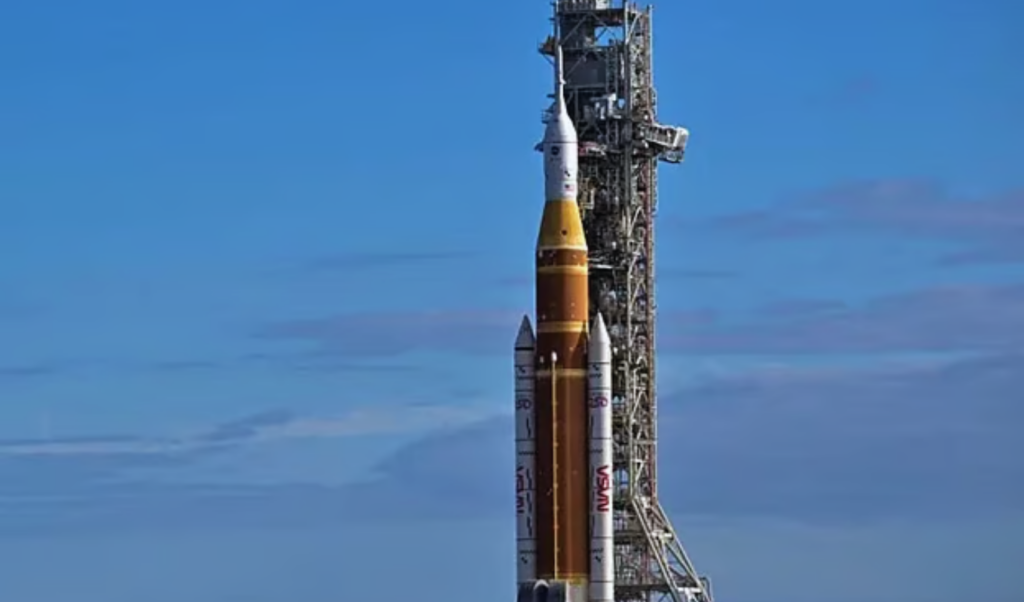
NASA’s Artemis II mission is set to carry four astronauts back toward the Moon. The historic journey has already faced multiple setbacks, with technical issues forcing the U.S. space agency to delay the launch. Initially scheduled for March, the mission has now been postponed for a second time due to last-minute mechanical and system anomalies.
NASA Administrator Jared Isaacman confirmed that there will be no chance of launch within March. The four-member crew—Reid Wiseman, Victor Glover, Christina Koch, and Jeremy Hansen—must now wait at least until 1 April before their journey can commence.
NASA has already secured a $2.9 billion contract with SpaceX to land astronauts on the Moon by 2027. However, repeated delays of the SLS rocket have introduced uncertainty into the Artemis programme. Currently, the astronauts are in quarantine in Houston, Texas, with the exact departure date still undetermined. Isaacman acknowledged the understandable frustration, noting that NASA’s teams working tirelessly on the mission feel it most acutely.
Artemis II Crew and Mission Highlights
Artemis II will not land on the Moon but will orbit it, testing spacecraft systems in preparation for future human landings. The mission marks a historic set of firsts:
| Astronaut | Country | Role | Historic Significance |
|---|---|---|---|
| Reid Wiseman | USA | Commander | Experienced U.S. Navy pilot |
| Victor Glover | USA | Pilot | First Black astronaut to fly to the Moon |
| Christina Koch | USA | Mission Specialist | First woman on lunar orbit; holds longest spaceflight record |
| Jeremy Hansen | Canada | Mission Specialist | First non-U.S. citizen to travel to the Moon |
The astronauts will launch aboard the SLS rocket and the Orion spacecraft, completing a lunar flyby before returning to Earth. The ten-day mission will serve as a rehearsal for future crewed lunar landings and test critical technologies.
Scientific Experiments and Advanced Technology
The Artemis II mission will carry out several key experiments:
ARCHER Study: Investigates astronauts’ sleep, stress, and coordination in deep space.
Radiation and Isolation Effects: Monitors immune system changes under cosmic radiation and solitude.
Organ-on-a-Chip Tests: Examines cellular responses to deep-space radiation.
The Orion spacecraft offers major technological upgrades over Apollo: 30% more interior space, solar panel energy instead of fuel cells, and hundreds of times more computing power. Although mechanical issues caused the schedule shift, the mission now targets March 2026 for launch.
A New Lunar Era
The Apollo era ended due to political, scientific, and financial challenges. At that time, the Moon was thought to be geologically dead and dry. The discovery of water molecules by India’s Chandrayaan-1 in 2008 changed that perception. Evidence of ice in the Moon’s permanently shadowed southern regions has opened possibilities for long-term human habitation—central to NASA’s Artemis vision.
For the first time in over fifty years, humans are poised to return to the Moon—not merely as visitors, but as pioneers preparing for sustained lunar presence. Artemis II is not only a mission but the gateway to humanity’s next chapter in space exploration.