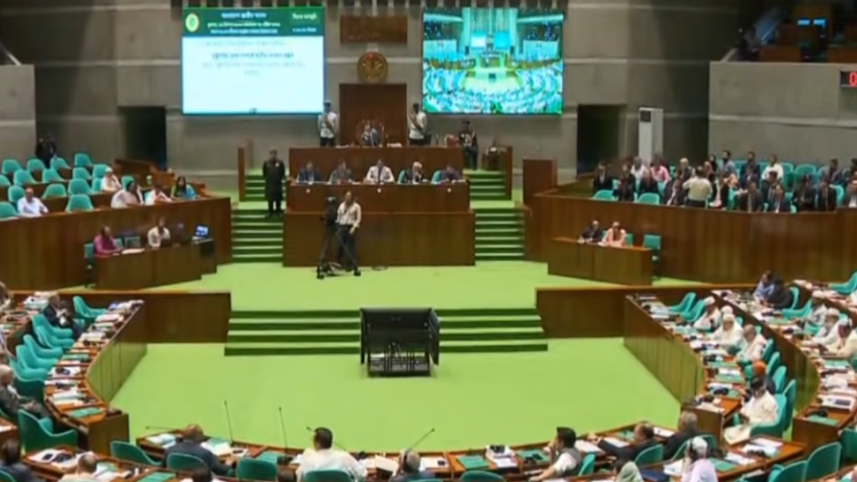
The Jatiya Sangsad has passed two significant amendment bills removing upper age restrictions for appointments to the leadership and membership of two key financial regulatory bodies—the Bangladesh Securities and Exchange Commission (BSEC) and the Insurance Development and Regulatory Authority (IDRA). The decision has triggered a sharp political debate over timing, intent, and institutional neutrality.
Under the newly approved Bangladesh Securities and Exchange Commission (Amendment) Bill, 2026, the previous 65-year age ceiling for the post of BSEC chairman and commissioners has been abolished. In parallel, the Insurance Development and Regulatory Authority (Amendment) Bill, 2026 removes the earlier 67-year limit applicable to the chairman and members of IDRA.
Revised Age Limit Framework
| Institution | Previous Age Limit | Current Provision |
|---|---|---|
| BSEC (Chair & Commissioners) | 65 years | No age limit |
| IDRA (Chair & Members) | 67 years | No age limit |
The passage of the bills was followed by an intense and at times contentious parliamentary discussion. Opposition lawmakers questioned both the timing and rationale behind the amendments, suggesting they could be tailored to accommodate specific individuals. Treasury bench members firmly rejected these allegations, insisting the changes were driven by broader policy considerations.
Independent MP Rumeen Farhana proposed that the bills be referred to a public opinion review committee, an attempt that effectively curtailed extended floor debate. While several opposition members sought to participate, the Speaker permitted only Opposition Leader Shafiqur Rahman to speak at length.
Rahman criticised the legislative process, arguing that MPs had not been given adequate time to review the proposals. He maintained that the bills were made available only shortly before deliberation, limiting meaningful scrutiny. The Speaker responded that procedural requirements had been met and that the documents had been circulated the previous day before proceeding with the vote.
Following passage of the legislation, National Citizens’ Party leader Akhter Hossen raised concerns that the removal of age restrictions could be aimed at facilitating appointments of preferred individuals. He also referenced historical precedents, recalling earlier decisions by past governments to adjust retirement ages in key constitutional offices, which he claimed had long-term institutional consequences.
Finance Minister Amir Khosru Mahmud Chowdhury defended the amendments, arguing that they reflect changing demographic realities. He noted that when securities legislation was first introduced, average life expectancy was significantly lower, whereas it now stands at approximately 72 years. According to him, experienced professionals should not be excluded solely on the basis of age when they remain capable of contributing effectively to regulatory institutions.
He further stated that the amendments were not politically motivated and were grounded in economic and administrative necessity. While parliamentary convention limits debate after passage of bills, he nonetheless addressed concerns raised by members to clarify the government’s position.
Opposition Leader Shafiqur Rahman also used the debate to raise broader concerns about recent appointments within financial regulatory institutions, including the central bank. He alleged a lack of neutrality in certain selections, warning that politicisation of regulatory bodies could undermine national progress.
Deputy Opposition Leader Syed Abdullah Mohammad Taher went further, questioning the neutrality of the current central bank governor and calling for a replacement. The Finance Minister rejected these claims, arguing that professional engagement in political processes does not necessarily indicate partisan affiliation and insisted that current leadership had demonstrated strong performance.
The passage of the bills marks a notable shift in appointment policy for financial regulators, while simultaneously intensifying debate over governance standards and institutional independence in Bangladesh’s financial oversight framework.