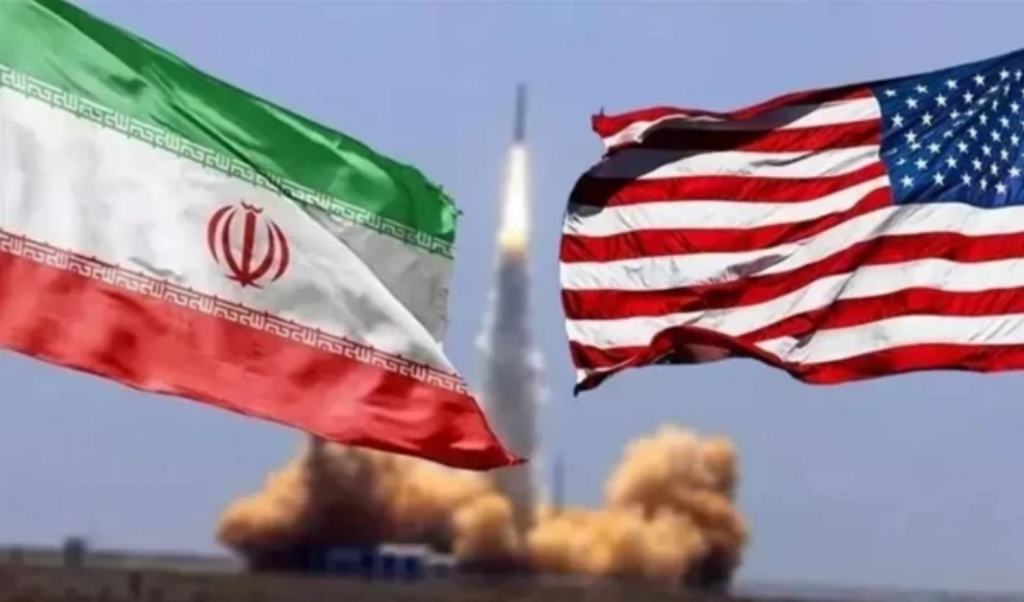
The White House has firmly dismissed speculation suggesting that the United States is considering a nuclear strike against Iran, moving to contain mounting political and media controversy triggered by recent remarks from Vice-President J. D. Vance.
The clarification was issued after comments by the Vice-President were interpreted by critics as implying that nuclear options could be on the table in the event of a future military escalation. The administration, however, described such interpretations as entirely unfounded and a distortion of the original statement.
In an unusually emphatic response published on the social media platform X, the White House stressed that Vice-President Vance’s remarks contained “absolutely no indication” of nuclear escalation. Officials said the statement was intended to reaffirm conventional military readiness and deterrence capability, rather than signal any shift in nuclear posture.
What triggered the controversy
The debate stems from remarks made by Vice-President Vance in which he stated that, in enforcing a stern ultimatum issued by President Donald Trump, the United States military possesses capabilities that “have not yet been utilised”.
While intended as a demonstration of strategic deterrence, the phrasing prompted immediate scrutiny from political opponents and commentators, some of whom argued that it could be misinterpreted as a reference to extreme escalation scenarios, including nuclear weapons.
The White House moved quickly to reject that interpretation, insisting the comments referred broadly to non-nuclear strategic and conventional military assets within the US defence system.
Key developments in the dispute
| Issue | Details |
|---|---|
| Trigger statement | VP Vance referenced “unused military capabilities” |
| Allegation | Critics suggested possible nuclear implication |
| White House position | No nuclear reference or intent whatsoever |
| Political reaction | Amplified via online posts linked to opposition supporters |
| Broader context | Ongoing US–Iran geopolitical tensions |
Officials also criticised what they described as misleading online commentary, including social media posts linked to supporters of former Vice-President Kamala Harris, which suggested President Trump might be considering nuclear action against Iran. The administration categorically rejected such claims.
Broader US–Iran context
The exchange comes against a backdrop of continued geopolitical friction between Washington and Tehran, particularly over nuclear policy disputes, sanctions enforcement, and regional security concerns. Although there is currently no active military confrontation between the two countries, diplomatic relations remain strained and highly sensitive.
Analysts note that rhetoric surrounding military readiness has intensified in recent months as both sides continue to signal deterrence without crossing into direct escalation. The situation remains fluid, with periodic spikes in tension driven by political statements, regional developments, and international diplomatic pressure.
Strategic communication and risks of misinterpretation
Defence analysts say references to “unused capabilities” are common in strategic messaging and are typically intended to reinforce deterrence rather than indicate specific operational intent. However, they caution that in today’s highly polarised and fast-moving information environment, such statements can be rapidly amplified and misinterpreted.
The incident highlights how quickly national security language can be reframed in political discourse, particularly when circulated through social media platforms where context is often lost.
White House seeks to reassure allies
By issuing a forceful denial, the White House appears to be aiming to reassure both domestic and international audiences that there is no consideration of nuclear escalation in relation to Iran. Officials reiterated that US military doctrine continues to prioritise proportional response, deterrence, and the avoidance of catastrophic escalation in volatile regions.
The administration’s response underscores the sensitivity surrounding nuclear rhetoric and its potential to influence diplomatic perceptions, market reactions, and geopolitical stability.
While the White House has moved decisively to shut down speculation, the episode highlights the broader challenges of strategic communication in an era of heightened political polarisation. Even carefully framed remarks can trigger global debate when interpreted through partisan or online amplification channels, underscoring the continuing importance of clarity in matters of international security.