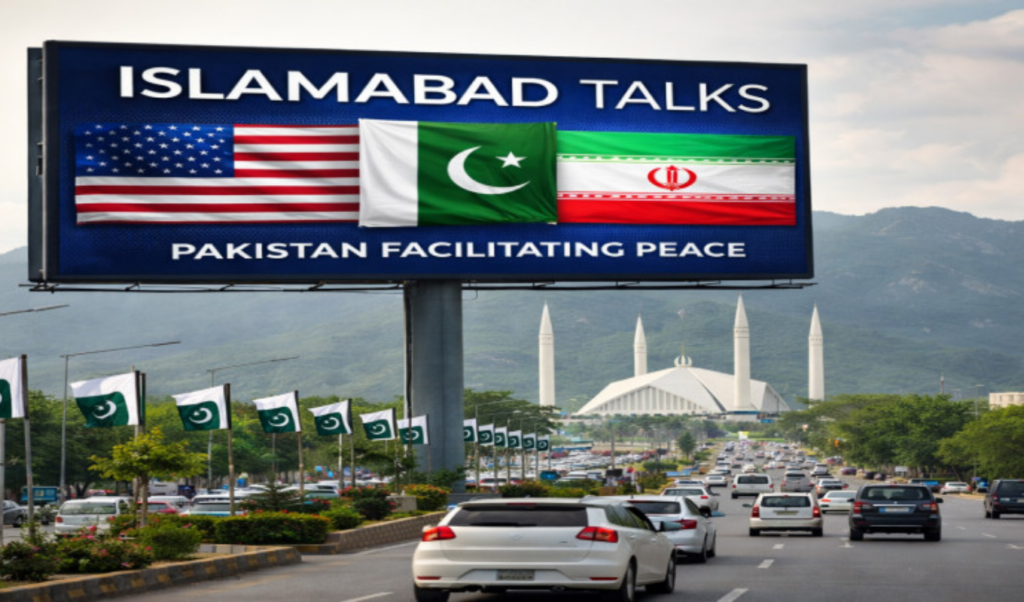
A high-stakes diplomatic effort between the United States and Iran aimed at easing tensions and laying the groundwork for peace in the Middle East concluded in Islamabad without any formal agreement, despite 14 hours of continuous negotiations. Both delegations have since returned to their respective countries, with no immediate announcement of breakthroughs or concrete outcomes.
While the talks failed to produce a deal, mediators in Pakistan stressed that the fact both sides remained engaged until the end was itself a limited success. Islamabad, acting as facilitator, said it would continue efforts to keep dialogue channels open, although no date has been set for a follow-up round.
Key outcomes at a glance
| Item | Status |
|---|---|
| Duration of talks | 14 hours |
| Location | Islamabad, Pakistan |
| Outcome | No agreement reached |
| Mediator | Pakistan |
| Next round | Not scheduled |
Pakistani Deputy Prime Minister Ishaq Dar said both sides had shown willingness to continue engagement and thanked the delegations for recognising Pakistan’s mediating role. He expressed hope that diplomatic efforts would eventually lead to lasting peace and stability in the wider region.
However, statements from both delegations reflected deep divisions.
Sharp exchange of positions
Iran’s parliamentary speaker Mohammad Bagher Ghalibaf, who led Tehran’s delegation, said the United States had failed to build trust or demonstrate sufficient goodwill during the discussions. He argued that Iran entered the talks constructively but remained sceptical due to past regional conflicts and military escalations.
On the American side, Vice President JD Vance confirmed that no agreement had been reached, stating that Iran had rejected what he described as Washington’s “final and most comprehensive proposal”. He insisted that the United States had made its position “explicit and clear” during negotiations.
Despite the breakdown, Iranian officials signalled that diplomatic engagement would continue. Tehran said technical teams from both sides are exchanging detailed proposals and expert-level drafts, suggesting that dialogue has not been completely suspended.
Iran’s Foreign Ministry spokesperson Esmaeil Baghaei noted that while differences remain on several key issues, including only partial convergence on some topics, the expectation of an immediate agreement was unrealistic given the “high level of mistrust” following years of regional conflict and sanctions pressure.
Core disputes dominating talks
1. Nuclear programme
The central point of contention remains Iran’s nuclear activities. Washington is demanding a full cessation of Iran’s nuclear ambitions, including restrictions on dual-use technologies. Tehran insists its nuclear programme is peaceful and sovereign.
Vice President JD Vance reiterated that the United States seeks an unequivocal commitment from Iran that it will not pursue nuclear weapons under any circumstances.
2. Strategic waterways and the Strait of Hormuz
Control and regulation of the Strait of Hormuz emerged as another major sticking point. Iran considers it a strategic red line, with senior officials reiterating that the waterway falls under Iranian authority. The strait is one of the world’s most critical energy corridors, carrying roughly one-fifth of global oil shipments.
Iranian officials have also suggested tighter control measures, including the possibility of charging transit fees in Iranian currency, escalating tensions over maritime access.
3. Sanctions and regional conflicts
Iran demanded comprehensive sanctions relief and compensation linked to past military actions, alongside an end to hostilities across the region, including in Lebanon. The United States, however, did not accept these terms.
Continued escalation outside the talks
Even as negotiations were underway, regional tensions remained high. Israeli air operations in Lebanon reportedly continued, with the Lebanese health authorities confirming at least 13 deaths in fresh strikes, further complicating the diplomatic environment.
At the same time, Iran’s energy sector is attempting to recover from recent damage. A senior Iranian oil ministry official said the country aims to restore up to 70–80% of its refining and fuel distribution capacity within one to two months, with some facilities expected to resume partial operations within days.
Outlook uncertain
Despite the absence of a breakthrough, officials from all sides avoided declaring the talks a complete failure. Pakistan’s mediators insist diplomatic engagement will continue, while both Washington and Tehran have left the door open—at least formally—for future discussions.
However, with sharp disagreements over nuclear policy, maritime control, and sanctions relief, the path forward remains deeply uncertain. The Islamabad round may therefore be remembered less for what it achieved, and more for how clearly it exposed the enduring fault lines between the two sides.