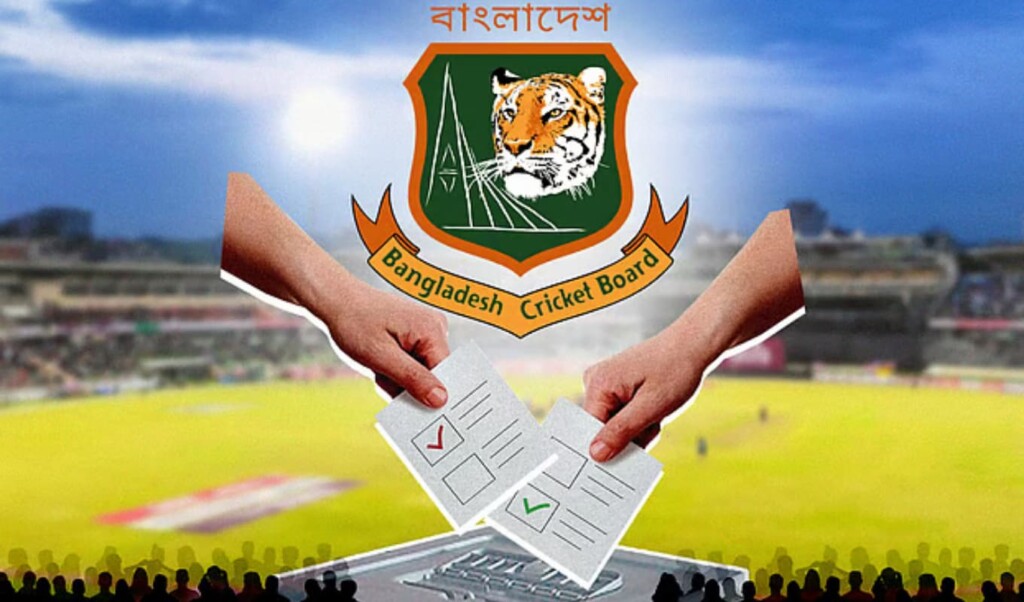
The governance of the Bangladesh Cricket Board (BCB) remains closely bound to political influence, despite successive adjustments to its leadership structure. Historically, whether administered by executives with overt partisan affiliations, state-endorsed figureheads, or celebrated former international athletes, the sporting body has routinely failed to execute an electoral process independent of external state pressure.
Instead, a well-entrenched administrative culture persists, under which structural authority is systematically deployed to marginalise independent and opposition challenges. The upcoming BCB board of directors elections, scheduled for 7 June, are advancing under an identical clouds of institutional skepticism.
Interim Panel Faces Ethical Questions
Following the formal publication of the electoral roadmap on 16 May, the progression toward the ballot boxes has consistently generated public and media criticism. Initially, an 11-member ad-hoc committee was installed by the National Sports Council on 7 April under the presidency of former national cricket captain Tamim Iqbal. This temporary panel was specifically mandated to oversee day-to-day operations and deliver a completely neutral, transparent, and uncompromised general election.
Nevertheless, the foundational neutrality of this interim administration has been severely undermined by conflicts of interest. Out of the 11 individuals serving on Tamim Iqbal’s convenor committee, seven—including President Tamim Iqbal himself—have registered as active candidates in the upcoming election. While this layout does not technically violate the statutory articles of the BCB constitution, it has invited profound ethical condemnation from sports analysts.
Although the current leadership maintains that the polling will be strictly isolated from internal bias due to the oversight of the BCB Election Commission, critics note that identical explanations were offered during previous elections by former president Aminul Islam. Those historic cycles were ultimately boycotted by Tamim Iqbal and his immediate colleagues on the explicit grounds of systemic institutional manipulation.
Non-Competitive Categories and Political Patronage
The composition of the interim board has drawn sharp political commentary, including satirical debates within parliament where the body was termed the “Baper Doya” (Father’s Blessing) board. This label emerged following the appointment of multiple individuals who, despite lacking verified backgrounds in sports organization or club administration, secured seats on the committee owing to their status as the children of sitting cabinet ministers and parliamentarians.
This environment of patronage extends to the formal candidate list for the 7 June ballot, where nearly one-third of all prospective directors are direct relatives of government ministers or Members of Parliament. This demographic trend is equally mirrored within the 184-member voter councilor registry.
Consequently, the upcoming election has effectively ceased to be competitive across major categories. The operational layout of the seats and the absolute absence of electoral contests are outlined in the table below:
| Electoral Group | Regional / Institutional Focus | Total Board Seats | Seats Decided Unopposed | Status of Remaining Contests |
| Category 1 | District & Divisional Sports Associations | 10 | 7 | Limited to minor, nominal contests for two seats in Khulna and one in Barisal. |
| Category 2 | Dhaka-based District Cricket Clubs | 12 | 0 | 16 candidates remaining for 12 positions following two withdrawals. |
| Category 3 | Selected Public Universities & Institutions | 1 | 1 | Zero competition; single candidate returned entirely unopposed. |
Within Category 2, which dictates the leadership of the influential Dhaka clubs, extensive behind-the-scenes engineering has been reported. Allegations indicate that state actors and dominant club figures held private negotiations to pre-arrange successful candidates, creating a structured voting mechanism. Marginalised candidates have remained publicly silent, driven by the fear of losing future athletic administrative appointments.
Institutional Shifting From Historical Precedents
While proponents of the current framework argue that political cross-over is standard within Bangladeshi sports federations, independent observers emphasise that this election represents a severe departure from established institutional norms. In previous eras, board directors possessing political affiliations still maintained extensive, verifiable credentials as local sports organizers and club developers.
Furthermore, qualified sports organizers affiliated with opposition political parties, including the Bangladesh Nationalist Party (BNP), have been completely excluded from the councilor lists. Today, many contenders would fail to secure basic voter credentials without direct political endorsement.
The integrity of the process is further challenged by procedural irregularities at the grass-roots level. Multiple district ad-hoc panels revealed they were entirely bypassed by their respective District Commissioners, who independently forwarded voter listings to the BCB without consulting local executive boards. Combined with the continued deployment of controversial electronic voting (e-voting) protocols, these compounding anomalies suggest that the 7 June ballot may be recorded as the least competitive and most compromised election in the history of the Bangladesh Cricket Board.