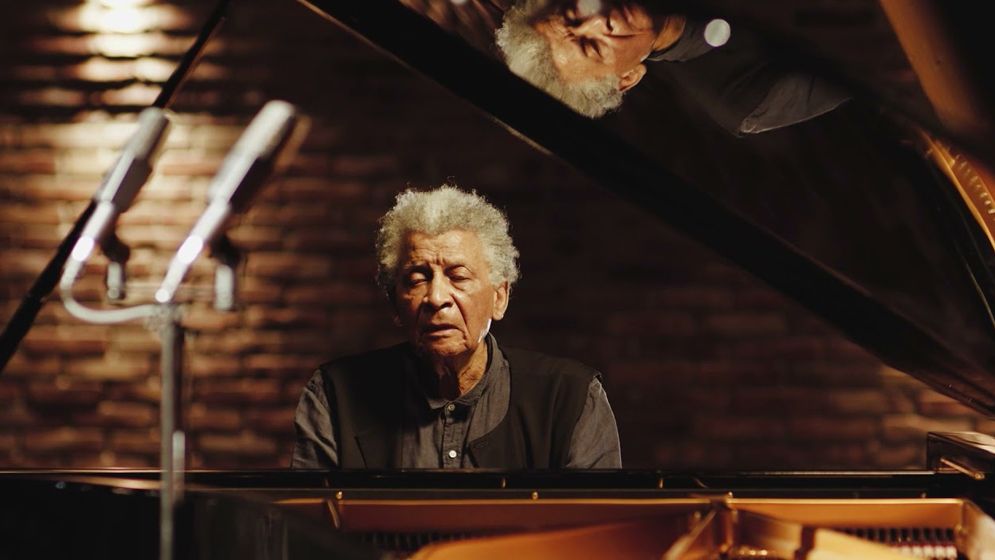
The revered South African jazz composer and pianist, Abdullah Ibrahim, has passed away in Germany following a period of illness. Over his extensive and distinguished career, Ibrahim recorded more than 70 albums. He was 91 years old at the time of his death. His family confirmed the news in an official statement released on Monday, 15 June.
Tributes and Early Life
Following his passing, Abdullah Ibrahim’s partner, Dr Marina Umari, wrote:
“Abdullah passed away very peacefully, carrying South Africa and its people in his heart. No matter where he was in the world, his love for his country never faded.”
Born in Cape Town under the name Adolph Johannes Brand, the musician discovered his passion for music at a very early age. He had previously disclosed that he began composing melodies when he was just seven years old, subsequently making his professional debut as a musician at the age of 15.
Rise to Prominence and Exile
During the 1950s, Ibrahim became highly regarded within the local music scene under the moniker “Dollar Brand”. In 1960, he recorded an album with the musical group The Jazz Epistles. Their release, titled Jazz Epistle Verse 1, achieved historical significance as the first full-length jazz LP recorded by Black South African musicians. Although their compositions were not explicitly political, the group faced targeted harassment from the contemporary apartheid regime.
Fleeing political oppression, Ibrahim relocated to Europe during the 1960s. His talent caught the attention of the legendary American jazz musician Duke Ellington, who subsequently facilitated Ibrahim’s move to the United States. Ibrahim pioneered a distinct musical genre by blending traditional South African melodies with American jazz rhythms. In 1974, he released his definitive track, Mannenberg, which quickly transformed into an anthem of resistance against white minority rule in South Africa.
Cinematic Contributions and Final Performance
In addition to his studio albums, Ibrahim composed background scores for several international films. Notable among these were the drama films No Fear, No Die and Chocolat, both directed by the French filmmaker Claire Denis.
Despite residing outside South Africa for many years, Ibrahim maintained strong ties with his homeland and performed there whenever possible. His final live performance took place just three months ago at the Cape Town International Jazz Festival. Throughout his career, Ibrahim received numerous accolades, including the German Jazz Trophy and the South African Music Lifetime Achievement Award.
Summary of Abdullah Ibrahim’s Life and Career
The following table outlines the key biographical details and career milestones of the late jazz icon:
| Category | Historical and Biographical Facts |
| Birth Name | Adolph Johannes Brand |
| Professional Moniker | Dollar Brand |
| Age & Place of Death | 91; Germany (Confirmed Monday, 15 June) |
| Total Discography | More than 70 recorded albums |
| Historic LP | Jazz Epistle Verse 1 (First Black South African jazz LP) |
| Anthem of Resistance | Mannenberg (Released in 1974 against Apartheid) |
| Film Scores | No Fear, No Die and Chocolat (Directed by Claire Denis) |
| Major Accolades | German Jazz Trophy; South African Music Lifetime Achievement Award |
| Final On-Stage Appearance | Cape Town International Jazz Festival (Three months prior to death) |
Through his groundbreaking blend of folk melodies and classical jazz structure, Abdullah Ibrahim left an indelible mark on global music history. His passing signifies the end of a foundational era for South African jazz infrastructure.