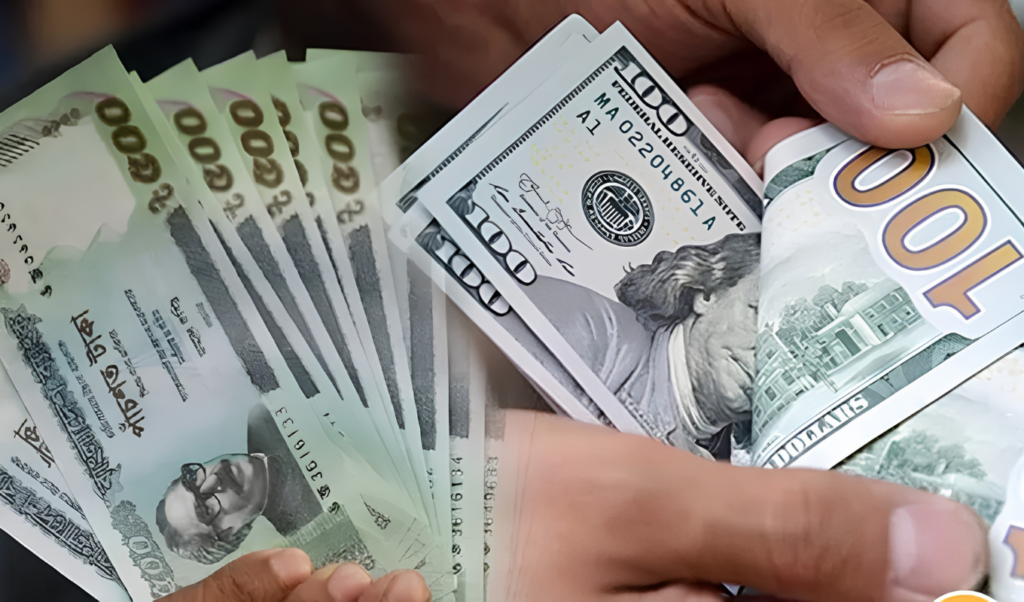
The domestic foreign exchange market concluded its operations for the final working day of the week on Thursday, 18 June 2026. Global and domestic currency markets have experienced persistent fluctuations over the past few months, driven by various international factors, including the ongoing geopolitical crisis in the Middle East. Despite these routine fluctuations, market data indicates that foreign currency values have maintained a broader upward trend for over a month.
According to official statistics released by Bangladesh Bank, the central bank of the nation, the exchange rate for the US Dollar (USD) remained unchanged compared to the previous trading session. However, whilst the greenback held steady, the majority of other prominent international currencies experienced a depreciation in their value during today’s trading hours.
Analysis of the US Dollar and Major Currencies
Statistical disclosures from the central bank confirmed that the average exchange rate for the US Dollar was recorded at 122.75 BDT. Although the value of the US Dollar has shown a consistent pattern of volatility over several months, its steady performance during Thursday’s session provided a temporary pause in that trend.
In contrast to the stability of the US Dollar, the values of most other primary currencies widely utilised in international trade decreased against the Bangladeshi Taka. The official central bank data indicates that the currencies experiencing a decline in value include the Euro (EUR), the British Pound Sterling (GBP), the Chinese Yuan (CNY), the Australian Dollar (AUD), and the Singapore Dollar (SGD). Conversely, the exchange rates for the Indian Rupee (INR) and the Japanese Yen (JPY) remained unchanged, mirroring their previous positions in the market.
Market Dynamics and Commercial Implications
Financial market observers note that cash transactions within the informal open market (locally termed the kerb market) routinely occur at slightly higher rates than the official exchange rates published by Bangladesh Bank. This standard variance between institutional and open-market pricing persisted through Thursday’s trading sessions.
Financial analysts emphasise that fluctuations in foreign exchange rates directly influence the operational expenditure of international commerce, affecting both import and export sectors. A rise in exchange rates increases the cost of importing industrial raw materials and international freight charges, subsequently altering the overall cost of doing business and impacting consumer prices within the domestic economy.
Daily Foreign Exchange Rate Assessment
The table below outlines the average exchange rates and market trends for major international currencies as determined by Bangladesh Bank for the current session:
| Currency Profile | Official Trading Status | Market Trend Specification |
| US Dollar (USD) | Unchanged | Stabilised at an average rate of 122.75 BDT |
| Euro (EUR) | Depreciated | Value declined compared to the prior session |
| British Pound (GBP) | Depreciated | Faced downward pressure during trading |
| Chinese Yuan (CNY) | Depreciated | Devalued against the domestic currency |
| Australian Dollar (AUD) | Depreciated | Exchange value decreased by the close of the session |
| Singapore Dollar (SGD) | Depreciated | Experienced a reduction in standard market value |
| Indian Rupee (INR) | Unchanged | Remained fixed at its previous valuation |
| Japanese Yen (JPY) | Unchanged | Maintained its prior institutional exchange rate |