Sunday, 5th April 2026

Khabor Wala Desk
Published: 18th February 2026, 7:02 AM
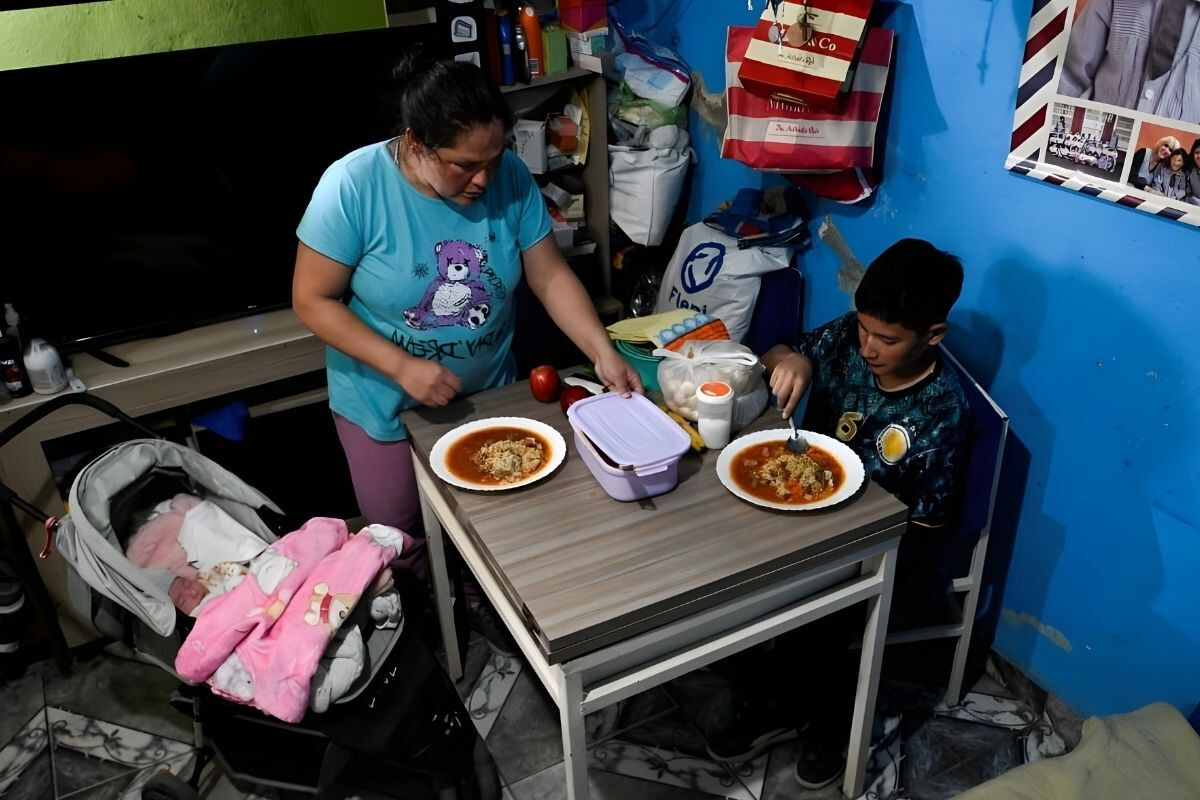
Argentina is grappling with a severe economic crisis that has forced many citizens to take on debt merely to afford basic necessities such as food. The situation has reached alarming proportions, highlighting the widening gap between wages and living costs in the South American nation.
Diego Nacacio, 43, works as a full-time sales assistant at a large hardware store in the Buenos Aires suburb of Florencio Varela. He explains the harsh reality many families face: “By around the 15th of the month, my wife and I have already spent our salaries. After that, it’s a scramble for extra work, digging through household items, using credit cards, or taking small loans.”
He adds, “For 25 years, we’ve worked hard. Our jobs allowed us to build a home, buy a car, and raise our 17-year-old son. Yet now, even with a better job than before, we cannot afford to buy enough food for the whole month.”
Recent surveys reveal that nearly half of Argentinians are dipping into savings, selling belongings, or borrowing from banks and relatives just to get by. Another report indicates that 63% of the population has reduced expenses in order to make it to the end of the month.
Violeta Carrera Pereyra, a sociologist at the Argentina Grand Institute, describes the situation as “extremely worrying. Even those holding multiple jobs are borrowing, not for housing or cars, but simply to put food on the table.”
President Javier Milei, who took office in 2023, maintains that his policies have revitalised the economy and reduced poverty, with support from the International Monetary Fund. Yet, the reality for everyday citizens tells a different story. While certain sectors, such as banking and agriculture, saw growth in November 2025, industrial and trade sectors experienced significant declines, and overall food demand has decreased. Meanwhile, costs for electricity and fuel have skyrocketed, stretching household budgets even further.
The Milei administration has implemented controversial measures to curb inflation, including keeping wages below inflation levels and opening up cheaper imports. While intended to stabilise the economy, these policies have reduced disposable income and led to closures of thousands of factories and small businesses.
Government data shows that nearly half of supermarket purchases in Argentina are now made using credit cards. At the same time, loan defaults have surged, with approximately 11% of personal loans remaining unpaid—the highest rate since 2010.
Griselda Quipildor, 49, who lives with her husband, two daughters, and two grandchildren, explains the cycle of financial struggle her family endures: “Even though several of us work, by the 18th of each month, our money runs out, and we must borrow again. We pay off bills and loans at the start of the month, then run out of funds and borrow once more. It’s a cycle that is almost impossible to break.”
| Indicator | Value | Notes |
|---|---|---|
| Population borrowing for essentials | ~50% | Includes loans from banks or relatives |
| Households reducing spending | 63% | To make salaries last the full month |
| Personal loan default rate | 11% | Highest since 2010 |
| Supermarket purchases via credit card | ~50% | Rising reliance on debt for daily expenses |
| Food demand trend | Decreasing | Especially affected by rising energy and fuel costs |
The current crisis in Argentina underscores the profound challenge of balancing economic growth with the basic welfare of citizens. While macroeconomic figures may suggest recovery, the daily struggle for food and essential goods tells a starkly different story.


Comments